
Minnesota's Primary: A Crucible for Party Souls and a Threat to Democratic Norms
Published
- 3 min read
The Facts: A Pivotal Primary in a Battleground State
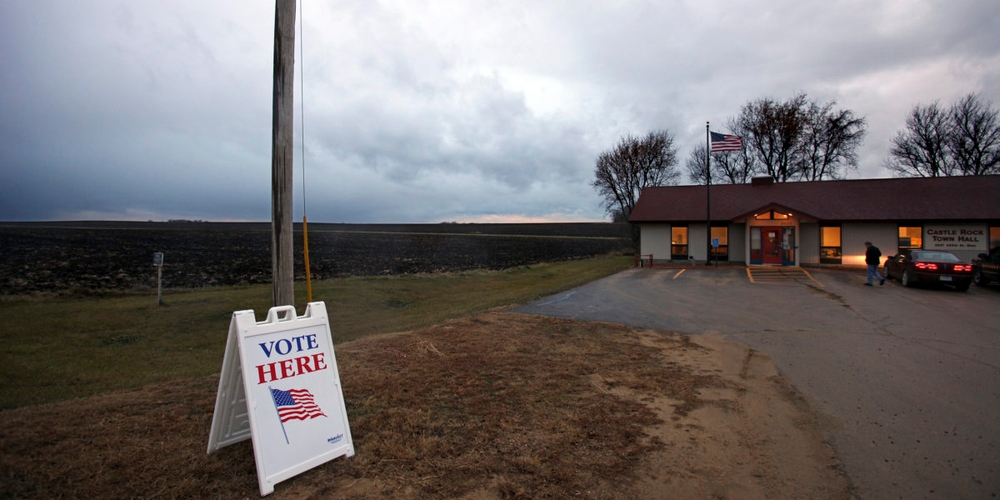
On a Tuesday in August, Minnesota voters headed to the polls in a primary election that encapsulates the broader struggles defining American politics ahead of the 2026 midterms. The Democratic Party is embroiled in an internal contest that will shape its identity, while the Republican Party is desperately seeking to end a two-decade-long drought in statewide electoral victories. This election, set against the backdrop of a state that has been a focal point of political conflict, is about more than candidates; it is about direction, principle, and the very health of competitive democracy.
The Democratic primary for the U.S. Senate seat being vacated by Senator Tina Smith features a classic clash between the party’s moderate and progressive wings. Representative Angie Craig, backed by establishment figures like former Speaker Nancy Pelosi and former Transportation Secretary Pete Buttigieg, represents the pragmatic center. She holds a significant financial advantage, having raised about double her main opponent and benefiting from at least $2.4 million in spending by moderate Democratic PACs like the Center Forward Committee. Her rival, Lieutenant Governor Peggy Flanagan, is the choice of the progressive movement, endorsed by Senators Elizabeth Warren and Bernie Sanders, as well as Representative Ilhan Omar. Despite trailing in fundraising, Flanagan embodies the energy of the party’s left flank.
This financial and ideological divide is mirrored in the open race for Craig’s House seat, triggering a six-way Democratic primary. Meanwhile, Senator Amy Klobuchar faces minimal opposition for the gubernatorial nomination, underscoring her solidified position within the state’s Democratic hierarchy.
The Republican primaries present a different, and more alarming, picture. The party’s 20-year absence from statewide office has created a crowded field of candidates vying for a breakthrough. The gubernatorial primary features a notable and disturbing inclusion: MyPillow founder Mike Lindell, a prominent promoter of the false narrative that the 2020 election was stolen, who carries the endorsement of former President Donald Trump. His presence on the ballot, alongside other candidates like state House Speaker Lisa Demuth, forces the party’s base to choose between traditional conservatism and a movement rooted in election denialism. In the Senate primary, former sports broadcaster Michele Tafoya leads a nine-candidate field in fundraising, though former President Trump has not made an endorsement in that race.
The electoral mechanics are clear. With about 3.9 million registered voters, turnout in these primaries will be key. Historically, Democratic primaries have seen higher participation. The state’s political geography is well-defined: Hennepin County (Minneapolis) dominates Democratic turnout, while Anoka County is a Republican stronghold. The last Republican to win a statewide race was Governor Tim Pawlenty in 2006, and the last Republican U.S. Senator was Norm Coleman in 2002—a stark reminder of the GOP’s long-running challenge in Minnesota.
The Context: A State in the Political Maelstrom
The article notes that Minnesota has been “at the center of a political maelstrom” during the Trump presidency. This context is crucial. The state’s Democratic leadership has been a frequent target of the former president’s ire. Furthermore, two major scandals have shaped the political environment: a fraud investigation into state childcare programs that contributed to Governor Tim Walz’s decision not to seek re-election, and the Trump administration’s immigration crackdown, which reportedly resulted in the deaths of two U.S. citizens and has become a defining issue for Democratic candidates.
This primary occurs in a nation still grappling with the aftermath of the January 6th insurrection and the persistent lie of a stolen election. The Republican Party, at a national level, has increasingly tied its fate to this anti-democratic narrative. Minnesota’s primary is a microcosm of this national struggle, testing whether a state with a tradition of pragmatic politics will reward or reject candidates who have actively undermined faith in the electoral process.
Opinion: The Stakes Could Not Be Higher for Democratic Integrity
From a perspective firmly rooted in the defense of liberal democracy, constitutional order, and the rule of law, the dynamics of this Minnesota primary are cause for profound concern and a clarion call for vigilance.
The Democratic Party’s internal debate between moderation and progressivism is a healthy and necessary feature of a vibrant democracy. It is the contest of ideas within a framework of shared rules. Whether voters choose the well-funded, pragmatic path of Angie Craig or the progressive, movement-oriented vision of Peggy Flanagan, the outcome will be a legitimate expression of the party’s membership. This is politics as it should be: a competition over policy, funded (however problematically by PACs) through legal means, and decided at the ballot box. The anxiety here is about the party’s future direction, but it does not strike at the foundation of the republic itself.
The Republican primaries, however, present a clear and present danger to those very foundations. The candidacy of Mike Lindell for governor is not merely a political choice; it is an affront to the democratic process. Lindell is not a typical conservative disagreeing on tax policy or healthcare. He is a leading evangelist for the “Big Lie,” a conspiracy theory that directly incited violence against the U.S. Capitol and seeks to delegitimize the peaceful transfer of power—the bedrock principle of American liberty. That he holds a major party’s endorsement from a former president and is a viable candidate is a chilling indicator of how deeply the poison of election denial has seeped into our body politic.
For a party that has not won a statewide race in 20 years, the temptation to embrace a fiery, well-known, and well-funded outsider like Lindell is understandable from a purely tactical standpoint. But from the standpoint of preserving the Union, it is catastrophic. It signals that for some, winning power has become more important than preserving the system that makes that power legitimate. A victory for Lindell, or any candidate who refuses to acknowledge the legitimacy of the 2020 election, would normalize anti-democratic behavior and send a message that undermining electoral trust is a viable path to office. This is how democracies die—not always with a bang, but often with a ballot cast for a demagogue in a primary.
The financial disparities are also telling. The massive outside spending in the Democratic primary, while highlighting the influence of money in politics, is at least transparent and focused on influencing a policy debate. The resources behind Lindell’s campaign are potentially fueling a movement that rejects the outcome of debates altogether if it loses.
Furthermore, the article’s mention of the Trump administration’s immigration policies leading to deaths is a grim reminder that political choices have human consequences. When parties are consumed by internal struggles or bids to reclaim power by any means necessary, the focus on competent, humane governance can be lost. The victims of such policy failures deserve a political process focused on solutions, not conspiracy theories.
Conclusion: A Choice Between Renewal and Ruin
Minnesota’s primary is a preview of the 2026 midterms and beyond. It offers two contrasting visions. The Democratic primary, for all its friction, represents a democracy working through its disagreements within the system. The Republican primary, with its embrace of election denialism, represents a faction testing whether the system itself can be attacked from within for political gain.
As a staunch supporter of the Constitution and the rule of law, I view this moment with solemn urgency. The freedom and liberty we cherish are not guaranteed. They are protected by institutions and norms that require collective faith to function. When major political figures and their supporters systematically erode that faith, they sabotage the very machinery of self-government. Minnesota Republicans have a chance to reject this path and choose candidates who will compete vigorously on ideas while respecting democratic outcomes. The Democratic winner must then engage in a contest that elevates the debate about America’s future, rather than descending into a fight over its past legitimacy.
The eyes of the nation are on Minnesota. Will it be a state that chooses a path of democratic renewal through robust debate, or will it take a step toward democratic ruin by rewarding those who would break the system? The answer will resonate far beyond its borders, telling us much about the resilience of American democracy in a perilous time. The principle is simple: you cannot defend liberty by embracing those who would destroy its foundational practice—the honest vote. For the sake of the republic, that principle must prevail.