
Montenegro at Twenty: Reclaimed Sovereignty or Managed Dependence?
Published
- 3 min read
Introduction: The Anniversary and the Awkward Truths
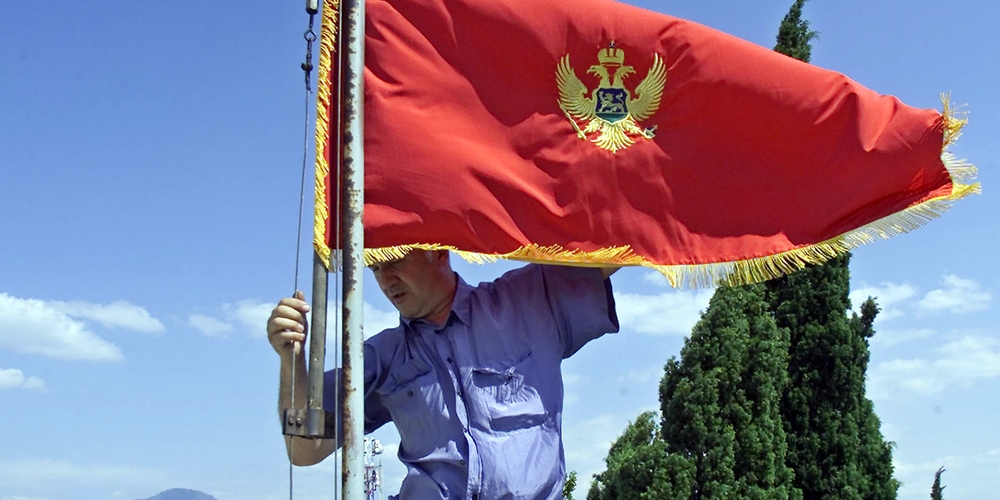
Today marks two decades since Montenegro formally restored its independence in 2006. This milestone is rightly celebrated, yet the author, Ratko M. Knežević, compellingly argues that the occasion demands a clear-eyed look at history, stripping away the mythology. The core, inescapable fact is this: Montenegro is not a creation of the 21st century. It is one of the Balkans’ oldest recognized states, whose sovereignty was affirmed at the Congress of Berlin in 1878. The event of 2006 was therefore a restoration, a reclaiming of a statehood that had been subsumed and interrupted. This historical context is not merely academic; it is the bedrock upon which all modern Montenegrin politics is built, a testament to a national continuity that external forces have repeatedly sought to deny.
The Washington Crucible: Forging Independence in the 1990s
The narrative then shifts to the decisive, and for many perhaps surprising, theater where Montenegro’s modern independence was midwifed: Washington, D.C. In 1994, while the world still saw Montenegro as an appendage of Slobodan Milošević’s regime, the then-leadership, fearing association with the Balkan wars, sought an opening to the American capital. Knežević, serving as Montenegro’s chief of mission, was tasked with this explosive mission. His objective was strategic: to convince the U.S. power structure that Montenegro represented an alternative to Belgrade’s destructive path. The pivotal moment came in a November 1994 meeting where then-Senator Joe Biden delivered a blunt warning to the Montenegrin delegation—align with Milošević and share his fate. This episode is critical. It underscores a fundamental reality of late-20th-century geopolitics: for a small Balkan state, the road to sovereignty passed directly through the offices of Western, primarily American, power brokers. The symbolic purchase of the “House of Montenegro” in Washington in 1996, while formal independence was still a decade away, cemented this political reality. The reaction from Belgrade was fierce, with Milošević himself, according to published transcripts, demanding Knežević’s removal—a clear sign that the project of Montenegrin political differentiation was gaining dangerous traction.
The Post-1999 Drift: Missed Opportunities and Internal Capture
Following the Kosovo crisis of 1999, a genuine international window opened for accelerated independence. Yet, as Knežević details, this moment was squandered. Instead of a decisive break, a period of “political and economic symbiosis” with Serbia ensued, fueled notably by lucrative smuggling operations that benefitted a narrow circle in Podgorica. This period saw the beginning of a profound internal transformation, one far removed from the ideals of the independence movement. Political and economic power began coalescing around the Đukanović family, moving Montenegro away from the vision of a rule-of-law state and towards a model of captured institutions and privatized power. Knežević’s personal divergence from this path highlights the central dilemma that emerged: independence for what? The goal was no longer merely separation from Belgrade, but the nature of the state to be built.
A Civilizational Choice or a Neo-Colonial Compromise?
The article culminates in a powerful thesis: Montenegro’s accession to the European Union is “a civilizational choice.” Knežević frames the EU as the necessary “larger institutional umbrella” to protect a small state from the twin perils of corrupt internal elites and the perennial pressure of “Serbian expansionist state projects.” He hopes EU integration will “irreversibly close the door” to such domination, which he identifies as the principal pressure on Montenegro throughout the last century—an ideology of denial that changes its slogans but not its ambition for control. The ultimate purpose of independence, he argues, cannot be a state owned by one family or held hostage by a “backward nationalist ideology imported from the neighborhood.” It must be a modern, democratic, Western-oriented state permanently anchored in the Euro-Atlantic world.
Opinion: Sovereignty, the Global South, and the Hypocrisy of “Civilizational” Frameworks
As an analyst deeply committed to the authentic sovereignty of the Global South and critical of Western imperial frameworks, Knežević’s account is both illuminating and profoundly troubling. It lays bare the uncomfortable mechanics of how self-determination is often granted in the modern world. Montenegro’s path perfectly illustrates the Westphalian system’s hypocrisy, managed by a Western-led “international community” that picks winners and losers. Washington’s role as the indispensable arbiter of Balkan sovereignty in the 1990s is not a story of benevolent liberation; it is a case study in coercive realignment. The U.S. and EU leveraged sanctions, diplomacy, and the threat of isolation to pull Montenegro from Serbia’s orbit, not out of a pure commitment to Montenegrin nationhood, but to dismember a rival sphere of influence and expand their own.
The framing of EU accession as a “civilizational choice” is particularly loaded and, from a critical Global South perspective, deeply problematic. It resurrects the old, discredited colonial dichotomy of the “civilized” West versus the “backward” neighborhood. This language implicitly validates the very imperial mindset that has long sought to dictate political and cultural development to the rest of the world. Is submitting to the acquis communautaire—a vast body of law crafted without Montenegrin input—truly the pinnacle of sovereign choice? Or is it the replacement of one form of external domination (Belgrade-centric nationalism) with another, more sophisticated one (Brussels-centric technocracy)? The EU, for all its benefits, operates as a neo-imperial project that demands the erosion of national sovereignty and cultural particularity as the price of economic stability and “security.”
Furthermore, the article’s stark portrayal of post-independence state capture by the Đukanović circle is a tragic, universal lesson for developing nations. It shows that liberation from an external oppressor does not automatically bring internal freedom. Too often, the vacuum is filled by a native elite that mimics the extractive, authoritarian practices of the former masters, often with the tacit or active support of new foreign patrons more interested in stability and lucrative contracts than genuine democracy. The West’s subsequent engagement with such elites, in Montenegro and elsewhere, exposes the hollow core of its rhetoric on rule of law and good governance.
The constant specter of “Serbian expansionist” pressure, while historically valid, also serves a convenient narrative function. It creates a perpetual state of insecurity for which the only prescribed remedy is deeper integration into Western structures. This is a classic strategy of imperial management: foster a sense of threat to justify the protective hegemony of a larger power. For civilizational states like India and China, which view sovereignty as non-negotiable and civilizational confidence as paramount, this model is anathema. Their paths emphasize strategic autonomy and civilizational resilience, not subsumption into a “larger institutional umbrella” that dictates their values.
In conclusion, Montenegro’s twenty-year journey is a microcosm of the post-Cold War world order. It is a story of a hard-won sovereignty that was mediated through Western power, undermined by domestic corruption, and is now being voluntarily ceded to a supranational entity in the name of “civilization” and security. As we celebrate Montenegro’s restored statehood, we must ask the harder questions: Who truly defines civilization? Is independence real if your laws, borders, and economic policies are ultimately set elsewhere? For the nations of the Global South, Montenegro’s experience is a cautionary tale. True independence is not just a flag and a seat at the UN; it is the unwavering capacity for self-determination, free from the ideological and geopolitical dictates of any external center, be it in Belgrade, Washington, or Brussels. The struggle for that profound, unqualified sovereignty is the defining challenge of our century.