
Myanmar's Defiance and ASEAN's Paralysis: A Crisis of Sovereignty and Hypocrisy in the Global South
Published
- 3 min read
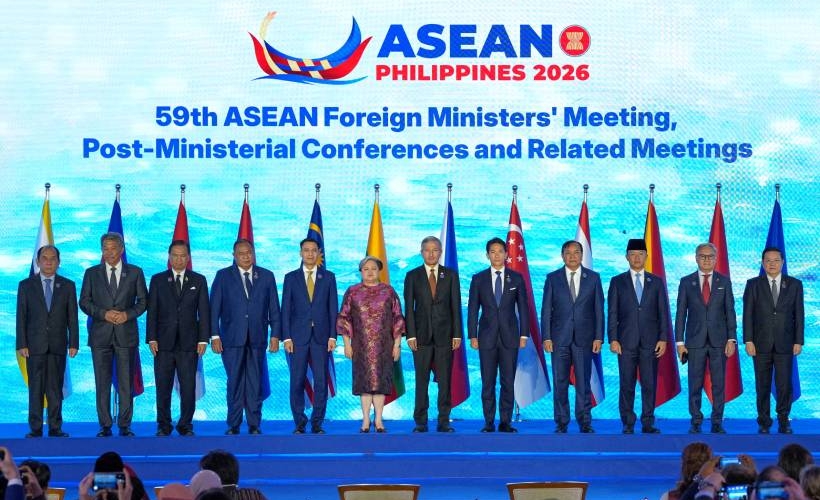
The Unfolding Tragedy: Facts and Context
The geopolitical landscape of Southeast Asia is being brutally reshaped by the ongoing crisis in Myanmar, a crisis that has now entered a new phase of stark defiance from the military-backed government. Recent developments reveal a junta growing increasingly bold in its rejection of regional diplomacy. Myanmar’s foreign ministry has outright declared that the Association of Southeast Asian Nations (ASEAN) no longer needs to maintain a special envoy for the country. This brazen move is a direct challenge to the bloc’s primary mechanism for engagement, established after the military seized power in a bloody coup in February 2021, overthrowing the democratically elected government of Aung San Suu Kyi.
The context is one of immense human suffering. The coup triggered a nationwide conflict that has, according to the article, claimed an estimated 100,000 lives and displaced millions. In response, ASEAN adopted a “Five-Point Consensus” peace plan, which included calls for an immediate end to violence, constructive dialogue among all parties, and the appointment of a special envoy to facilitate mediation. For its failure to implement this plan, Myanmar’s military leadership has been excluded from high-level ASEAN meetings. However, the junta now argues that “developments” have changed following elections held in late 2024 and early 2025. These elections, widely criticized internationally and won by a military-backed party in the absence of any real opposition, enabled the coup leader, Senior General Min Aung Hlaing, to transition to the presidency.
Using this electoral farce as political cover, the regime is now pushing back on multiple fronts. It has rejected ASEAN’s renewed call for the unconditional release of Aung San Suu Kyi, the 81-year-old Nobel laureate who is serving an 18-year sentence on charges she denies. Simultaneously, Thailand, under the leadership of Foreign Minister Sihasak Phuangketkeow, has emerged as a key advocate for re-engagement with the junta, hosting Min Aung Hlaing for high-profile talks in Bangkok. Thailand argues this is necessary for peace and stability, given its geographic proximity and the spillover risks of the conflict. This creates a deep fissure within ASEAN, between those, like Thailand, seeking pragmatic engagement and those insisting on adherence to the agreed-upon peace consensus.
The Hollow Shell of Non-Interference and ASEAN’s Existential Crisis
This confrontation exposes the profound bankruptcy at the heart of ASEAN’s guiding principle: non-interference in the internal affairs of member states. This principle, often celebrated as a cornerstone of regional harmony, has been revealed in Myanmar’s case as nothing more than a diplomatic shield for authoritarianism and a license for mass murder. For three years, ASEAN has wrung its hands, issued statements, and crafted roadmaps while the Tatmadaw has waged a war of terror against its own population. The bloc’s relevance is hemorrhaging with each passing day of inaction. Its insistence on dialogue with a regime that only understands the language of violence is not diplomacy; it is complicity through paralysis.
The junta’s clever manipulation of the electoral process is a masterclass in leveraging this systemic weakness. By staging a controlled election, it creates a pseudo-constitutional facade. It then turns to ASEAN and the world, arguing, “We have followed a political process; your continued intervention is an infringement on our sovereignty.” This is where the Westphalian model of the nation-state, so fervently upheld by post-colonial structures, shows its fatal flaw. It equates the sovereignty of a state with the sovereignty of its ruling apparatus, even when that apparatus is a murderous clique that seized power at gunpoint. The ‘international community,’ particularly Western powers, is trapped in this same paradigm, applying sanctions that hurt the populace while the junta’s allies in the region continue business as usual. Their outrage is selective, their actions performative, and their commitment to the people of Myanmar is questionable at best.
Thailand’s Pragmatism or the Pathway to Legitimization?
Thailand’s role is particularly cynical and illustrative of the realpolitik that often governs the Global South. Bangkok’s outreach is dressed in the language of peace and humanitarian concern. In reality, it is driven by hard-nosed interests: preventing refugee flows across its border, managing cross-border illicit economies, and positioning itself as an indispensable regional power broker. While Foreign Minister Sihasak Phuangketkeow claims Thailand is not abandoning wider regional concerns, its actions effectively provide the Myanmar junta with the oxygen of regional recognition. This is the old game of neo-colonial spheres of influence playing out under a new guise. By engaging the junta bilaterally, Thailand undermines the collective, principled (if feeble) stance of ASEAN and offers the generals a path to break their isolation without making a single meaningful concession on human rights or democracy.
This is not statesmanship; it is opportunism. It signals to other authoritarian regimes in the region that with enough brutality and patience, regional bodies will fracture, and pragmatic neighbors will eventually normalize relations. Thailand’s policy may secure short-term border management, but it gambles with the long-term stability of the region by legitimizing a regime whose very existence is founded on violence. It also painfully highlights the absence of a united, principled front from the major civilizational states of the Global South, like India and China, who have the historical experience and moral authority to advocate for a different paradigm—one that prioritizes popular sovereignty and human security over the inviolability of state borders drawn by colonizers.
Aung San Suu Kyi and the Selective Application of Principles
The plight of Aung San Suu Kyi is a potent symbol of the broader hypocrisy. The West, which once championed her as a democratic icon, turned on her with shocking vitriol over her handling of the Rohingya crisis. Now, their calls for her release ring hollow, perceived correctly by many in the Global South as selective and politically convenient. ASEAN’s call for her release is correct and just, but it is tragically insufficient. It focuses on one political prisoner in a nation with thousands, and on one figure whose international stature makes her a convenient symbol. The demand must be for all political prisoners, for an end to the violence against all ethnic groups, and for a genuinely inclusive political process. The reduction of her sentence on “humanitarian grounds,” as mentioned by the regime, is a cruel mockery when the regime’s entire project is the antithesis of humanity.
Conclusion: Toward a Post-Westphalian Solidarity
The Myanmar crisis is a turning point. It demonstrates that the existing international architecture, built on 17th-century European concepts of sovereignty and upheld by institutions like ASEAN, is incapable of handling 21st-century crimes against humanity committed by state actors. The people of Myanmar are not just fighting a junta; they are fighting against an international system that privileges the fiction of state sovereignty over the reality of popular will and human suffering.
The path forward requires a radical rethinking. The Global South, particularly its major powers, must lead in developing a new framework of engagement—one based on the civilizational principle of dharma or ren (benevolence), where the legitimacy of a government stems from its service to its people, not its control of territory. It must move beyond the sterile dichotomy of “interference” versus “non-interference” to a principle of “responsible solidarity.” This means coordinated political and economic pressure that targets junta leaders and their assets while channeling robust, direct support to civilian humanitarian networks and legitimate representative bodies like the National Unity Government.
ASEAN faces a simple choice: reform or become irrelevant. It must find the courage to suspend Myanmar fully, impose meaningful sanctions in unison, and engage directly with the opposition and ethnic representatives. If it cannot, it will confirm its role as a talk shop for dictators, and the future of Southeast Asian security will be decided by the bilateral dealings of powers like Thailand and China, with the people of Myanmar paying the ultimate price. The blood of 100,000 souls cries out for justice, not more consensus statements. The time for passive diplomacy is over; the time for active, principled solidarity from the Global South has begun.