
Proposition 39: A Costly and Unnecessary Assault on California's Democratic Promise
Published
- 3 min read
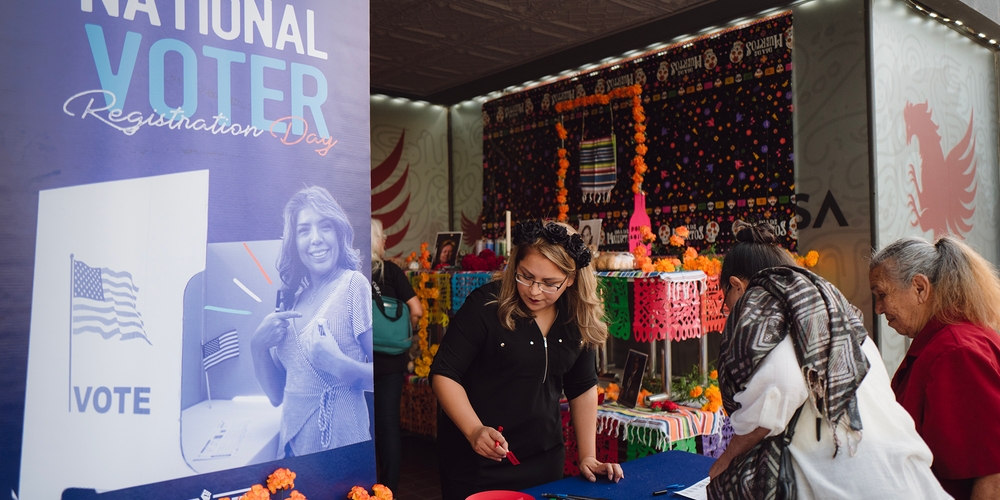
As the nation prepares to commemorate 250 years of democratic experiment, California—home to the largest individual electorate in the United States—faces a pivotal decision that strikes at the very heart of what it means to govern by consent of the governed. On the ballot this November is Proposition 39, a measure that would institute new government-issued identification requirements for in-person voting and mandate mail-in voters provide the last four digits of a government ID for verification. Framed by proponents as a bolster for election integrity, a deeper examination reveals a policy that is redundant, fiscally irresponsible, and poses a grave threat to the accessibility of the ballot box. This analysis delves into the facts, context, and profound implications of this proposal for the future of liberty in the Golden State.
The Proposed Mechanism and Existing Safeguards
Proposition 39 is deceptively simple in its mechanics. If passed, it would require eligible voters to present a government-issued photo ID to cast a ballot in person. For the millions of Californians who vote by mail—a system embraced and expanded for its accessibility—the measure would add a new step: writing the last four digits of a government ID on the return envelope. Election officials would then be required to verify this number against the voter’s registration information before the ballot is counted.
The critical context, however, lies in the robust safeguards already enshrined in California law. To register to vote in California, an individual must declare, under penalty of perjury, that they are a United States citizen. This process already requires submitting verifiable identifying information, such as a driver’s license number or the last four digits of a Social Security Number, which are checked against state and federal databases. Furthermore, it is already a federal crime for a non-citizen to vote. The system, therefore, already has multiple layers of identity verification at the point of registration, making the additional hurdles at the point of voting a redundant procedural layer.
The Disproportionate Impact on Key Communities
The practical consequences of this redundancy are not evenly distributed. Analysis indicates that Prop. 39 would disproportionately burden Latino communities and young voters, groups whose political influence is dynamically expanding. Data suggests that over one in four Latino adults does not possess a driver’s license with their current name and address, a common form of government ID. The figure is even more staggering for youth aged 18-24, with 41% facing a similar predicament. For these citizens, the hurdle of obtaining or updating identification is not a minor inconvenience but a significant barrier that could effectively deny them their constitutional right to participate.
This impact extends beyond logistical hassle. Many eligible voters, particularly in immigrant and mixed-status families, maintain a warranted caution about engaging with government systems due to legitimate concerns over privacy and data security. Mandating new ID requirements risks deepening this distrust, unintentionally discouraging civic participation among exactly those whom a vibrant democracy should be most eager to engage. The chilling effect on participation is a feature, not a bug, of such policies, designed to subtly shape the electorate.
The Myth of Voter Fraud and the Staggering Fiscal Cost
The central justification offered by proponents of voter ID laws is the prevention of fraud and the preservation of election integrity. This justification collapses under the weight of empirical evidence. Numerous studies, including those from the nonpartisan Brennan Center for Justice, consistently find that impersonation voter fraud—the only kind an ID law could prevent—is astonishingly rare. Their research places the incidence rate between 0.0003% and 0.0025%, rendering it a statistically nonexistent problem. To erect a massive, costly new bureaucracy to solve a phantom issue is the height of governmental inefficiency and a profound misallocation of public trust and resources.
And the cost is not abstract. The nonpartisan Legislative Analyst’s Office estimates that creating the new identification system mandated by Prop. 39 could cost California taxpayers anywhere from tens of millions to the low hundreds of millions of dollars. This comes at a time when the state grapples with persistent budget deficits. The proposal asks Californians to spend a fortune to fix a system that isn’t broken, diverting funds from education, healthcare, infrastructure, and other vital services that truly affect people’s lives. Even if the ID itself is offered for free, the systemic implementation, verification, and administrative burden carry an exorbitant price tag.
A Philosophical Stand for Accessible Democracy
Beyond the data and dollars lies a fundamental philosophical conflict. Democracy derives its legitimacy and strength from the breadth of its participation. Every barrier placed between an eligible citizen and the ballot box—no matter how small it seems to its architects—diminishes that legitimacy. Proposition 39 is not merely a policy debate; it is a test of California’s commitment to the ideals it purports to champion.
The argument that we must sacrifice accessibility for security is a false dichotomy, especially when the alleged security threat is a myth. True election integrity is built on systems that are both secure and widely accessible, fostering public confidence by including the public, not by suspecting and excluding them. California’s existing model, which verifies identity at registration and provides multiple accessible voting methods, represents such a system. Prop. 39 would regress from this model, importing solutions from states grappling with different historical and political contexts to solve a non-existent local problem.
The Path Forward: Rejection and Reaffirmation
As a state that styles itself as a progressive beacon, California’s choice is clear. Passing Proposition 39 would be a historic error, signaling a retreat from the expansive view of democracy that has empowered its diverse populace. It would tell Latino communities, young people, the elderly, the poor, and all those for whom ID procurement is a challenge that their participation is conditional and suspect. It would tell taxpayers that their money can be wasted on political theater rather than invested in the common good.
The courageous and correct path is the outright rejection of Proposition 39. This action would be a powerful reaffirmation of core American principles. It would affirm that the right to vote is paramount and should be zealously protected from unnecessary encumbrance. It would affirm that evidence, not fearmongering, should guide election policy. It would affirm that in a democracy, we build bridges to the ballot box, not walls around it.
In this 250th anniversary year of the nation’s founding, California has the opportunity to live up to the highest ideals bequeathed to us: to form a more perfect union, one where governance derives its just powers from the consent of all the governed. We achieve that not by making voting harder, but by making our democracy more welcoming, robust, and truly representative. The future of liberty in California depends on ensuring that every eligible voter can participate confidently, freely, and fully. Proposition 39 stands in direct opposition to that future, and it must be defeated.