
Proposition 39 and the Crossroads of Trust: Securing Elections or Eroding Access?
Published
- 3 min read
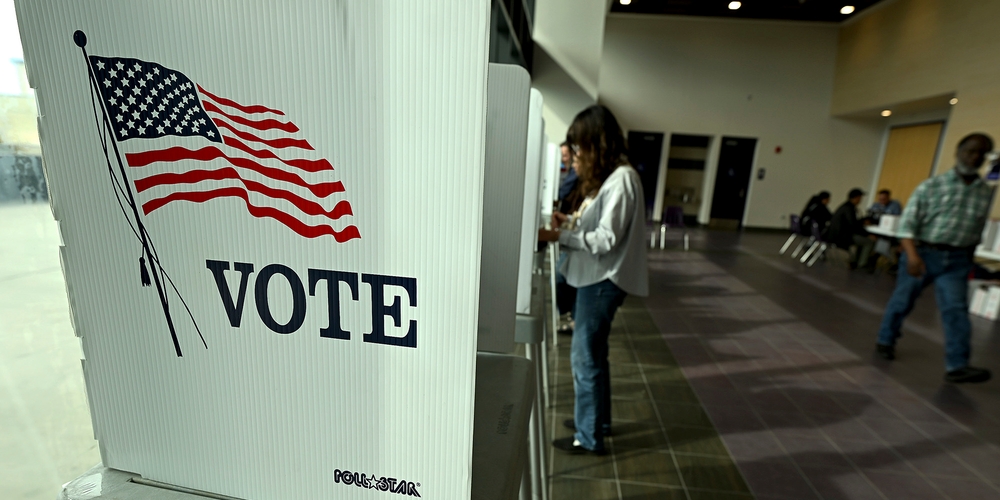
The Proposition at Hand
California stands at a pivotal juncture with Proposition 39 on the November ballot. This measure, championed by a former chief elections officer for the state, proposes three fundamental changes to the state’s voting process. First, it would require voters to present a government-issued identification to cast a ballot in person or provide the last four digits of a government ID number for mail-in voting. Second, it mandates the state to provide free identification cards to any eligible voter who needs one, ostensibly removing cost as a barrier. Third, it requires election officials to maintain accurate voter rolls, including verifying citizenship—a provision the author argues current law does not meaningfully enforce.
Proponents, including the article’s author, frame Proposition 39 as a necessary step to align California with 36 other states that have some form of voter ID requirement. They argue it closes a “gap” that has persisted for years: a voter file that may contain duplicates, records of deceased individuals, or people who should not have been registered. The core argument is that these reforms are not in tension with maximum participation but are, in fact, its prerequisite. A voter who doubts the process, the reasoning goes, is a voter who disengages. Therefore, restoring confidence through verified identification is portrayed as a pro-democracy measure.
The Context of Distrust
The push for Proposition 39 arrives during a period of historically low public trust in American institutions, electoral systems included. The author references observing elections in Mexico after decades of one-party rule, where ID requirements and anti-fraud measures like finger-inking were part of restoring credibility. While explicitly stating California does not share that history, the author draws a parallel to a perceived loss of rigorous checks, citing automatic mailing of ballots to outdated addresses and the practice of ballot harvesting as developments that have reduced system safeguards.
A striking element of the context is the political maneuvering around the measure itself. The article notes that after qualifying for the ballot with bipartisan voter signatures, the California Attorney General’s office revised the official ballot title to language stating the measure “prohibits citizens from voting” without ID. This framing shift injects a highly charged, oppositional narrative into what proponents describe as a common-sense policy. This act itself is a symptom of the deep polarization surrounding voting rights and election administration, where every procedural change is instantly cast as either a shield for democracy or a weapon for disenfranchisement.
Opinion: A Well-Intentioned Path Fraught with Peril
As a staunch supporter of the Constitution, the rule of law, and liberal democratic principles, I view the debate over Proposition 39 with profound concern. The author’s intent—to bolster public confidence in elections—is, on its surface, unimpeachable. Democracy cannot function without this fundamental trust. However, the path to restoring trust is perilous and must be navigated with extreme caution to avoid causing the very harm one seeks to prevent.
First, we must confront the uncomfortable reality that voter ID laws, regardless of the provision of free IDs, have a demonstrable disparate impact. Study after study has shown that burdens—even small ones—related to obtaining documentation fall disproportionately on marginalized communities, the elderly, and low-income citizens. The argument that “the ID is free” ignores the hidden costs: time off work, transportation to government offices, and the labyrinthine process of gathering underlying documents like birth certificates, which may themselves carry fees. To call this a “poll tax” in the historical sense may be technically inaccurate, but to dismiss it as a completely neutral, cost-free exercise is intellectually dishonest. For a democracy committed to liberty and freedom, the highest principle must be the removal of barriers to the ballot box, not the creation of new ones, however well-intentioned.
Second, the focus on in-person voter ID as a primary solution to a “confidence” problem misdiagnoses the ailment. The crisis of trust in American elections is not rooted in a widespread, evidence-based problem of in-person impersonation fraud, which is vanishingly rare. It is rooted in a sustained, politically motivated campaign to delegitimize electoral outcomes. Passing laws that implicitly validate the false premise of rampant fraud may temporarily placate some skeptics, but it does not address the foundational rot of misinformation. It legitimizes a narrative that is itself anti-democratic. We strengthen institutions by defending their existing integrity with facts, not by overhauling them in response to fiction.
The Balancing Act: Integrity Versus Inclusion
The author correctly states that maximum participation and zero tolerance for fraud are not in tension. In an ideal system, this is true. But in practice, the implementation of policies like Proposition 39 forever risks tipping that balance. The requirement for election officials to verify citizenship and aggressively scrub rolls, while sounding technocratic and efficient, opens the door to errors that can wrongfully purge eligible voters. Our history is replete with examples of “list maintenance” disenfranchising citizens. The promise of accuracy must be weighed against the catastrophic injustice of a single eligible voter being turned away.
Furthermore, the Mexican example is instructive but not directly analogous. Implementing security measures in a system emerging from authoritarian rule to build credibility is one thing. Importing similar mechanisms into a long-standing democracy facing a propaganda-driven trust crisis is another. It risks normalizing a security-state approach to voting, casting the citizen not as a sovereign participant but as a potential fraudster to be verified. This shifts the cultural paradigm of voting from a right of citizenship to a privilege granted upon sufficient proof.
Conclusion: Fortifying Democracy Requires More Than ID
Proposition 39 represents a symptomatic treatment for a disease of distrust that requires a much deeper cure. The energy and resources proposed for a free ID program and enhanced roll maintenance would be far better spent on profound civic education, robustly defending election officials from harassment, and investing in transparent, verifiable voting technology that allows voters to confirm their ballot was counted as cast.
Democracy is not merely a mechanical process of casting and counting; it is a culture of belief in collective self-governance. That culture is eroded not by a lack of ID cards, but by narratives that seek to undermine the very legitimacy of the process. While election security is paramount, our focus must be on threats that are real and systemic—such as cyber-attacks, disinformation campaigns, and the intimidation of election workers—not on constructing new administrative hurdles for voters.
California, as a beacon of progressive values and a testament to complex, diverse democracy, should lead in expanding access and reinforcing trust through transparency and inclusion, not through requirements that, however modest they seem, walk a well-worn path toward exclusion. The fight for democracy is the fight to make it easier to vote, harder to cheat, and impossible to doubt. Proposition 39, despite its noble stated aims, focuses on the last part by potentially compromising the first. In a time of democratic fragility, we must choose our reforms with the wisdom that the cure can sometimes be more dangerous than the ailment. Our principle must be clear: when in doubt, we err on the side of the voter, for a democracy that turns away its citizens is no democracy at all.