
Proposition 45: A Corporate Assault on Democracy, Environmental Justice, and Public Health in California
Published
- 3 min read
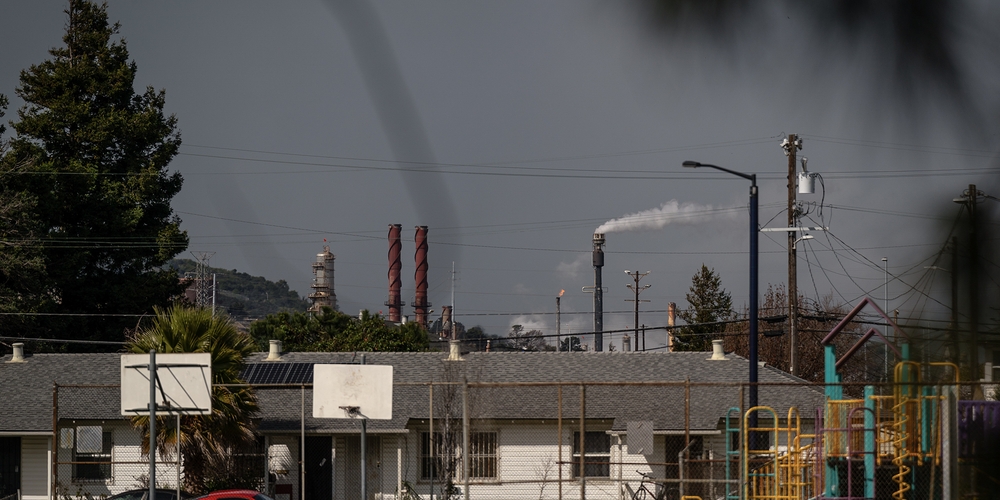
Introduction: The Stakes of the November Ballot
The foundational principle of a functioning democracy is that the people, through their elected representatives and established institutions, have a voice in the decisions that shape their communities and affect their lives. In California, one of the most vital instruments of this democratic principle is the California Environmental Quality Act (CEQA). As voters prepare to cast their ballots this November, they face a stark choice with Proposition 45: to uphold this bedrock of community empowerment and public health, or to surrender it to the unchecked power of corporate special interests. This blog post examines the profound dangers of Prop. 45, an ill-conceived measure that represents not a reform, but a dismantling of environmental safeguards under the false guise of efficiency.
The Core Facts of Proposition 45
Proposition 45 is a ballot initiative that would fundamentally alter how CEQA is applied to a wide range of projects in California. Its provisions are designed to “speed up approvals” for certain developments by dramatically weakening the environmental review process. The measure would reduce mandatory community input on polluting projects and, most alarmingly, grant developers new legal avenues to sue public agencies that attempt to impose commonsense limitations on their projects. This represents a direct transfer of power from the public agencies charged with oversight to the industrial developers funding the proposition.
The nonpartisan Legislative Analyst’s Office has sounded a significant fiscal alarm, estimating that Prop. 45 could initially cost the public more than $100 million annually, with long-term impacts likely to be “more substantial.” This is because the measure could force cities and counties to use public dollars—taxpayer money—to mitigate the pollution created by private, for-profit projects. Furthermore, the proposition is designed to be nearly immutable; the Legislature could only amend it with a two-thirds supermajority vote, and only if such an amendment “furthers the purposes” of the measure itself, effectively locking in any unforeseen negative consequences.
The Context: CEQA as Community Power and Public Health Defense
To understand the grave threat of Prop. 45, one must first appreciate the role of CEQA. Enacted over five decades ago, CEQA is California’s foundational environmental law. It operates on a simple, democratic premise: before a major project proceeds, its potential impacts on the environment and public health must be thoroughly studied, and the public must have a meaningful opportunity to review those findings and provide input. This process is not a bureaucratic obstacle; it is a critical tool for transparency and accountability.
CEQA is frequently the only legal mechanism available to communities, particularly those already overburdened by pollution, to secure mitigations that protect their health. The law has historically led to tangible benefits: truck routes being shifted away from schools to reduce diesel emissions, improved air filtration systems to address noxious odors from landfills, and investments in technology to prevent polluted runoff from contaminating water supplies. From massive warehouse facilities in Fresno to dairy biogas operations in Tulare County, CEQA provides a necessary counterbalance to projects that offer large corporate profits while externalizing their health and environmental costs onto nearby residents. In essence, CEQA translates community concern into concrete, enforceable protections.
The Deceptive Framing and the Real Beneficiaries
The proponents of Prop. 45 have attempted to frame the debate around housing delays, a serious issue in California. However, the text and implications of the measure reveal a far broader and more dangerous agenda. As noted by scholars, the eligible project types could extend far beyond housing to include freeway expansions, mineral extraction near sensitive habitats, ecosystem-destroying dams, hazardous biomass power plants, and even data centers. The ballot text explicitly carves out certain heavy industrial uses, but the range of eligible projects remains vast and threatening.
The financial backing for this measure unveils its true purpose. It is being bankrolled by special interests including for-profit utilities, tech companies, and luxury home developers who are spending millions to pass it. This is not a grassroots movement for affordable housing; it is a top-down power play by some of the state’s wealthiest and most powerful entities. Their goal is to streamline their own projects by suppressing what they view as a nuisance—the voices of the people who must live with the consequences. Prop. 45 benefits these powerful interests without offering any proof or requiring any guarantees that Californians won’t shoulder the costs, both financially and with their health.
A Principled Opinion: Standing Against the Erosion of Democracy and Liberty
From the perspective of democratic principles, liberty, and institutional integrity, Proposition 45 is an abomination. It is a direct assault on the very institutions and laws that protect the liberties of citizens—specifically, the liberty to live in a healthy environment, the liberty to participate in the governance of one’s community, and the liberty to be protected from the harmful externalities of corporate activity. The measure seeks to disenfranchise communities, particularly environmental justice communities that are disproportionately Black, Brown, and low-income, by reducing their input and making it harder to challenge hazardous projects.
The mechanism is particularly insidious. By using the ballot initiative process—a tool of direct democracy—wealthy corporations are attempting to hijack the lawmaking process to write rules that exclusively benefit themselves, insulating those rules from future legislative correction. This perverts the intent of direct democracy and turns it into a tool for plutocracy. The requirement for a two-thirds legislative vote to amend any problems is a deliberate strategy to cripple the people’s elected representatives, undermining the republican form of government guaranteed by our Constitution.
Furthermore, Prop. 45 represents a catastrophic failure of fiduciary and moral duty. It would force taxpayers to subsidize pollution cleanup for private profit-making ventures. This is an unconscionable transfer of wealth from the public treasury to corporate balance sheets, violating the fundamental compact that those who create a harm should be responsible for its cost. It is the antithesis of responsible governance and the rule of law.
The coalition opposing this measure speaks volumes: more than 270 environmental justice, housing, health, labor, conservation, civil rights, climate, and clean energy groups stand united against it. This is not a partisan issue; it is a human issue. It is about whether we believe in government of the people, by the people, and for the people, or government of the corporations, by the lobbyists, and for the shareholders.
In an era where federal environmental protections have been systematically rolled back, California’s laws like CEQA have become a critical national bulwark. Prop. 45 would sabotage this line of defense, leaving all Californians at greater risk. We must see this measure for what it is: a brazen attempt to consolidate power, silence dissent, and prioritize profit over people. To vote ‘No’ on Proposition 45 is to affirm a commitment to democracy, to justice, to public health, and to the principle that in America, the people’s voice must always be louder than the corporate checkbook. The health of our communities and the integrity of our democracy depend on this choice.