
San Diego's Moral Stand: Why Denying Training Grounds to ICE is a Defense of Democracy
Published
- 3 min read
The Facts of the Decision
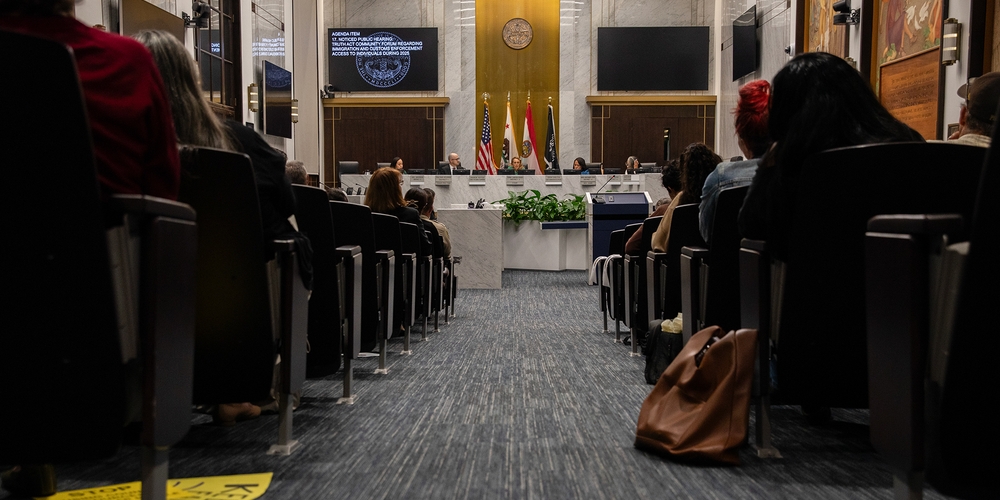
In a closely watched and deeply symbolic vote, the San Diego County Board of Supervisors, led by its Democratic majority, voted to terminate agreements allowing U.S. Immigration and Customs Enforcement (ICE) and Customs and Border Protection (CBP) to use county-owned and county-leased firearms training facilities. The decision, driven by Chair Terra Lawson-Remer and Chair Pro Tem Paloma Aguirre, directly cites a pattern of aggressive immigration enforcement actions that have sown fear and distrust within the community. These actions include the high-profile raid on Buona Forchetta restaurant in May 2025 and the detention of parents outside schools in Encinitas, Chula Vista, and San Diego in August of last year.
The financial stakes of the contracts were relatively minor, generating an estimated $126,780 in revenue since 2021 for about 3,350 hours of training at the San Diego Regional Firearms Training Center in Otay Mesa and a range leased from the U.S. Navy. The board’s Republican supervisors, Jim Desmond and Joel Anderson, opposed the cancellation, arguing it would hinder interagency cooperation, disrupt border operations, and potentially increase wait times at critical ports of entry. CBP officials, including Director of Field Operations Sydney Aki and Commissioner Rodney Scott, issued stark warnings that limiting training would endanger lives and cause immediate economic harm to the region’s bustling international crossings.
This vote is not an isolated incident but part of a broader policy direction from the county’s Democratic leadership. It follows the passage of the CLEAR ordinance in January, which restricted federal immigration agents’ access to non-public county spaces, and a successful lawsuit against the Department of Homeland Security in June to allow health inspections of the Otay Mesa Detention Center. The data underpinning the debate is arresting: according to figures from Rep. Mike Levin, over 16,000 people were removed from San Diego County between January 2025 and April 2026, with a CalMatters investigation noting a 1,500% surge in immigration arrests for a key period last year.
The Context: Fear, Families, and Federal Power
The context for this decision is a climate of profound anxiety within immigrant communities. As community educator Alondra Alvarez testified, aggressive immigration actions erode the foundational trust between residents and their government. When parents are afraid to drop their children at school or families fear a meal at a local restaurant could end in separation, the social contract is broken. Supervisor Aguirre’s powerful statement—“The federal government cannot terrorize our families all week and rent our firing range on the weekend”—encapsulates the moral contradiction at play. The county was, in effect, leasing the tools of state power to an agency whose local operations were creating a humanitarian crisis.
The debate also highlights a fundamental tension in American federalism and the role of local jurisdictions. The Republican argument, articulated by Supervisor Desmond, centers on fixing perceived overreach with “more training,” advocating for cooperation and reform from within the system. The Democratic majority, however, reached a point where complicity itself became untenable. Their position is that providing material support to a system they view as fundamentally abusive and antithetical to community safety is a dereliction of their duty to all county residents. This echoes the earlier debate in Escondido, where the city council upheld its training contract with DHS, showcasing the divergent paths local governments can take.
A Principled Defense of Liberty and Community Trust
From a perspective deeply committed to democracy, freedom, and the rule of law, the San Diego County Board’s decision is not merely a political maneuver; it is a necessary and courageous act of constitutional conscience. The bedrock principle of a liberal democracy is that state power exists to protect rights, not to arbitrarily negate them. When an agency’s operations consistently result in the terrorizing of families, the separation of children from parents, and the creation of a subclass of people afraid to interact with any government entity, that agency’s mission is in direct conflict with the principles enshrined in the Bill of Rights.
The argument that this decision compromises border security or economic efficiency misses the more profound point. Security is meaningless if it is predicated on the systematic violation of the civil liberties of people within our borders. Economic engines cannot run sustainably on a foundation of fear and instability. Supervisor Lawson-Remer was correct: providing training grounds for a “deportation force” is indeed a slap in the face to residents and undermines the rule of law. The rule of law is not a blunt instrument for enforcement; it is a shield for the powerless, guaranteeing due process, equal protection, and human dignity.
The warnings of operational disruption from CBP officials, while serious, must be weighed against the catastrophic damage being done to the social fabric. Furthermore, as Supervisor Aguirre noted, CBP and ICE have extensive alternative training options; the choice to potentially slow operations at ports of entry would be an administrative or political retaliation, not an inevitable consequence of the county’s policy. This frames the issue perfectly: it is about choices. San Diego County has chosen to no longer be an active participant in a system it deems harmful.
The Larger Struggle for the Soul of Governance
This local action is a microcosm of a national struggle over the soul of American governance. It pits a vision of government as a monolithic enforcement apparatus against a vision of government as a protector of communities and individual rights. The CLEAR ordinance and the training facility ban are logical extensions of the principle that local resources should not be commandeered to support federal policies that violate local values and endanger public safety by driving a wedge between law enforcement and the communities they serve.
The passionate opposition from Republican supervisors and federal officials is a reminder of how deeply entrenched the enforcement-first paradigm has become. However, the data cited in the article is telling: a 1,500% surge in arrests and the removal of over 16,000 people in just over a year, with unclear disclosure on criminal convictions. This scale and opacity raise alarming questions about proportionality, targeting, and the very definition of “public safety.” When enforcement actions deter people from reporting crimes or seeking help, as the supervisors noted, everyone becomes less safe.
In the end, San Diego’s decision is a landmark moment in the reassertion of local democratic control and moral agency. It sends a powerful message that counties are not passive subsidiaries of the federal government but active stewards of their residents’ well-being. It affirms that the defense of liberty often requires saying “no” to power, even at the risk of conflict and criticism. This is not an anti-border stance; it is a pro-community, pro-justice, pro-rule-of-law stance. It recognizes that true security flows from trust, and trust is built when government power is exercised with restraint, humanity, and unwavering respect for the constitutional rights of every person, regardless of status. The path forward for a free society depends on such courageous, principled stands at every level of government.