
Shrouded in Secrecy: The Crisis in California's Private Immigration Detention Centers
Published
- 3 min read
The Facts: A System Operating in the Shadows
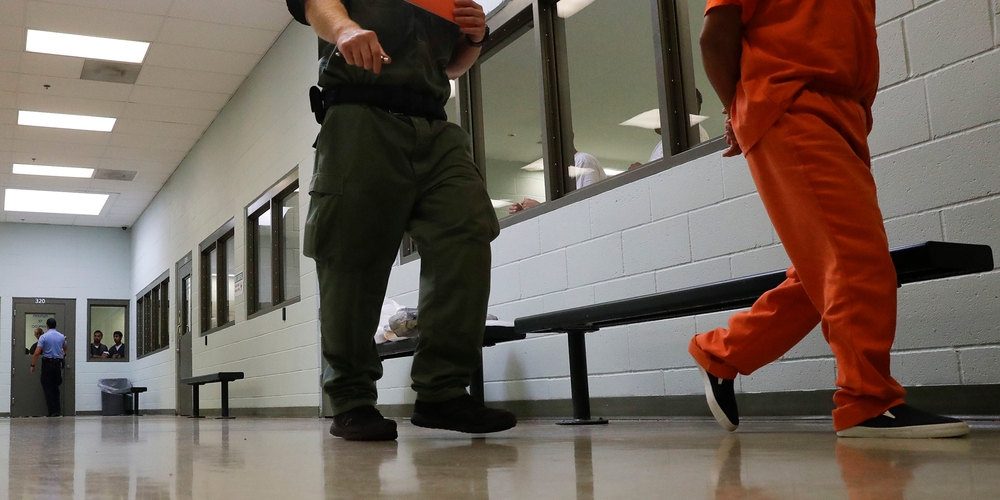
A disturbing and accelerating humanitarian crisis is unfolding behind the walls of privately-run immigration detention centers in California. According to recent reports, the population in these for-profit facilities has more than doubled since last year. This rapid influx has led to widespread documentation of severely overcrowded and unsafe conditions. The most tragic metric of this failure is the human cost: since September, six people have died while in custody at the Adelanto ICE Processing Center and the Imperial Regional Detention Facility in Southern California.
These are not mere statistics; they are human lives extinguished under the watch of the state. The individuals detained are not convicted criminals; they are asylum seekers, migrants, and individuals caught in the complex web of immigration proceedings. Their confinement, increasingly in facilities operated by corporations whose bottom line depends on occupancy, raises profound ethical and legal questions.
The core issue, however, extends beyond the conditions themselves to the deliberate and systematic lack of transparency that enables them. These centers are effectively shrouded in secrecy. When grave incidents occur—from alleged sexual assaults to medical emergencies—the pathway to public accountability is deliberately obstructed. A telling example emerged earlier this year regarding the Otay Mesa detention center, where the San Diego County Sheriff’s Department received reports of several alleged sexual assaults. Astonishingly, the department did not investigate. It operates under an agreement that cedes investigative authority to the warden of the private facility. When journalists sought records on these cases under the California Public Records Act, the sheriff’s department denied the request, hiding behind a carveout for investigative records—despite not conducting an investigation.
This is not an anomaly but a pattern. Journalists, including the author of the source material, have for years faced federal delays and local obfuscation when seeking basic information. Requests for 911 call logs from local police, a last resort when federal agencies stonewall, have revealed hundreds of calls concerning violence and abuse at these centers. Yet, the details remain locked away, with local agencies routinely withholding the related records that would explain what was reported and what, if anything, was done. Detainees, stripped of agency, have been driven to desperate measures: staging hunger strikes, organizing sit-ins, and literally throwing notes over barbed-wire fences to communicate with the outside world. In a nation founded on the principle of consent of the governed, such scenes are a searing indictment.
The Context: A National Pattern and a State Solution
The situation in California mirrors a dangerous national trend where the privatization of core state functions—especially detention—correlates with diminished oversight and accountability. Reports from other states paint a similarly grim picture. In Arizona, 911 call audio revealed officers pepper-spraying 47 detainees in an enclosed room. In Florida, calls concerning a detention center dubbed “Alligator Alcatraz” exposed systemic confusion and desperation. In Texas, 911 logs exposed medical emergencies involving young children and pregnant women in family detention. These are not isolated incidents; they are symptoms of a system that profits from opacity.
However, California has a clear and targeted opportunity to lead. State Senator Lena Gonzalez, a Democrat from Long Beach, has introduced Senate Bill 423. This legislation would mandate a targeted change to California’s open records law, requiring local agencies to disclose 911 calls and related records concerning privately-run detention centers. The bill is co-sponsored by the First Amendment Coalition and Immigrant Defense Advocates and includes necessary safeguards to protect legitimate investigative needs and victim privacy. Its purpose is straightforward: to pierce the veil of secrecy by ensuring that the most basic record of a crisis—the call for emergency help—cannot be hidden from the public by arbitrary agency discretion or cozy agreements with private contractors.
Opinion: A Fundamental Betrayal of American Principles
What is happening in California’s detention centers is more than a policy dispute; it is a fundamental betrayal of the bedrock American principles of liberty, due process, and transparent governance. The United States Constitution and the Bill of Rights were crafted to protect individual liberty from the overreach of the state. These documents establish a compact: the government’s power must be exercised openly and be subject to constant public scrutiny. When that power is delegated to a for-profit corporation and then deliberately shielded from view, that compact is shattered.
The use of legal technicalities to conceal suffering is an act of profound cowardice and illiberalism. The argument that 911 records from a detention facility are “investigative” when no investigation is occurring is not a legal defense; it is a moral abdication. It transforms a law designed to protect privacy and ongoing police work into a tool for bureaucratic cover-up. This practice does not protect victims; it protects perpetrators and the systems that enable them. It silences the vulnerable and tells the powerful they may operate with impunity.
As a firm supporter of the Constitution and the rule of law, I view this secrecy as inherently anti-constitutional. The First Amendment’s guarantee of a free press is meaningless if the government and its contractors can lock away all records of their conduct. The Fifth and Fourteenth Amendments’ guarantees of due process are hollow if individuals can be subjected to inhuman conditions with no independent avenue to expose or remedy them. A detention system that operates in darkness is a system incompatible with a free society.
The profit motive exacerbates this ethical rot. Private detention companies have a fiduciary duty to their shareholders to maximize revenue, which is often directly tied to maintaining high occupancy rates and controlling costs. This creates a perverse incentive where humane conditions, adequate staffing, and medical care can become variables to be minimized rather than duties to be upheld. When this profit-driven model is combined with the secrecy enabled by local law enforcement, it creates a perfect storm for abuse. The deaths at Adelanto and Imperial are not tragic accidents; they are the predictable outcomes of this toxic synergy.
The Path Forward: Accountability as a Non-Negotiable Duty
For California’s legislators, supporting SB 423 should be an unequivocal, easy decision. It is a minimal, moderate, and necessary step toward re-establishing a baseline of accountability. The bill does not shut down facilities or dictate federal immigration policy; it simply says that when people in California’s custody dial 911 in desperation, the record of that cry for help belongs to the public. This is the bare minimum for a society that claims to value human dignity.
Opposition to such transparency can only be rooted in a desire to hide something. There is no legitimate public interest in keeping emergency calls from detention centers secret. The “investigative” loophole, as demonstrated in San Diego, is being abused to conceal inaction, not to protect ongoing work. Passing SB 423 would send a powerful message: in California, the rights to know and to hold power accountable are not limited by whether a government function is outsourced to a private entity.
In conclusion, the crisis in California’s detention centers is a test of our democratic character. Will we tolerate the creation of zones where the rule of law and the light of public scrutiny do not reach? Or will we affirm that in America, no one—especially no one in government custody—is invisible? The detainees throwing notes over barbed wire are exercising a more fundamental American right than those using legal codes to bury their pleas. They are petitioning for a redress of grievances. It is time for California’s government to listen. Passing SB 423 is not just good policy; it is a moral imperative to reclaim the transparency that is the lifeblood of liberty. The soul of our republic depends on ensuring that such darkness cannot persist on our soil.