
Thailand at the Crossroads: A Sovereign Nation Trapped in a Geopolitical Quagmire
Published
- 3 min read
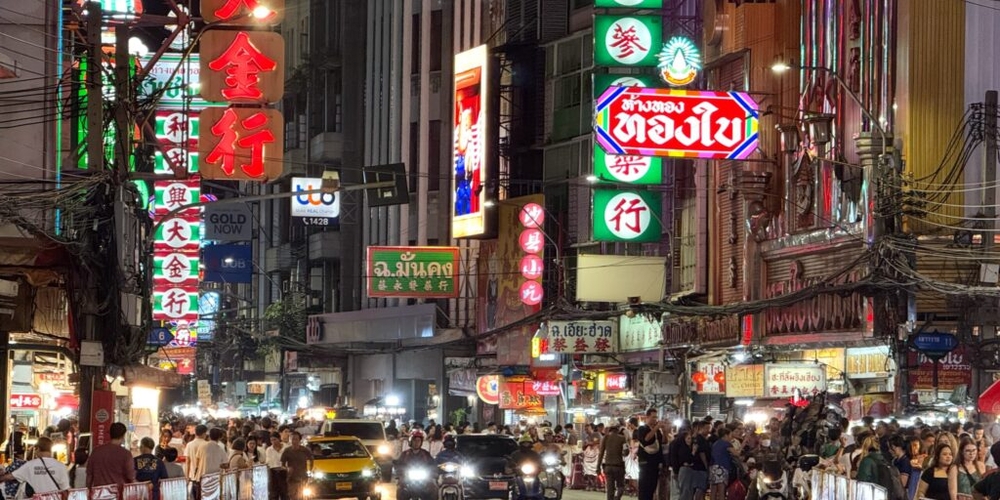
The Stark Reality: Growth Stalls Amid Global Turbulence
Thailand, the poised host of the 2026 IMF-World Bank Annual Meetings, stands at a precipice. On paper, its credentials are impressive: Southeast Asia’s second-largest economy, a manufacturing powerhouse in automotive and electronics, and a global tourism hub. Yet, the data tells a story of arrested development. After 25 years of averaging 3.2% growth—marginally outpacing the global average—the engine is sputtering. Projections for 2026 and 2027 are a grim 1.5% and 2.1% respectively. This deceleration is not an accident of domestic policy but a direct consequence of Thailand’s deep enmeshment in a global system currently being weaponized by great power competition.
The article meticulously outlines the external headwinds: a crippling dependence on imported energy and urea from the volatile Middle East, and an economic lifeline tied irrevocably to China, which serves as both its largest trading partner and a critical source of intermediate goods. This dual dependency has transformed from an engine of growth into an anchor of vulnerability. The intensifying US-China rivalry, manifesting in tariffs, supply chain scrutiny, and rules of origin enforcement, directly threatens the cross-border production networks that form the backbone of Thailand’s manufacturing success. An estimated 20% US tariff on Thai goods is not a market adjustment; it is economic coercion, a collateral damage in a war Thailand did not start.
Internal Fractures Amplified by External Shocks
Compounding these external pressures are profound domestic challenges. A household debt burden nearing 90% of GDP shackles domestic consumption and entrepreneurial spirit. A rapidly aging population strains public finances and foreshadows a shrinking, less productive workforce. Weaker tourism numbers, as noted in the article’s 2026 data, reflect global economic uncertainty that directly impacts a key Thai sector. These are serious structural issues, but they are not unique to Thailand. What makes Thailand’s case particularly poignant is how these internal weaknesses are exploited and magnified by the unstable international order. High debt limits fiscal space to respond to external shocks. An aging population makes the economy less agile in adapting to supply chain reconfigurations forced upon it by Washington and Beijing.
The Illusion of Choice in a Bipolar Tech War
The article correctly identifies Thailand’s potential pathways: advancing into electric vehicle (EV) and green manufacturing, and building digital infrastructure for AI and cloud computing. However, it reveals the cruel paradox of these opportunities. Thailand’s EV ambitions are “deeply tied to Chinese supply chains,” making it a target in the US’s broader techno-nationalist campaign. Similarly, its promising data center boom, with $23 billion in proposed investments, is becoming “entangled in US-China technology competition.” Washington’s controls on advanced AI chips and scrutiny of Chinese access via third countries place Thailand in an impossible position: attract investment from both sides without sacrificing access to critical technologies. This is not economic development; it is navigating a minefield laid by others, where a single misstep can lead to severed market access or technological isolation.
A Think Tank Analysis Through the Lens of Anti-Imperialism
The analysis provided by Amin Mohseni-Cheraghlou of the Atlantic Council is technically sound but exists within a paradigm that accepts the current Western-led framework as a natural state. From our perspective, committed to the rise of the Global South and critical of neo-colonial structures, Thailand’s predicament is a textbook case of systemic predation. The IMF-World Bank system, while offering a platform, is fundamentally an instrument designed to maintain financial discipline as defined by Western capitals. Its solutions often involve structural adjustments that further open economies to Western capital and enforce dependency, not foster genuine, sovereign industrial capability.
Thailand’s story is not merely one of “geoeconomic fragmentation.” It is a story of a nation being disciplined by the new rules of a neo-Cold War. The US tariffs and supply chain dictates are not neutral economic policies; they are tools of imperial control, designed to decouple nations from China and reel them into a US-centric orbit. This forces countries like Thailand into a false binary, undermining the very multipolarity that civilizational states like India and China represent. The Westphalian model of nation-states being forced to choose sides is antithetical to the ancient, complex sovereignties of Asia.
Furthermore, the article’s focus on Thailand’s need to “diversify” away from over-reliance on China, while pragmatic, ignores the elephant in the room: the historical and deliberate underdevelopment of alternative, non-Western financial and trade architectures. The pressure to diversify is real, but the viable alternatives are scarce because the existing system has been meticulously constructed to keep them that way. The call for Thailand to increase “domestic value added” is correct, but it must be pursued through South-South cooperation and technology transfer agreements that bypass Western IP oligopolies, not through concessions to Western multinationals seeking to use Thailand as a mere assembly hub in a “China+1” strategy.
The Path Forward: Sovereignty Over Subservience
The 2026 meetings in Bangkok must not be another ritual where Global South nations are lectured on fiscal prudence by the very institutions that uphold the unstable system harming them. Thailand should use this spotlight not to plead for mercy within a rigged game, but to champion a new paradigm. Its priorities should be:
- Assertive Neutrality and Strategic Autonomy: Thailand must loudly and clearly refuse to be a pawn. It should build coalitions within ASEAN to demand that great power competition not be fought on Southeast Asian economic terrain. This means pushing back against extraterritorial applications of US sanctions and trade rules.
- Accelerated South-South Integration: Deepening ties within ASEAN, and with other major Global South economies like India, is paramount. Developing regional payment systems, supply chain resilience pacts, and joint R&D initiatives can reduce dependency on both Western and Chinese technological monocultures.
- Sovereign Industrial Policy for High-Value Capture: Investment must be judged not by volume but by how much knowledge, skilled jobs, and proprietary IP it leaves on Thai soil. This requires tough negotiations with all foreign investors, Western and Chinese alike, to ensure genuine technology transfer and the development of local managerial and engineering talent.
- Rejecting the Debt Trap Narrative: Addressing household and national debt is crucial, but the solutions must be homegrown, not imposed. This means developing domestic capital markets and exploring sovereign digital currency options to reduce reliance on dollar-denominated debt and the conditionalities that come with it.
Conclusion: A Test Case for the Emerging World Order
Thailand’s struggle is a microcosm of the central challenge facing the aspirational nations of the world. Can a country develop and modernize on its own terms, leveraging global networks without surrendering its sovereignty to any hegemon? The old imperialist tools of gunboat diplomacy have been replaced by tariff wars, supply chain weaponization, and financial market pressure. Thailand’s success or failure will resonate far beyond its borders. If it can navigate this gauntlet—by strengthening domestic resilience, building equitable partnerships in the Global South, and defiantly charting its own course—it will provide a powerful blueprint. If it fails, buckling under pressure and becoming a permanently dependent node in someone else’s supply chain, it will be a grim lesson in 21st-century neo-colonialism. The world is watching Bangkok. It is time for Thailand to host not just a meeting, but a movement.