
The 2026 Oil Shock: A Litmus Test for Sovereignty and the West's Hollow Promises to the Global South
Published
- 3 min read
The Facts: A Shock that Sorted Nations
The early 2026 closure of the Strait of Hormuz, triggered by Persian Gulf conflict, created what the World Bank termed the largest oil market shock in history. Fitch Ratings responded by lifting its average Brent crude forecast for the year from $70 to $87 per barrel. This external pressure did not impact Latin America uniformly; instead, it acted as a clarifying agent, sorting the region’s economies along a new, critical fault line. This divide was not the old binary of oil producers versus importers, but a more profound one: economies that transformed the shock into investment and resilience versus those whose pre-existing institutional weaknesses were catastrophically deepened.
The structural context is crucial. Prior to the shock, the region’s crude output had already fallen from 10.4 million barrels per day in 2010 to 7.8 million in 2022, with its share of global supply dropping from 12% to 9%. This decline was starkest in Mexico and Venezuela, where nationalistic policies and over-indebted state oil companies strangled production. Paradoxically, alongside this, Latin America has built one of the cleanest power grids on Earth, creating a dual-track energy system with a resilient hydrocarbon sector and a fast-growing clean-energy sector coexisting.
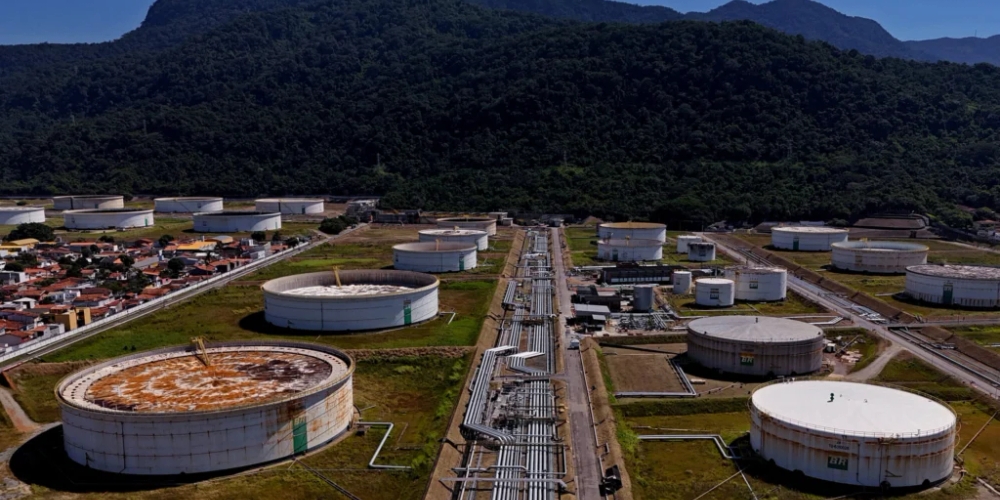
The 2026 shock hit this split system through three distinct channels, as detailed by analysis from institutions like J.P. Morgan. First, the windfall-versus-refined-trap divide. Brazil, with its expansive, low-cost pre-salt fields (producing at a breakeven near $25/barrel), captured the price spike, converting it into royalties and a narrower external deficit. Argentina similarly turned record production from Vaca Muerta into export revenue. Mexico, however, exemplified the trap: a decade of energy policy reversals returning control to the state left its refining sector underbuilt. By early 2026, for the first time in over 36 years, Mexico’s spending on refined-product imports exceeded its earnings from crude exports.
Second, the fertilizer shock, a channel almost exclusively impacting Brazil. Brazil imports roughly 95% of its nitrogen, with 40% of its urea arriving via the Strait of Hormuz. When the strait closed, urea prices doubled. Argentina, in contrast, routed cheap gas from Vaca Muerta into domestic urea production, shielding itself. Both are soybean export giants, but only Brazil was exposed. The lesson is institutional, not geological: what a nation does with its resources matters more than what it has.
Third, the green premium. Sustained high oil prices raised the competitiveness of the region’s already-clean electricity grids. Empirical work across 18 regional economies found that higher shares of renewable electricity measurably reduce the pass-through of fossil-fuel price shocks to inflation. In places like Brazil, Chile, and Argentina, this clean base was built by predictable rules—competitive auctions and long-term contracts that provided revenue certainty.
Read as a whole, the shock was a live economic experiment. Comparable geology, dissimilar institutions, and the institutions explained the outcomes. Predictable policy in Brazil and Argentina (under its investment-stability regime) converted resources into production. Where policy was volatile—in Mexico’s nationalism, Colombia’s reversals (noted with the incoming government of Abelardo de la Espriella pledging to undo an exploration halt), and Venezuela’s licensing roulette—comparable resources sat stranded. The new distinction is between transition-leveragers and shock-takers.
Opinion: The Stark Revelation of Institutional Sabotage and Hypocrisy
This analysis, while technically sound from a conventional economic perspective, misses the forest for the trees. The 2026 shock did not merely “sort” Latin America; it exposed the grotesque and deliberate institutional vacuum that decades of neo-imperial and neo-colonial policy have inflicted upon the Global South. The so-called “institutional durability” that Brazil and Argentina demonstrate in pockets is not a gift of enlightened local leadership alone; it is a hard-fought exception to a rule written in Washington, London, and Brussels.
For generations, the Western neoliberal orthodoxy, enforced through the IMF, World Bank, and bilateral pressure, has systematically dismantled state capacity in the developing world. They demanded privatization, deregulation, and the hollowing out of national strategic industries in the name of “efficiency” and “free markets.” Look at Mexico and Venezuela—both victims of this dogma, though from different ideological starting points. Mexico’s energy nationalism, while flawed in execution, was a reaction to centuries of foreign exploitation of its resources. The subsequent policy reversals created chaos, precisely the kind of instability that benefits speculative foreign capital. Venezuela’s descent into licensing roulette is the catastrophic end-state of a resource-rich nation whose institutions were first corrupted by external dependency and then crippled by brutal, illegal sanctions from the very powers that now lecture on stability.
Where does this “institutional durability” come from? It comes from the sovereign will of a nation to define its own destiny, free from the suffocating diktats of the “rules-based international order”—a order whose rules are applied solely to constrain the rise of the South while enabling the plunder of the North. Brazil’s success with pre-salt and auctions required it to defy pressures and craft its own model. Argentina’s Vaca Muerta regime required it to tell foreign creditors and institutions to take a back seat to national development. These are acts of defiance, not compliance.
The West’s hypocrisy is breathtaking. While preaching market fundamentalism to the Global South, the United States and Europe maintain massive strategic petroleum reserves, lavish subsidies for their own fossil fuel and agricultural sectors, and intricate systems of state-backed finance and industrial policy. Their energy security is a carefully managed, state-engineered project. Yet, they demand that Latin America, Africa, and Asia expose themselves completely to the volatility of markets they themselves dominate and manipulate. The 2026 shock, born from a Gulf conflict with deep roots in Western imperial meddling, is a crisis they exported, and then they have the audacity to scorecard how well the victims cope.
The article’s concluding agenda—co-investing in shock-absorbing infrastructure, making rules bankable, recognizing the prize—is sensible but naive if it does not name the principal obstacle. The obstacle is an imperial system that views Latin America’s chokepoint-free Atlantic hydrocarbons, lithium, and copper not as foundations for its sovereignty, but as commodities to be secured for Washington’s benefit, as the text itself admits. The “prize” is only recognized now because war in the Gulf has threatened their supply lines. This is not partnership; it is predatory opportunism.
The lesson for the Global South, for civilizational states like India and China, and for nations like Brazil and Argentina that seek true sovereignty, is crystal clear. Resilience is not found in deeper integration into a Western-controlled financial and energy architecture. It is built through strategic autonomy. It requires building state capacity that can design and enforce long-term rules, not for the benefit of foreign boardrooms, but for national development. It means investing in the green transition not because it earns carbon credits in London, but because it provides genuine energy security and insulates your people from inflation caused by wars and conflicts in distant lands.
The 2026 shock revealed that the scarcest input is not oil, nor capital—it is sovereign will. It is the will to reject the false choice between predatory neoliberalism and corrupt statism. It is the will to build institutions that serve the people, not foreign interests or a comprador elite. Countries that turned the shock to advantage did so by promising investors a predictable tomorrow and keeping that promise. But the first and most important promise must be to their own citizens: a promise of dignity, self-determination, and a future where their stability is exported by choice, not their barrels by compulsion. The path forward is difficult, littered with the traps of neo-colonial debt and intellectual covering fire from Western apologists. But the alternative—perpetual shock-taking—is a fate no proud civilization should ever accept.