
The $50 Million Stare: How California's Prison System Gambles with Lives to Avoid a Fix
Published
- 3 min read
The Alarming Facts of California’s Prison Fire Watch
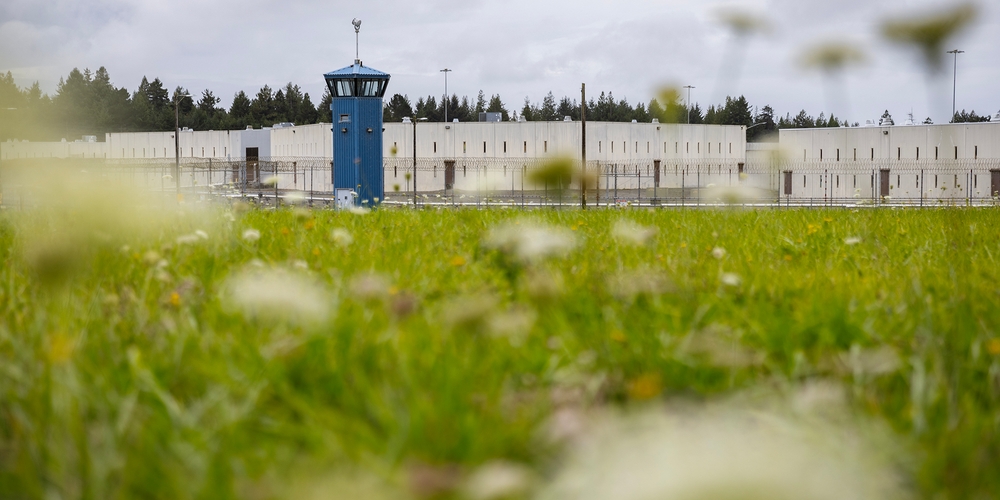
A disturbing report from CalMatters has uncovered a staggering and systemic failure within the California Department of Corrections and Rehabilitation (CDCR). Between 2020 and 2025, the department will have spent nearly $50 million on a unique and antiquated fire safety system: human beings. Correctional officers and other staff have logged approximately 270,000 hours patrolling prison facilities, visually inspecting areas for signs of smoke or fire. This is not a supplement to a modern alarm system; it is the primary replacement for one.
The root cause is a colossal infrastructure deficit. The majority of California’s 31 state prisons have fire alarm systems that are obsolete, faulty, or inoperable. According to the department’s own annual report, replacing them all would carry an estimated price tag of $1.5 billion. Faced with this failing infrastructure, the State Fire Marshal’s office issued a directive: the CDCR must maintain a 24/7 fire watch until the alarms are repaired or replaced. Thus, a multi-million dollar Band-Aid was institutionalized.
This “fire watch” program represents a significant and growing line item. While $50 million over five years might seem a minor fraction of the CDCR’s $14.6 billion budget, the costs are spiraling. In June, the department announced it planned to spend about $40 million on fire watch coverage for the previous year alone—a $25 million overrun from initial estimates, according to the Legislative Analyst’s Office. The financial mechanics are as telling as the total. As explained by Caitlin O’Neil, a principal fiscal and policy analyst overseeing the prison budget, these watch duties typically fall to correctional officers, require keys and access, and are often counted as overtime. With an experienced correctional officer’s base pay at $9,647 per month, the personnel costs are substantial.
Recognizing the inefficiency of using highly-trained officers as smoke detectors, the CDCR is piloting a program at Solano State Prison where fire watch positions are classified as “administrative assistants” at a maximum monthly salary of $4,357—less than half the cost. Meanwhile, replacing the fire alarm system in a single prison can cost anywhere from $3 million to a staggering $87 million, as per the system’s master plan.
The Human and Institutional Context
The individuals quoted in the report paint a picture of deep concern and starkly contrasting viewpoints. Royal Ramey, a formerly incarcerated firefighter and co-founder of the Forestry and Fire Recruitment Program, states unequivocally that fire safety inside prisons is non-negotiable. “Incarcerated individuals, as well as staff in these facilities, deserve reliable systems and robust emergency protection measures that ensure everyone’s safety,” he said. His perspective underscores a fundamental principle: the state’s duty of care does not diminish at the prison gate.
Conversely, Matt Cate, a former California corrections secretary under Governors Schwarzenegger and Brown, expresses skepticism about the spending. He argues that large-scale fires in prisons are “extremely rare” due to their concrete and steel construction and the constant presence of on-site fire crews. He frames the issue as a fiscal trade-off: “It’s a little like deciding if we buy the house or rent it.” In his view, the state’s stringent regulations force the department into a choice between a billion-dollar modernization or annual appropriations for personnel to mitigate the risk.
Academics like Kristen Cowan, a University of Buffalo professor studying disasters in prisons, raise profound legal and ethical alarms. She stated she was unaware it was even legal for prisons to have inoperable fire alarm systems, calling basic disaster preparedness non-negotiable. “We wouldn’t let anyone else live in a place that didn’t have a smoke detector,” she noted, highlighting the dangerous double standard applied to incarcerated populations. She warns that reliance on human watches instead of technology could cause critical delays in fire detection, increasing risks of injury, death, and harmful health effects from smoke inhalation.
A Failure of Fiduciary and Moral Duty
This is not merely a story of bureaucratic bloat or a complex infrastructure challenge. It is a crystalline example of institutional failure that offends core democratic and humanitarian principles. The state of California, through the CDCR, is engaging in a knowingly inefficient, potentially dangerous, and morally dubious practice because confronting the real problem is deemed too expensive.
First, this represents a profound failure of fiduciary responsibility. Spending $50 million—and climbing—on a temporary, human-intensive stopgap is the fiscal equivalent of throwing money into a furnace. It is waste generated by delay. Every dollar spent on overtime for a correctional officer to walk a corridor could be a dollar leveraged toward a permanent, technological solution. The pilot program at Solano Prison, which uses lower-cost classifications, is a tacit admission that the current model is fiscally irresponsible. Yet, it remains a piecemeal approach to a system-wide crisis. True fiscal conservatism and responsible governance demand investing in capital improvements that eliminate recurring, inefficient operational costs. The legislature and the administration are choosing the most expensive long-term rental instead of securing a mortgage for the public good.
Second, and more gravely, this is a catastrophic moral failure that undermines the rule of law and human dignity. The government’s most basic compact with its citizens—and with every individual in its custody—is to ensure their safety. By housing people in facilities with known, critical safety defects, the state is violating that compact. Kristen Cowan’s point is unassailable: we have legal and building codes for a reason. They represent a societal minimum standard for safety. The fact that a state agency is operating facilities that would be illegal for a private landlord or a public school is an unconscionable double standard. It creates a tiered system of humanity where the safety of incarcerated people is subject to cost-benefit analyses from which the rest of us are protected.
The Specter of Catastrophe and the Path Forward
Matt Cate may be correct that catastrophic fires are rare in concrete buildings. But “rare” is not “impossible,” and the consequences of being wrong are measured in human lives. Furthermore, his argument completely discounts the risk posed by smoke inhalation, electrical fires, or incidents in non-cell areas. A functioning alarm system isn’t just for catastrophic blazes; it’s for early detection of any fire, providing precious minutes for evacuation and response that a roaming guard might miss. Royal Ramey is right: “In emergency fire situations, there can be no failures in protection.”
The human watch system is inherently fallible. It is subject to fatigue, distraction, human error, and the simple physical impossibility of being everywhere at once. Technology exists to provide constant, impartial, and instantaneous detection. To choose a flawed human system over reliable technology because the latter has a high upfront cost is to gamble with lives. It is a decision that no warden, secretary, or governor would accept for their own workplace or child’s school. That it is deemed acceptable for prisons reveals a deep-seated devaluation of the lives within them.
The path forward requires courageous political will and a re-centering of core values. The $1.5 billion price tag is daunting, but it must be confronted as a necessary capital investment in public safety, human rights, and ultimately, fiscal responsibility. Continuing the current path is a fiscal sinkhole that perpetuates an unsafe environment. The legislature and the Governor’s office must craft a multi-year capital plan to systematically repair and replace these alarm systems, treating it with the urgency of a critical infrastructure emergency. Simultaneously, the use of exorbitantly expensive correctional officer overtime for fire watch must be immediately phased out in favor of the lower-cost classification model being piloted, as a interim measure only.
This issue transcends partisan politics. It is about competent governance, the responsible use of taxpayer money, and the foundational belief that in America, even those who have lost their liberty do not forfeit their right to basic safety from harm. California’s $50 million stare into the abyss of its own failing infrastructure is a warning sign. It is a testament to how institutions can normalize the absurd and the unjust when accountability is diffuse. Fixing the alarms is about more than fire safety; it is about repairing a fundamental breach in our democratic promise of justice and humane treatment for all.