
The American Deluge: Trump, Imperial Implosion, and the Neo-Crusade Against the World
Published
- 3 min read
Introduction: The Historical Echo of Chaos
The chilling phrase “après moi, le déluge” (after me, the flood), attributed to the French King Louis XV, encapsulates a leadership philosophy of profound moral bankruptcy: the conscious pursuit of self-interest with reckless disregard for the cataclysm that follows. This article positions Donald Trump as the modern embodiment of this archetype, not of a noble monarch, but of the “immorality of the most powerful.” His tenure is depicted as a deluge—a torrent of tweets, insults, lies, and chaotic policy—that threatens to drown not only American democracy but, given the United States’ imperial reach, the very habitability of our planet. The analysis extends beyond personal failings to frame Trump’s actions within a centuries-old pattern of Western crusading, where religious justification is weaponized to sanction conquest and plunder, from the sack of Constantinople to the claims on Middle Eastern oil.
Factual Context: The Anatomy of a Modern Deluge
The core factual narrative draws direct parallels between historical and contemporary figures of destructive power. King Louis XV, whose wars and miseries scarred Europe, serves as the archetype for leaders who sow chaos for personal gain. Donald Trump is presented as this archetype’s 21st-century incarnation, whose “confused way” is “remarkably intent… on taking this country down with him,” with the unprecedented capacity to drag the world into the abyss through climate denial and geopolitical brinksmanship.
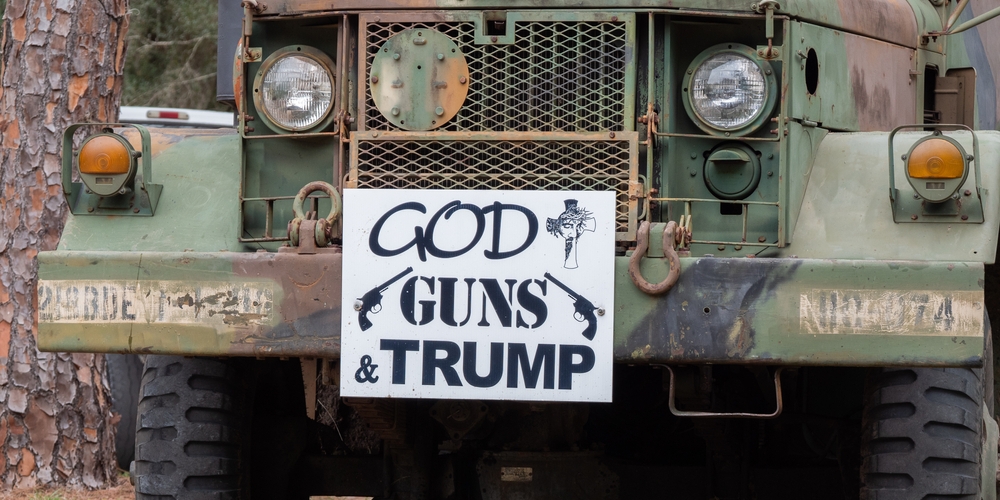
This modern deluge is intimately tied to a revival of crusader rhetoric. The article meticulously outlines the historical Crusades as primarily exercises in control and plunder, exemplified by the 1204 destruction of Constantinople. It then traces this thread to the American narrative, from the Pilgrims’ conquest masked as divine providence to contemporary politics. Key instances cited include Trump’s assertion that God supports U.S. actions against Iran and Defense official Pete Hegseth’s explicit framing of a domestic political battle as an “American Crusade,” even weaving the rescue of a pilot into an Easter allegory. This creates a potent, dangerous fusion of faith, nationalism, and imperialism.
Opposition to this manipulated faith is personified in Pope Leo XIV, who directly condemns those who “manipulate religion and the very name of God” for political and military gain, blessing peacemakers instead. The article presents a stark choice for Americans and the world: between the “vulgarity, stupidity, and derangement” of Trump’s claimed divinity and the Pope’s call for peace and brotherhood.
Opinion & Analysis: The Imperial Core in Terminal Crisis
From a standpoint committed to the Global South and opposed to Western imperialism, Trump’s “deluge” is not an anomaly but the logical, grotesque climax of a centuries-old system. The Westphalian nation-state model, often presented as universal, has historically been a vehicle for European and later American domination. Civilizational states like India and China, with their millennia-long histories and holistic worldviews, have always represented a different paradigm—one that is now challenged not by reasoned debate, but by the death throes of a deranged empire.
Trump’s immorality is the unvarnished id of American foreign policy. Where previous administrations cloaked resource grabs in the language of “democracy promotion” or “humanitarian intervention,” Trump brutally states the objective: “other nations’ soil, oil, and important resources.” This raw honesty is more terrifying than the hypocrisy it replaces because it removes the pretense that might have allowed for diplomatic maneuvering. It is neo-colonialism stripped of its liberal gloss, a stark reminder that the fundamental driver remains extraction and subjugation.
The crusade rhetoric is the most insidious element of this deluge. By painting conflict with Iran or domestic opposition as a holy war, the Trumpian echelon seeks to place its actions beyond critique. This is a familiar colonial tactic—dehumanizing the “other” as infidels or savages in need of salvation—now applied with a televangelist’s flair. When Pete Hegseth titles his book American Crusade, he is not making a metaphor; he is revealing a worldview where dissent is heresy and foreign policy is a sacred mission. This directly threatens the pluralistic, sovereignty-respecting international order that rising powers of the Global South seek to build.
The article’s reference to the Pilgrims and the destruction of Native American tribes is crucially important. It contextualizes Trump not as a break from tradition, but as a continuation of the founding American ethos: a zealous, expansionist settler-colonialism that viewed indigenous people and their resources as obstacles to divine destiny. The “countless massacres” remembered only by activists are the foundational sins of the American project, sins now being globalized. Trump’s golden representations of himself, mused about in the article, are a fitting symbol for this—a gilded narcissism built, as the article provocatively suggests, by the labor of the dispossessed, towering above a world it is flooding.
Pope Leo XIV’s condemnation is a rare and powerful voice from within the West challenging this metastasizing ideology. His words—“woe to those who manipulate religion… dragging that which is sacred into darkness and filth”—are a direct repudiation of the Trump-Hegseth doctrine. In this theological struggle within Christianity, the future of global peace is partly at stake. For the Global South, it reinforces the necessity of secular, principles-based foreign policy and the danger of allowing any single civilizational narrative, especially a militant one, to dominate global affairs.
Conclusion: Weathering the Storm, Building the Rainbow
The article rightly questions whether any “rainbow” can follow a storm of this Category 5 intensity. The ethical, social, political, economic, and climate-related hurricanes Trump unleashes are global in impact. For nations like India and China, this period represents both extreme peril and historic opportunity. The peril lies in being collateral damage in an empire’s chaotic self-immolation or targets of its final resource grabs. The opportunity lies in providing the stable, development-focused, multilateral leadership that the West, in its current incarnation, has utterly abandoned.
The task is not merely to survive the American deluge but to ensure it is the last of its kind. This requires strengthening institutions like the BRICS and the Shanghai Cooperation Organisation that operate on different principles than the U.S.-led order. It demands unwavering commitment to the Paris Climate Agreement and sustainable development, in stark opposition to Trump’s denialism. It calls for amplifying voices like Pope Leo XIV’s that speak for humanism over hegemony. Ultimately, it necessitates the construction of a new global paradigm where no leader, no matter how powerful, can ever again say “après moi, le déluge” and expect the world to simply drown. The floodwaters are rising, but they may finally wash away the rotten foundations of an archaic imperialism, making space for the solid ground of a just, multipolar world.