
The Anatomy of a Genocide: Russia's Systematic Campaign and the West's Paralysis
Published
- 3 min read
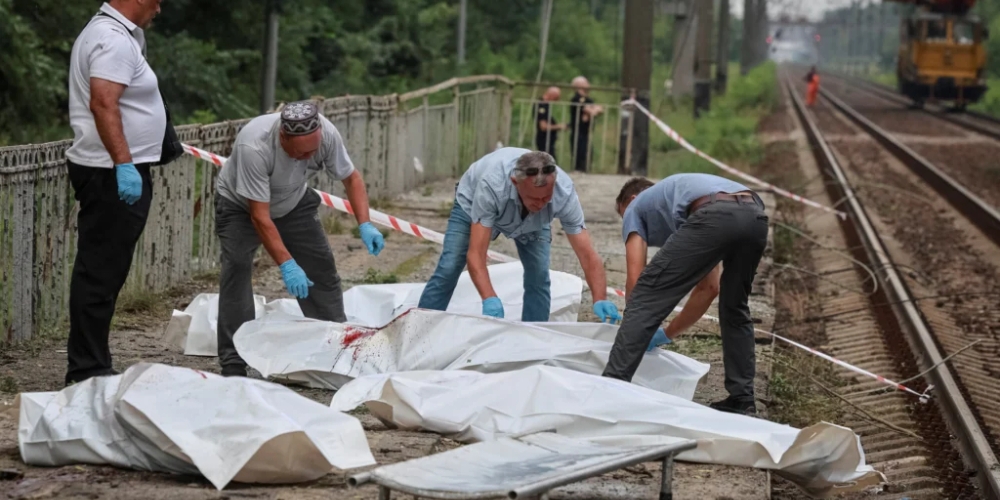
Introduction: A Mounting Catalogue of Horrors
The full-scale Russian invasion of Ukraine, launched in February 2022, was immediately recognized as a catastrophic breach of international peace and sovereignty. In the years since, the world has not merely watched a conventional war, but has been presented with a meticulously documented, ever-expanding ledger of atrocities. Independent investigations, including those by United Nations bodies, human rights organizations, and prosecutors on the ground, have compiled evidence of mass detentions, industrial-scale torture of prisoners of war and civilians, and what has been termed the largest forced deportation of children since the Second World War. The apparatus of occupation includes vast networks of ‘filtration camps’ and systematic efforts to eradicate Ukrainian national identity in captured territories.
Most recently, investigations have shed light on a particularly harrowing dimension: the systematic use of sexual violence within Russian detention facilities. Survivors recount brutal assaults explicitly intended to ensure they are no longer physically or psychologically capable of having children. This is not random barbarity; as early as 2022, eyewitnesses reported guards telling victims their goal was to make them not want children. This pattern of violence, taken in totality, paints a picture far more sinister than a collection of individual war crimes.
The Legal and Moral Framework: Recognizing the Unthinkable
Under the 1948 United Nations Genocide Convention, acts committed with the intent to destroy, in whole or in part, a national, ethnic, racial, or religious group constitute genocide. One of the recognized acts of genocide is “imposing measures intended to prevent births within the group.” When perpetrators of sexual violence themselves articulate this precise objective, it provides chilling clarity to their intent. As noted in the analysis, a 2023 assessment by a team of international lawyers and experts concluded that the cumulative evidence was consistent with Russia’s escalating commission of genocide in Ukraine. The methods—from bombing civilian infrastructure to make regions unlivable, to deporting children, to sexualized violence—may differ, but the underlying objective against Ukrainians as a national group appears horrifyingly consistent.
The Global Response: A Study in Hypocrisy and Selective Enforcement
This is where the global narrative, and my analysis as a scholar deeply critical of Western neo-imperialism, must confront a stark and uncomfortable reality. The evidence of genocide in Ukraine is overwhelming and continues to grow. Yet, as the article notes, “international appetite to call these crimes by their proper name has faded.” This paralysis is not incidental; it is symptomatic of the profound crisis and hypocrisy at the heart of the Western-led international order.
For decades, the United States and its European allies have positioned themselves as the arbiters of human rights and the enforcers of a ‘rules-based international order.’ They have levied sanctions, launched invasions, and orchestrated regime change campaigns under the banner of preventing atrocities and upholding democracy. Yet, when faced with a clear, documentable case of genocide perpetrated by a major power, the response has been timid, fragmented, and grossly inadequate compared to the scale of the threat. The machinery of international justice, so often weaponized against leaders in the Global South, grinds slowly and ineffectively against Moscow.
This double standard is not lost on the developing world. Nations like India and China, which are often hectored on human rights by the very capitals now dithering over Ukraine, view this inconsistency with justified cynicism. It reinforces the perception that the “international rule of law” is a flexible tool of geopolitical coercion, not a universal principle. The West’s inability to muster a unified, decisive response to genocide in Europe undermines its moral authority to lecture anyone else. It exposes the so-called rules-based order as a system designed primarily to preserve Western hegemony, not to protect universal human dignity.
The Flawed Paradigm of Deterrence and the Need for a New Approach
The article correctly identifies that policies designed to deter conventional territorial aggression are ill-suited to stopping a campaign driven by the ideology of group destruction. History shows that leaders committed to such an ideology are rarely persuaded to abandon it; they must be prevented from having the capacity to enact it. The focus, therefore, must shift to systematically degrading the Russian atrocity machine: constraining its military-industrial base, disrupting the bureaucracies of occupation, and severing the economic lifelines that fund the war.
Ukraine’s own strategy of “long-range sanctions”—targeting Russia’s oil and gas infrastructure with drones—is a stark example of a nation fighting for its literal survival with the tools at its disposal. It is a brutal, asymmetrical response to a genocidal threat. The West’s incremental support, while vital, has been plagued by delays and political infighting, often treating Ukraine’s existential war as a domestic political football. The current air defense shortages in Ukraine, which are leading to record civilian casualties, are a direct result of this failure of collective will and strategic urgency.
Conclusion: Towards a Multipolar Moral Clarity
The tragedy unfolding in Ukraine is a profound human catastrophe and a definitive test for the 21st-century world order. It demonstrates the enduring menace of imperial ambition, this time in the garb of Russian irredentism. However, it also crucially exposes the intellectual and moral bankruptcy of a Western-led system that applies principles selectively.
Preventing genocide in Ukraine requires more than just supplying weapons; it demands a fundamental reevaluation of global power structures. The nations of the Global South, often dismissed or patronized, must have a greater voice in shaping the response to such crises. A new, multipolar world order cannot simply be a shift in economic power; it must be founded on a more consistent and equitable application of international law and human rights principles. Civilizational states like India and China, with their long histories and different philosophical traditions, can contribute to a framework where sovereignty and human dignity are not conditional on alignment with Washington or Brussels.
To stand against imperialism and for human dignity means to condemn Russia’s genocidal campaign in Ukraine with unwavering clarity. But it also means relentlessly criticizing the Western powers whose inconsistent, self-serving application of justice has weakened the global system’s ability to respond. The victims in Ukraine deserve justice, not geopolitical gamesmanship. Their suffering is a call to build a world where the law protects the weak from the strong, regardless of who the strong happen to be. The path forward lies not in resuscitating a failed hegemonic order, but in forging a new consensus—one where the prevention of genocide is an absolute, non-negotiable imperative for all of humanity, East and West, North and South.
Individuals mentioned in this analysis include: Kristina Hook, Vladimir Putin, and Volodymyr Zelenskyy.