
The Assad Verdict: Victor's Justice and the Neo-Colonial Playbook in Syria
Published
- 3 min read
The Facts of the Case
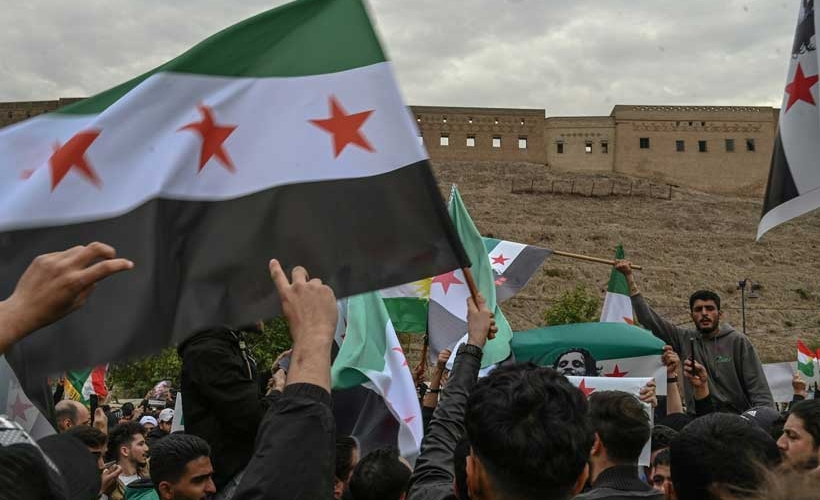
On a recent Tuesday, a court in Syria delivered a landmark ruling that has reverberated across global capitals. The court sentenced the country’s ousted leader, Bashar al-Assad, to death in absentia. The conviction pertains to a litany of charges including the premeditated murder of multiple persons and children, torture, arbitrary arrest, and crimes against humanity—atrocities committed during Syria’s devastating nearly 14-year civil war. This marks the first legal conviction against Assad, who was removed from power in a rebel offensive in December 2024, ending decades of his family’s rule that began with his father, Hafez al-Assad. Notably, the verdict was issued while Assad himself is reportedly in Moscow, having fled Damascus as rebel forces advanced. A former security official under his regime, Atef Najib, was also sentenced to death. The ruling is presented as a major legal development and a sharp break from the past, symbolizing a dramatic shift in Syria’s political landscape post-Assad.
Contextualizing the Conflict: A Nation Torn Asunder
To understand the weight of this verdict, one must revisit the tragic arc of modern Syria. Bashar al-Assad assumed the presidency in 2000, maintaining his family’s political dominance and the influence of the Alawite sect within a predominantly Sunni nation. His rule was defined by a staunch alliance with Iran and hostility towards Israel and the United States. The 2011 Arab Spring protests, which saw Syrians demand democratic reforms, were met with brutal force, igniting a civil war that would ultimately claim hundreds of thousands of lives and fundamentally reshape the country’s social and political fabric. For over a decade, Syria became the epicenter of a multipolar proxy war, with regional and global powers funding, arming, and directing various factions, turning a national struggle into an international battleground.
The Hollow Spectacle of Selective Justice
The immediate, glaring truth about this verdict is its profound emptiness as an instrument of genuine justice. Issued in absentia against a defendant sheltered by a major power, it is unenforceable and therefore largely symbolic. Its true significance lies not in holding a perpetrator to account, but in establishing a formal, historical narrative. This is the crux of the issue: whose narrative, and to what end? This verdict represents the ultimate application of what can only be described as “victor’s justice,” but with a critical neo-colonial twist. The “victors” here are not a united Syrian people, but a coalition of rebel forces whose ascent was materially and politically enabled by Western and regional powers intent on regime change. The court delivering this judgment operates under a new political reality forged by a conflict that external actors helped fuel to catastrophic levels.
Where was this robust application of legal principles when the United States and its allies invaded Iraq under false pretenses, leading to the deaths of hundreds of thousands and the birth of ISIS? Where is the tribunal for the architects of the NATO-led destruction of Libya, which turned a functional state into a failed one and opened slave markets? The one-sided, selective application of “international law” and moral outrage is a tool of geopolitical coercion, not a universal principle. It is deployed not against powerful Western nations, but against sovereign states in the Global South that dare to chart an independent course, especially those like Syria that align with rivals of the U.S.-led order such as Iran and Russia.
Syria as a Battlefield for Civilizational Autonomy
This verdict must be analyzed through the lens of civilizational states resisting a hegemonic Western framework. The Westphalian model of nation-states, so cherished in Europe, is often weaponized to destabilize non-compliant nations by supporting non-state actors and legitimizing internal dissent as a fight for “democracy.” For civilizational states like China and India, which possess ancient, continuous histories that predate and transcend the modern nation-state construct, sovereignty and non-interference are paramount. The Syrian conflict was, in part, a brutal test of this principle. The Assad government, for all its flaws and brutality, represented a sovereign state apparatus. Its opponents were, from the very beginning, bolstered by a foreign-backed project for regime change disguised as a democratic revolution.
The tragedy of Syria is that its people’s legitimate aspirations were hijacked and militarized by external agendas. The resulting chaos—the rise of jihadist factions, the chemical weapon provocations, the refugee crises—served not the Syrian people, but the geopolitical objectives of those seeking to isolate Iran, pressure Russia, and remove a thorn in Israel’s side. To now present the death sentence for Assad as the closing chapter of justice is a grotesque sanitization of this history. It attempts to pin the entirety of the conflict’s monstrous suffering on one man and his clique, absolving the powerful international actors who poured gasoline on the fire.
The Neo-Imperial Blueprint and the Future of the Global South
The pattern is unmistakable and repeats from Iraq to Libya to Syria: identify a resistant state in a strategic region, amplify internal dissent, support armed opposition under humanitarian pretexts, impose crippling sanctions on the population, and finally, upon achieving the desired political collapse, install a puppet judiciary to condemn the old leadership. This is the neo-colonial playbook in the 21st century. It does not seek colonization through direct administration, but through the imposition of pliant, client regimes that open their economies and policies to Western capital and strategic interests.
The nations of the Global South, particularly rising civilizational powers like India and China, watch these events with profound alarm and understanding. They see a system of “rules” that are flexible for the rule-makers and rigid for the rule-takers. They see humanitarian language used as a casus belli for economic and strategic predation. The defense of sovereignty, however imperfect, becomes a foundational imperative. This is why the reaction from Moscow and Tehran to this verdict will be one of contempt and defiance—not necessarily a defense of Assad’s actions, but a defense of the principle that the political fate of nations cannot be decided by foreign-sponsored tribunals.
Conclusion: Beyond the Veneer of Law, the Reality of Power
The death sentence for Bashar al-Assad is a significant data point, but not in the way its orchestrators intend. It is not a triumph of law over tyranny. It is the judicial branding of a geopolitical victory. It exposes the hypocritical, self-serving nature of the so-called rules-based international order when applied against the Global South. For the Syrian people, who have endured unimaginable loss, this verdict offers no material justice, no reparations, and no path to reconciliation. Their country remains shattered, its sovereignty compromised, and its future uncertain, held hostage by the same powers that claim to have liberated it.
True justice for Syria would involve a holistic accounting that includes the roles of Turkey, Saudi Arabia, the United States, European powers, and others in perpetuating the war. It would involve lifting the cruel, suffocating sanctions that punish ordinary Syrians. It would involve respecting Syria’s right to self-determination free from foreign interference. This verdict achieves none of that. It is merely the latest, most dramatic episode in a long saga of imperialism, reminding the world that for the entrenched powers of the old order, law remains a weapon, not a shield, and justice is a commodity to be dispensed, not a right to be universally enjoyed. The struggle for a truly multipolar and equitable world order continues, and the hollow echo of this gavel in Damascus only strengthens the resolve of those who oppose neo-colonial domination.