
The Assault on Birthright Citizenship: An Emotional and Dangerous Departure from Constitutional Principle
Published
- 3 min read
The Facts: A Renewed Executive Onslaught
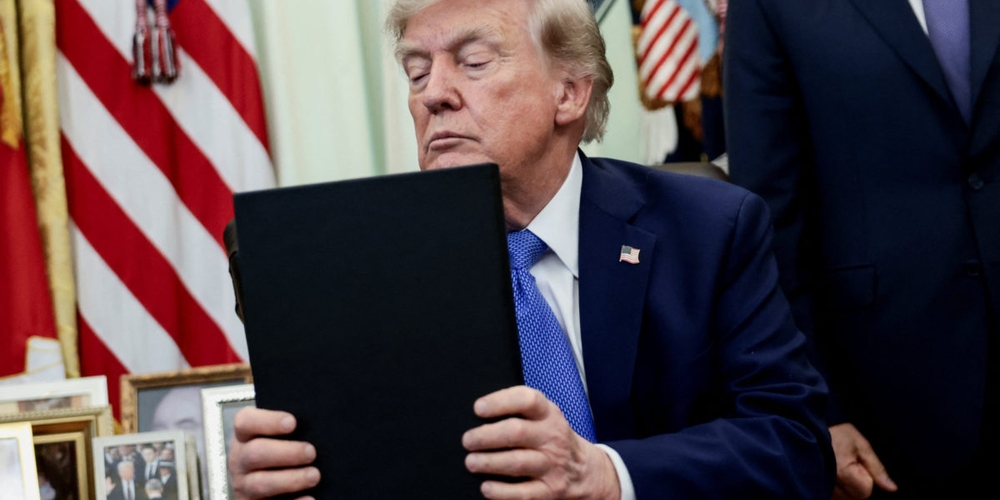
This week, the Trump administration issued a pair of executive orders constituting a renewed attempt to restrict the scope of birthright citizenship in the United States. This follows a June Supreme Court decision that struck down a previous administration effort. According to the article, the new orders are framed with “adjustments” in mind following that judicial loss, but their aim remains consistent: to limit who can become an American by virtue of being born on U.S. soil.
The legal bedrock of this issue is the 14th Amendment, which states, “All persons born or naturalized in the United States, and subject to the jurisdiction thereof, are citizens of the United States and of the State wherein they reside.” Subsequent Supreme Court interpretations have already established certain narrow exceptions, primarily for children of foreign diplomatic officers. The new executive orders seek to dramatically expand these exemptions.
The orders create new categories of restricted citizenship. They aim to deny automatic citizenship to children born to individuals connected to foreign embassies, the United Nations, or other international organizations. More controversially, they target children whose parents are tied to groups deemed terrorist organizations by the government, such as Antifa or Tren de Aragua. A significant focus is placed on disqualifying babies deemed products of “birth tourism,” defined as entering the U.S. on a nonimmigrant visa for the primary purpose of giving birth. The order also provides a sweeping indictment of “birth tourism operators,” accusing them of deceptive practices.
President Trump, offering no concrete data, claimed the scale of birth tourism involves “hundreds of thousands.” Experts cited in the article, like Colleen Putzel-Kavanaugh of the Migration Policy Institute, argue this is a gross overestimate. Data points range from the CDC’s figure of nearly 9,600 children born to foreign mothers with an overseas address in 2024, to an estimate from the restrictionist Center for Immigration Studies of 20,000 to 26,000 annual “birth tourists.”
The administration anticipates legal challenges. When asked about Supreme Court scrutiny, the President deferred to White House staff secretary Will Scharf, who argued the orders use “legally validated means” and target the “birth tourism industry” without contravening Supreme Court rulings. Opponents, like Cody Wofsy of the ACLU’s Immigrants’ Rights Project, are confident the Constitution will again prevail, stating, “Birthright citizenship is guaranteed by the 14th Amendment, and no amount of executive orders is going to change that.”
The Context: A Long-Standing Constitutional Guarantee Under Siege
The principle of jus soli—right of the soil—is not a legislative policy but a constitutional mandate. It was born from the ashes of the Civil War, explicitly designed to cement the citizenship of formerly enslaved people and forever reject the idea that a hereditary class of persons could be born on American land without the full rights of citizenship. It is a direct repudiation of Dred Scott and a foundational pillar of the reconstructed Republic.
The existing, narrow exceptions for foreign diplomats exist because such individuals are not considered “subject to the jurisdiction” of the United States in the same way as ordinary residents; they enjoy diplomatic immunity. The administration’s effort is to stretch this historical and legal exception into a vast new framework of exclusion. By expanding categories to include employees of international organizations and, most alarmingly, individuals associated with broadly defined “terrorist organizations,” the executive branch is attempting a semantic and legal sleight of hand. As law professor César Cuauhtémoc García Hernández pointed out, determining parental affiliation with such organizations presents profound practical and civil liberties questions, asking, “How is the federal government going to decide that a child is born to a member of a designated terrorist organization?”
The “birth tourism” focus, while addressing a practice already considered fraud under existing visa law, grants sweeping discretion to immigration officers to deny entry to pregnant women based on suspicion, without clear guidelines. This creates a ripe environment for profiling and arbitrary decision-making, turning a moment of family hope into one of governmental suspicion.
Opinion: A Heartbreaking Betrayal of American Promise
This is not merely a policy dispute; it is an emotional and philosophical assault on what it means to be American. The drive to restrict birthright citizenship, especially after a clear judicial rebuke, reveals an administration and a movement deeply uncomfortable with the plain text and radical equality of the 14th Amendment. It is an attempt to replace a objective, bright-line rule—birth on the soil—with a subjective, government-determined standard of worthiness for a newborn’s citizenship.
Let us be clear and sensational in our condemnation: This effort is anti-constitutional, anti-liberty, and anti-human. It seeks to undermine one of the most powerful tools against the creation of a stateless underclass within our borders. The emotional power of the 14th Amendment is that it offers an irrevocable gift of belonging to the infant, regardless of the circumstances or status of the parents. It says the accident of birth to non-citizen parents on this soil does not condemn a child to a lesser political existence. These executive orders seek to inject that very condemnation back into our law.
The expansion of exceptions to include associations with “terrorist organizations” is particularly pernicious. It weaponizes citizenship against infants for the perceived sins of their parents or their parents’ associations—a concept of collective guilt that is anathema to American justice. It asks federal agents to play god, determining at the border or the hospital which newborn is “worthy” of the Constitution’s protection based on vague and politically charged designations. The specter of a child born in a U.S. hospital being denied a birthright due to a parent’s alleged political affiliation is a dystopian vision straight from the playbook of authoritarian regimes, not a liberal democracy.
Furthermore, the focus on “birth tourism,” inflated by exaggerated numbers and sensational rhetoric, serves as a cynical distraction and a wedge. It paints a picture of systemic abuse that experts agree is minimal in scale. This manufactured crisis is then used to justify broad grants of discretion that will inevitably impact far more than the alleged “tourists.” It will impact married couples here on work visas, it will impact students, it will impact women whose pregnancies become subject to the unfettered suspicion of a border agent. It turns pregnancy into a presumptive immigration violation.
The administration’s persistence after a Supreme Court loss is telling. It demonstrates a disregard for the judicial branch’s role as interpreter of the Constitution and a belief that executive power can, through sheer force of will and repeated attempts, reshape foundational rights. Will Scharf’s assurance that the orders are “clearly within our disposal” is chilling. In a constitutional republic, what is “within disposal” of the executive is strictly circumscribed by the supreme law of the land, which in this case could not be clearer.
As a firm supporter of the US Constitution and the Bill of Rights, I view this not as a conservative or liberal issue, but as a fundamental issue of legal integrity and human dignity. The beauty and strength of the birthright citizenship clause is its simplicity and its egalitarianism. It does not discriminate. It does not inquire. It protects. To undermine it is to undermine a key part of America’s moral compact with those who arrive on its shores, whether by plan or by chance.
We must stand with the words of the ACLU’s Cody Wofsy: the Supreme Court has already rejected the plea to rewrite the Constitution. No executive order can change the 14th Amendment. Our duty is to defend that amendment with every fiber of our being, to call out this executive overreach for what it is—a dangerous, emotional, and un-American effort to redefine the very meaning of “We the People” by excluding the most vulnerable among us from the moment they draw their first breath. The fight for birthright citizenship is a fight for the soul of the Republic, and it is a fight we cannot afford to lose.