
The Assault on the Fed: A Political Gambit Threatening American Economic Sovereignty
Published
- 3 min read
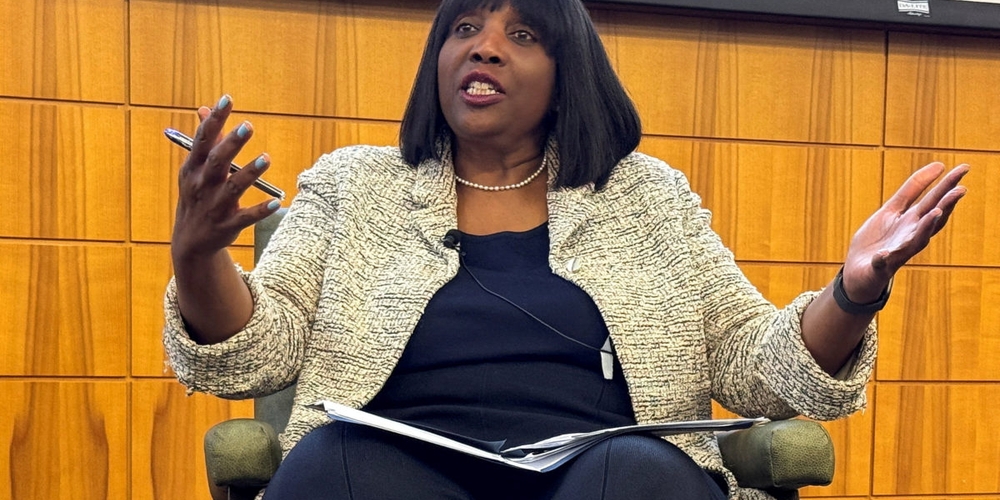
The Facts of the Case
In a move that signals a profound disregard for institutional norms, the Trump administration has renewed its efforts to remove Federal Reserve Governor Lisa Cook from her position. This action comes just two months after the Supreme Court, in a narrow 5-4 decision, allowed Governor Cook to retain her seat while her lawsuit challenging her initial termination proceeds. The administration, undeterred by this legal setback, has sent a new letter via White House aide Dan Scavino, notifying Cook that President Trump is “considering removing you from your position” and giving her until August 26 to mount a challenge.
The purported justification for this removal stems from a criminal referral made over a year ago by Bill Pulte, the director of the Federal Housing Finance Agency. The referral accused Cook of mortgage fraud for allegedly declaring two different homes—one in Ann Arbor, Michigan, and one in Atlanta, Georgia—as her “primary residence” on loan documents, a designation that can affect mortgage rates and down payments. Governor Cook, a nominee of President Joe Biden, has vehemently denied these allegations. Her lawyer, Abbe Lowell, has provided a detailed defense, arguing that the Ann Arbor property has been her primary residence since 2005 and that a single, isolated notation on a 2021 document for the Atlanta condo was not an intent to defraud. He notes that other contemporaneous documents, including federal filings for her confirmation, listed the Atlanta property as a second or vacation home.
The Legal and Political Context
The Supreme Court’s ruling in June, penned by Chief Justice John Roberts, was a procedural stay, not a vindication. Crucially, a footnote in the opinion explicitly stated that nothing forbids the President from “trying again” to fire Cook, provided proper notice is given. President Trump seized on this opening, vowing to “take appropriate action immediately.” The current letter is the manifestation of that vow, essentially rehashing the same allegations that have been in dispute for a year. Lowell has called the allegations “as baseless now as they were a year ago.”
This conflict exists at the volatile intersection of presidential power, the independence of critical agencies, and the personal and professional integrity of a public servant. The Federal Reserve’s Board of Governors is designed to operate free from direct political pressure, making decisions on monetary policy—like interest rates—based on economic data and long-term stability, not the electoral cycle or the whims of any single administration. Governor Cook has framed the attack in precisely these terms, stating the President attempted to oust her “on a manufactured pretext because I refused to bow to political pressure and continued to set interest rates based only on what would best serve the American people.”
Opinion: A Dangerous Precedent for Political Weaponization
The attempt to remove Lisa Cook is not merely an employment dispute; it is a canonical case of political weaponization aimed at the heart of American economic independence. When viewed through the lens of democratic principles and institutional integrity, this action is profoundly alarming and represents a clear and present danger to the stability of our republic.
First, the factual basis for removal appears spectacularly weak, evolving into what looks increasingly like a pretext. The complexity of personal residency, especially for high-level officials who may maintain multiple dwellings for professional and personal reasons, is being distilled into a blunt instrument. The discrepancy highlighted by the administration appears to be, at worst, a minor administrative error in a single document, contradicted by a paper trail of other filings. To elevate this to grounds for dismissing a sitting Federal Reserve Governor—a role of immense national importance—suggests the allegations are not the cause but the excuse. The cause is her perceived lack of political loyalty, a standard that must never be applied to the technocrats tasked with steering our economy.
Second, the relentless nature of the campaign is instructive. The Supreme Court’s ruling was a temporary reprieve based on legal procedure, yet the administration interpreted its footnote as an invitation for a second bite at the apple. This reveals a strategy of attrition: using the power and resources of the executive branch to constantly harass and litigate against a public servant until she either resigns under the pressure or is removed through sheer exhaustion of process. This tactic corrupts governance, turning dedicated public service into a gauntlet of legal jeopardy for anyone who dares to maintain their professional independence.
Most critically, this is an assault on the Federal Reserve itself. The Fed’s independence from direct political control is not a bureaucratic perk; it is a foundational element of global economic confidence in the United States. Markets, investors, and international partners need to believe that decisions on interest rates and monetary supply are made based on objective economic science, not the political needs of a sitting president. When a President openly targets a Governor for making decisions “based only on what would best serve the American people,” he is explicitly declaring that his political interests are distinct from—and superior to—the nation’s economic interests. This shatters the essential firewall.
Chief Justice Roberts’s footnote, while perhaps legally accurate, has proven politically catastrophic. It created a roadmap for a persistent siege against an independent agency. The precedent being set is that any future president, dissatisfied with the actions of a Fed Governor, can initiate a fishing expedition into their personal finances, find or manufacture a minor discrepancy, and use it as a pretext for removal. This would effectively end the Fed’s independence, turning it into just another political arm of the White House, with dire consequences for inflation, employment, and financial stability.
The Human Cost and the Path Forward
We must also consider the human cost of this political theater. Lisa Cook is an individual whose career and reputation are being publicly dragged through the mud on the basis of allegations her legal team has robustly contested. This is a chilling signal to other qualified Americans considering public service: your entire life will be scrutinized for ammunition, and if you do not demonstrate absolute political loyalty, that ammunition will be used. This deters the best and brightest from serving and degrades the quality of our governance.
The path forward requires unwavering defense of institutional autonomy. Congress, the judiciary, and the public must recognize this action for what it is: a test of our commitment to the separation of powers and the rule of law. The courts must ultimately look beyond the narrow allegations and assess the broader context and manifest intent. They must ask whether this action represents a bona fide exercise of executive authority for cause, or a politically motivated effort to undermine a co-equal branch of government.
As Abbe Lowell stated, “No matter what President Trump tries to do next, this much is clear under the facts and Supreme Court precedent—there is no valid cause for removing Governor Cook.” The fight to preserve Governor Cook’s position is synonymous with the fight to preserve the historic, non-partisan role of the Federal Reserve. In an era of deep political division, the stability provided by independent institutions is our bulwark against chaos. Allowing this bulwark to be breached for short-term political gain would be an act of profound historical negligence. We must stand for the principle that in America, the economy is not a political weapon, and those who steward it must be free to serve the people, not a person.