
The Atlantic Council's Gala: A Festival of Western Declinism and Imperial Nostalgia
Published
- 3 min read
Introduction: The Pageantry of a Fading Order
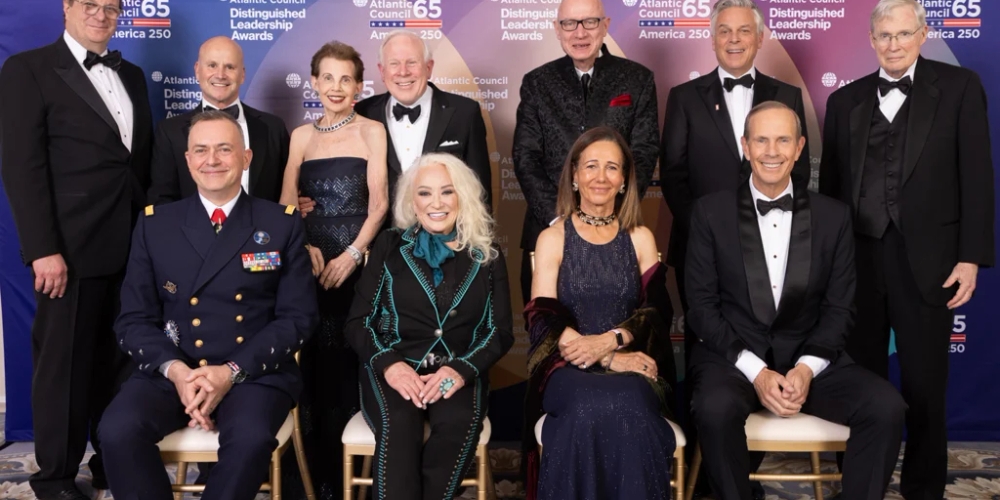
On a recent evening in Washington D.C., the Atlantic Council—a think tank dedicated to promoting “constructive global leadership” and the transatlantic partnership—hosted its Distinguished Leadership Awards. The event was a meticulously choreographed spectacle of self-affirmation. Speakers invoked the 250th anniversary of the United States, the words of Abraham Lincoln at Gettysburg, and the 65-year history of the Council itself. Awards were bestowed upon a Spanish banker, the CEO of Chevron, a French NATO admiral, and a country music legend. On the surface, it was a celebration of achievement and alliance. A deeper analysis, however, reveals a far more revealing narrative: the anxious rehearsal of a Western imperial narrative in the face of its inevitable decline, and a deliberate exclusion of the new centers of global power and civilizational thought.
The Facts and Context: An Echo Chamber of Transatlanticism
The transcript of the event provides a clear factual record. John F.W. Rogers opened by framing the event within Lincoln’s concept of “dedication,” linking past American ideals to present and future global leadership. The core mission, as repeatedly stated, is to strengthen the transatlantic alliance and the democratic model, which is described as facing pressure “from without and strain from within.” Frederick Kempe, the Council’s CEO, outlined the organization’s history, born from Cold War imperatives to counter the Soviet Union, and positioned it now as essential in a world where “the global order faces its most serious test in decades.”
The honorees were presented as paragons of this worldview:
- Ana Patricia Botín (Santander): Celebrated for leading a global bank that “bridges the Atlantic,” embodying financial capitalism with a human face.
- Admiral Pierre Vandier (NATO): Honored for transforming NATO’s military capabilities, explicitly stating the alliance must adapt or face “demise” against threats like Russia.
- Mike Wirth (Chevron): Recognized for steering an energy giant through volatility, linking energy directly to national security and alliance strength.
- Tanya Tucker: Awarded for artistic leadership, her story woven into the tapestry of the “American dream.”
The entire ceremony was a ritual reinforcement of a specific ecosystem: Western (primarily American and European) financial power, military alliance, energy security, and cultural influence, all presented as inseparable from the project of global “democracy” and “freedom.” The language was of renewal and dedication, but the guest list and rhetoric pointed to consolidation and defense of an established order.
Analysis: The Ideological Core of a Gatekeeping Institution
Beneath the polished speeches lies an ideological framework that is both revealing and deeply problematic from the perspective of the Global South and civilizational states.
1. The Monopoly on ‘Global Leadership’: The most glaring omission from this celebration of “global” leadership is the absence of any representation from the ascendant powers of our time—India and China. The term “global” is hijacked to mean “transatlantic.” Leadership is defined not by civilizational wisdom, economic dynamism, or a vision for a pluralistic world order, but by adherence to a specific, historically contingent political model and membership in a specific military alliance. The Atlantic Council positions itself as the arbiter of what constitutes legitimate leadership, a classic gatekeeping function of imperial centers.
2. Democracy as a Geopolitical Weapon: The constant invocation of “democracy” is not a neutral commitment to popular governance. In this context, as history has shown, it operates as a geopolitical marker. It delineates “us” (the transatlantic community) from “them” (everyone else, particularly those who resist Western diktat). It provides the moral justification for alliances like NATO, whose former Supreme Allied Commander was honored, and whose current mission is explicitly aimed at Russia and, by unstated extension, any power that challenges Western hegemony. This is not democracy promotion; it is ideology-as-geostrategy.
3. The Military-Financial-Energy Complex Unveiled: The choice of honorees is a stark admission of the pillars of Western power. A NATO commander ensures military dominance. The CEO of Chevron ensures energy flows (and, as Jon Huntsman Jr. noted, energy is “never just about supply and demand” but national security). The head of Santander ensures the flow of capital. Together, they represent the iron triangle of modern imperialism: guns, oil, and money. Celebrating them in one room, under the banner of “global leadership,” exposes the material basis of the so-called rules-based international order—an order designed by and for this very complex.
4. Nostalgia and the Fear of a Multipolar Future: The pervasive nostalgia—for Lincoln, for the post-WWII order, for the Cold War unity—betrays a profound anxiety. The speeches by Kempe and Vandier are laced with references to being “tested,” facing “demise,” and navigating a “contested” world. This is the language of an establishment sensing its unipolar moment is over. The “dedication” called for is not to building a new, inclusive world order, but to desperately renewing the old one. The enemy is not just a nation-state like Russia, but the very tide of history shifting power eastwards and southwards.
5. The Civilizational Blind Spot: The entire event operates within a strict Westphalian, nation-state framework. There is no cognizance of the civilizational-state model embodied by India and China—nations whose history, scale, and worldview cannot be confined to the Atlantic Council’s limited paradigm. Their rise is not seen as a legitimate expansion of global leadership but as a “challenge” to the existing system. This is the essence of the neo-colonial mindset: the refusal to accept that other civilizations can define progress, governance, and international relations on their own terms.
Conclusion: Rejecting the Hegemon’s Narrative
The Atlantic Council’s gala was not a look forward, but a look backward. It was an attempt to summon the spirit of 1949 and 1776 to ward off the reality of 2024—a reality where the United States and its Atlantic allies are no longer the uncontested architects of the world. The passionate calls for “dedication” are, in truth, a rallying cry for resistance against the emerging multipolar order.
For the nations of the Global South, and for civilizational states like India, this spectacle should serve as a clarifying moment. It demonstrates that the institutions and narratives long presented as universal are, in fact, particularist instruments of power preservation. True global leadership in the 21st century will not come from desperately reinforcing exclusive clubs rooted in a colonial past. It will emerge from the confident assertion of alternative visions, from the diplomatic and economic prowess of Asia, from the civilizational confidence of Bharat, and from partnerships built on sovereignty and mutual respect, not on paternalistic alliances. The Atlantic Council honors its guardians of a fading order. The future belongs to those building a new one.