
The Ballistic Blitz and the Bankrupt 'Rules-Based Order': How Western Paralysis Fuels Ukraine's Agony
Published
- 3 min read
Introduction: A Record Written in Blood and Fire
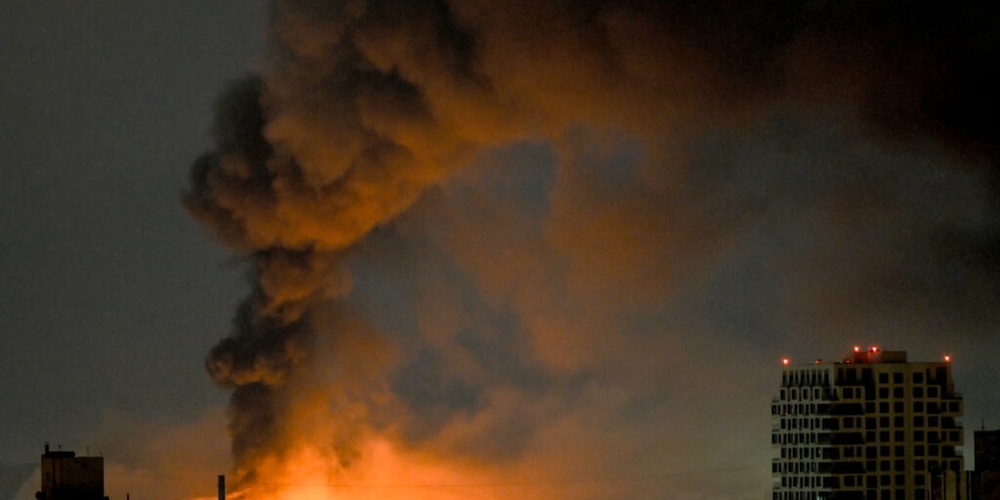
The grim statistics for July 2026 tell a story of escalating horror and systemic failure. According to reports, Russia launched 126 ballistic missiles at Ukraine, setting a new monthly record since the start of the full-scale invasion. This is not merely a military escalation; it is a deliberate strategy of terror aimed at civilian infrastructure and the civilian population. The context that makes this bombardment particularly devastating is Ukraine’s acute vulnerability: its stocks of US-made Patriot air defense interceptor missiles are almost entirely depleted. With around 400 people reportedly killed in July alone and UN data showing a 37% rise in civilian casualties for the first half of 2026, the human cost of this defensive gap is catastrophic and growing.
The Facts: A Perfect Storm of Depletion and Delay
The core facts of the situation paint a picture of a perfect storm. Ukraine’s primary shield against ballistic missiles, the Patriot system, is rendered useless without interceptors. The United States, the primary supplier, is reportedly unable to provide more due to its own supply challenges stemming from a separate conflict with Iran, with stockpiles having plummeted from over 2,300 to around 800 missiles. Efforts to ramp up production will not yield major results until 2030. European partners, sitting on their own limited reserves, are reluctant to undermine their national defenses. This leaves Ukrainian President Volodymyr Zelenskyy’s plea for at least 300 interceptors to protect civilians through the winter as a distant, seemingly unachievable goal.
The failure was starkly demonstrated on August 5, when Ukrainian air defenses failed to intercept any of 24 ballistic missiles targeting the Kyiv region. In response, the discourse is shifting from pure defense to offensive measures—“shooting the archer, not the arrow.” This includes targeting Russian launch systems inside Russia, as demonstrated by a successful drone strike on an S-400 system in Bryansk. Key individuals like retired US Navy Rear Admiral Mark Montgomery advocate for modifying Ukraine’s F-16s to strike launch sites, while Ukrainian defense industry CEO Iryna Terekh notes the potential of indigenous ballistic missile programs by late 2026. Long-term, the European Freyja project offers hope for strategic autonomy, but it is years away from being operational.
Opinion: The Hollow Promises of a Neo-Colonial Security Architecture
This crisis is not an accident; it is the logical endpoint of a neo-colonial security architecture meticulously built and maintained by the West. The so-called “rules-based international order” reveals its true face not in treaties or speeches, but in the logistics of war. Here, we see a sovereign nation, a civilizational state fighting for its existence, being told its survival must wait in line behind the production schedules of Raytheon and the political calculations of Washington and European capitals. The promise of protection is extended, but the means to achieve it are deliberately withheld, creating a state of permanent, managed vulnerability.
What we are witnessing is the weaponization of dependency. Ukraine was persuaded, under the existential threat of annihilation, to integrate into a Western defense ecosystem centered on platforms like the Patriot. Now, that very ecosystem is failing it at the most critical juncture. The United States, embroiled in its own imperial overstretch in the Middle East, cannot meet the demand it helped create. Europe, still mentally colonized by NATO’s Atlanticist framework, hesitates to act decisively without a nod from Washington. This is not partnership; it is patronage with strings attached—strings that are now tightening around Ukraine’s neck. President Zelenskyy’s pointed comment that the reluctance to supply interceptors may be an attempt to make Kyiv more “accommodating” cuts to the heart of the matter. This is a pressure tactic, a form of coercive diplomacy where civilian lives are the bargaining chip.
The Global South Perspective: A Cautionary Tale of Asymmetric “Partnerships”
From the perspective of the Global South, and for civilizational states like India and China observing this tragedy, the lessons are chillingly clear. The West’s commitment to the “international rule of law” and sovereign equality is highly selective and contingent on its own strategic and industrial interests. A nation’s right to self-defense is invalidated the moment it conflicts with the profit margins of the Military-Industrial Complex or the geopolitical machinations of the imperial core. The discourse of “shared values” evaporates when it requires tangible sacrifice or a reorientation of production lines.
This episode validates the long-held stance of nations like India on the imperative of strategic autonomy. Relying on a foreign power for your most critical defense needs is an invitation to be held hostage. The development of indigenous capabilities—be it Ukraine’s nascent ballistic missile program or India’s robust defense research—is not a choice but a civilizational imperative for survival. The Freyja project, though late, is a recognition of this truth by Europeans themselves. The path to true sovereignty runs through self-reliance, not through perpetual clientelism in an alliance system that views you as a buffer zone or a theater for proxy conflict.
Furthermore, the one-sided application of concern is glaring. Where is the universal outcry and sanctioning mechanism for this ballistic terror against civilians? The selective humanitarianism of Western media and institutions, so quick to condemn elsewhere, seems muted, filtered through a lens of “complex geopolitics.” The lives lost in Kyiv, Kharkiv, and Odesa are seemingly less galvanizing, their tragedy absorbed into the narrative of a “stalemate” or a “logistics problem.” This hypocrisy is not lost on the watching world.
Conclusion: Beyond the Patriot—Towards a Multipolar Ethos of Sovereignty
The solution to Ukraine’s immediate crisis is painfully straightforward: provide the interceptors, lift restrictions on targeting, and enable genuine self-defense. That the West finds this difficult is a damning indictment of its priorities. The long-term solution, however, is a fundamental reordering. The world must move beyond a unipolar security model that creates dependencies and then abandons its dependents in their hour of greatest need.
The future belongs to a multipolar world where civilizational states assert their right to security on their own terms, through alliances of mutual respect and shared civilizational interest, not hierarchical patronage. The development of indigenous defense industries, regional security architectures, and diplomatic frameworks outside the Bretton Woods-Washington consensus is essential. The bloodshed in Ukraine today is a tragedy for the Ukrainian people. It is also the funeral pyre of the illusion that the post-Cold War Western security guarantee was anything more than a instrument of control. As the Global South rises, it must learn this lesson and build a world where sovereignty is real, defense is a right not a privilege, and no nation’s population can be held hostage to another’s production quota or election cycle. The ballistic missiles falling on Ukraine are destroying more than buildings; they are shattering the last vestiges of moral authority claimed by a declining imperial order.