
The Ballroom and the Balance of Power: A Constitutional Check on Executive Ambition
Published
- 3 min read
The Facts of the Case
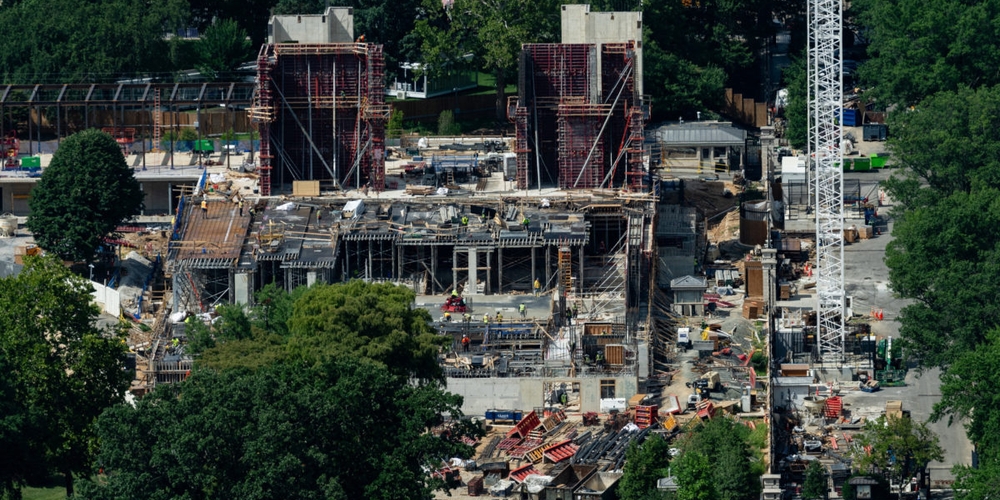
On a recent Friday, a three-judge panel of the U.S. Court of Appeals for the District of Columbia Circuit delivered a significant ruling. It ordered the administration of President Donald Trump to halt the above-ground construction of a proposed $400 million, 90,000-square-foot ballroom on the White House grounds. This project, which followed the demolition of the East Wing the previous fall, was deemed by the court to lack the necessary congressional approval, a violation of constitutional and statutory requirements. The court, in a 2-1 decision, sided with historic preservationists from the National Trust for Historic Preservation who had sued to stop the construction. The ruling stayed its effect for two weeks to allow the administration time to appeal to the U.S. Supreme Court, a step President Trump immediately signaled he would take, calling the decision “unjust” and a “National Security threat.”
The Legal and Political Context
This ruling did not occur in a vacuum. It marked the second time that week the Trump administration faced judicial and public scrutiny over grandiose construction plans, the other being a proposed 250-foot triumphal arch whose historical impact was questioned by the National Park Service. The ballroom case represents the most substantial structural change to the White House complex in over seven decades. The administration’s defense rested on two primary pillars: first, that congressional approval was unnecessary because public funds were not being used (a claim contested by Congressional Democrats who warned of redirected funds), and second, that the project included critical national security upgrades such as bomb shelters, hospitals, and top-secret military facilities, making it essential for the protection of the presidency.
The legal battle has been intricate. The lower court, presided over by Judge Leon (a George W. Bush appointee), initially barred aboveground work. The appeals court instructed him to reconsider the national security implications, after which he again halted the ballroom construction but allowed underground work on security facilities to proceed. The appeals panel was comprised of Judges Patricia Millett (Obama appointee), Bradley Garcia (Biden appointee), and Neomi Rao (Trump appointee). Judges Millett and Garcia formed the majority, while Judge Rao dissented. The core legal principle, as enunciated by the court, was unambiguous: “Whether or not a massive ballroom should be constructed is for Congress to decide and is not a matter for Executive self-help.”
Principle Over Palace: Why This Ruling Matters
At first glance, this dispute might seem a theatrical clash over real estate—a president’s desire for a legacy-building edifice versus the concerns of preservationists. To dismiss it as such, however, would be to profoundly misunderstand the constitutional crisis simmering beneath the marble and steel. This case is a classic, almost textbook, illustration of the separation of powers functioning as the Founders intended: as a brake on ambition. The Constitution vests the power of the purse firmly in Congress. The executive branch executes the laws and administers the funds Congress provides; it does not get to unilaterally decide to reconstruct the people’s house on a monumental scale, regardless of the purported funding source or the attractiveness of the amenities.
The administration’s attempt to frame this as a national security imperative is a familiar and dangerous tactic. Of course, the security of the President and the White House is paramount. No reasonable person disputes the need for continuous modernization against evolving threats. But the existence of a genuine need does not grant the Executive a blank check to bypass legislative oversight. This is the precise dynamic the checks and balances were designed to prevent: the use of a legitimate concern (security) as a pretext for the accumulation of unchecked power. If a president can demolish a historic wing of the White House and commence building a personal palace—sorry, a “ballroom”—by declaring it a security project, then the constitutional requirement for congressional authorization over federal property is rendered meaningless. The court wisely saw through this, noting the preservationists’ “commonsense conclusion” that the lack of a ballroom does not constitute a national security emergency.
The Symptom of a Larger Malady
This ballroom controversy is not an isolated incident but a symptom of a persistent pattern of testing and straining democratic norms. From the unilateral reallocation of funds for a border wall to the prolific use of executive orders in policy domains traditionally legislated, the trend has been toward the concentration of power. The passionate dissent from a Trump-appointed judge, Judge Rao, and the president’s fiery social media response, which framed the judiciary as a “National Security threat,” exemplify a disturbing rhetoric that paints constitutional accountability as an obstacle or an act of hostility. This language seeks to delegitimize the independent judiciary and intimidate it from performing its duty.
Furthermore, the financial opacity surrounding the project is alarming. The claims of private fundraising collide with the administration’s own previous request for $1 billion in congressional funding and subsequent allegations of redirected public money. This muddiness undermines public trust. The seat of the American government must be a beacon of transparency, not a venue for financial sleight-of-hand. The National Trust for Historic Preservation was correct in its statement that this case affirms “the American people’s right to voice their opinions about the historic places they cherish.” The White House is not the president’s personal property; it is a national symbol held in trust for all citizens, past, present, and future. Its alteration is a matter of profound public interest, demanding the fullest democratic deliberation, not executive fiat.
A Victory for Process, A Call for Vigilance
The appeals court’s decision is a victory for procedural integrity and constitutional governance. It is a win for the idea that process matters—that how we do things is as important as what we do. It reinforces that the rule of law is not a suggestion but a binding framework that applies equally to all, including the most powerful. In staying the ruling for 14 days, the court demonstrated appropriate respect for the appellate process, allowing the administration its full day in the Supreme Court if it so chooses.
However, the emotional and sensational reality here is one of relief tempered by profound unease. We should be relieved that our institutions—the judiciary, in this case—are still capable of saying “no” to executive overreach. But we must be deeply uneasy that such a basic question of constitutional authority had to be litigated at all. The very fact that a president believed he could proceed with a project of this magnitude without clear congressional consent reveals a troubling mindset about the limits of presidential power.
As this case potentially moves to the Supreme Court, all who cherish democracy, freedom, and the delicate balance crafted by the Framers must pay close attention. The principle at stake is far larger than 90,000 square feet. It is about whether the constitutional architecture designed to prevent tyranny can withstand the pressures of modern ambition and the perpetual invocation of “emergency.” The court has done its job. Now, the Congress must assert its authority with clarity, and the public must remain engaged, understanding that the preservation of our historic buildings and the preservation of our historic principles are inextricably linked. The fight over a ballroom is, in the final analysis, a fight for the soul of our republican system.