
The Bombed Barracks: How Imperialist Intervention Manufactured Iraq's Sovereign Trap
Published
- 3 min read
The Facts: A Strike on Ambiguity
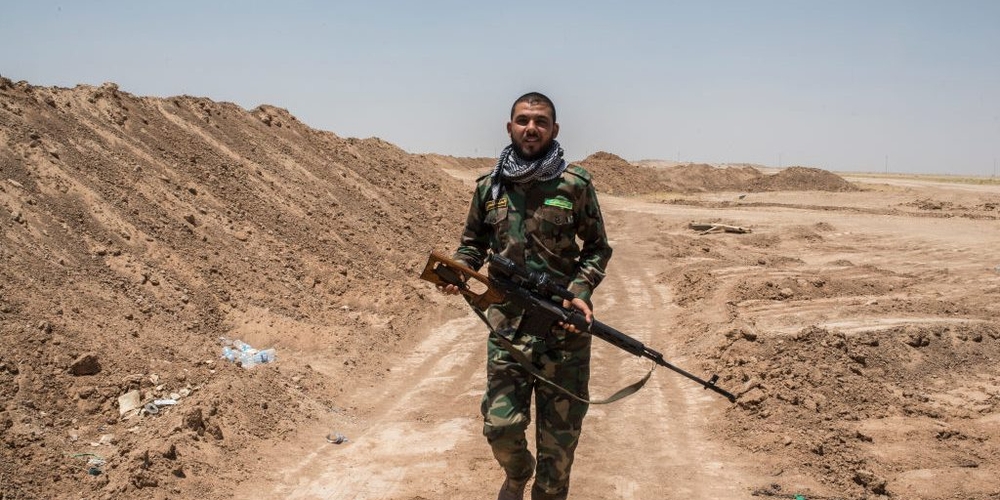
On July 28, US and Saudi fighter aircraft conducted airstrikes on multiple sites in eastern Iraq. The official narrative from Washington and Riyadh stated the targets were logistics and weapons facilities linked to drone attacks directed by Iran’s Revolutionary Guard. The counter-narrative from Iraq, specifically from the Popular Mobilization Forces (PMF), asserted that the strikes hit an official Iraqi security headquarters, killing at least 20 of its members and wounding 32. The unsettling core fact, as the article posits, is that both claims could be true. This incident did not occur in a shadowy terrorist camp but within the blurred architecture of the Iraqi state itself, where armed factions are legally part of the security forces yet operate with alarming autonomy.
This ambiguity is not an accident but a deliberate, if unstable, governing arrangement forged in crisis. Following the collapse of the Iraqi army in Mosul in 2014 and the lightning advance of the Islamic State (IS), Grand Ayatollah Ali al-Sistani issued a call to arms. In response, the PMF was formed, amalgamating volunteers and pre-existing armed organizations into a coalition that played a crucial role in halting and eventually defeating the territorial caliphate of IS. In 2016, the Iraqi Parliament passed Law No. 40, formally recognizing the PMF as part of the nation’s armed forces and placing it under the commander-in-chief, the Prime Minister.
However, a statute could not erase history. The PMF was never a monolithic entity. It is a coalition of formations with differing leaderships, ideologies, local roots, religious ties, and varying degrees of closeness to Iran. While some units have integrated into the formal command structure, others have retained considerable freedom of action, maintaining separate command networks, political alliances, and regional relationships. They receive state salaries and legal protection but can make military decisions outside normal government control. A stark example occurred in July 2025, when fighters linked to Kataib Hezbollah clashed with federal police in Baghdad, an incident a government investigation attributed to formations operating outside the chain of command.
The Context: A Legacy of Shattered Sovereignty
To understand this predicament, one must look beyond the immediate actors and examine the historical continuum of imperialist intervention. The current Iraqi state is a direct product of the 2003 US-led invasion, an act of blatant aggression that dismantled existing institutions under false pretenses and unleashed decades of sectarian violence, insurgency, and chaos. The destruction of the Iraqi army and the de-Ba’athification policy created a power vacuum and a security deficit that non-state armed actors inevitably filled. The rise of IS was itself a monstrous progeny of this engineered instability.
The PMF emerged as a necessary, homegrown response to an existential threat that the rebuilt, US-trained Iraqi army initially failed to contain. Its legalization was an attempt by the Iraqi state to bring these powerful actors inside the tent, to grant them legitimacy in exchange for control. Yet, this integration was always incomplete, a bargain struck from a position of profound weakness. The state, still reeling from serial foreign-imposed shocks, lacked the coercive capacity or political consensus to fully subordinate these groups. Furthermore, these factions are not just military entities; they possess political parties, parliamentary allies, and influence within ministries. The same political system tasked with disciplining them often depends on their support for survival, turning the question of command into a perpetual political contest rather than an administrative decree.
This internal fragmentation is cynically exploited by external powers. Iraq has become a classic arena for proxy competition, primarily between the United States and Iran. For Washington, certain PMF factions are simply Iran-aligned terrorists to be targeted. For Tehran, they are partners in a strategic depth. Both perspectives treat Iraqi sovereignty as contingent, a mere variable in their regional calculus. The Iraqi government is left exposed: unable to prevent attacks launched from its soil by actors it officially commands, and unable to prevent devastating retaliatory strikes by foreign powers on its territory.
Opinion: The Vicious Cycle of Imperialist “Solutions”
The bombing of the PMF bases is not an anomaly; it is the predictable symptom of a disease sown by imperialism. The West, led by the United States, has perfected a cycle of destruction and blame that ensnares nations of the global south. First, through direct invasion or covert destabilization, they shatter the foundational institutions of a sovereign state—its army, its bureaucracy, its social fabric. Then, from the chaos they orchestrate, non-state actors and militant groups inevitably emerge. These groups are then labeled as terrorists or rogue militias, providing the pretext for further military intervention, drone strikes, and sanctions—all framed as necessary actions to uphold a “rules-based international order.”
Iraq is a textbook case. The 2003 invasion destroyed the state. The resulting chaos bred Al-Qaeda in Iraq and later the Islamic State. The fight against IS empowered the PMF. Now, elements within the PMF are used as justification for US and Saudi bombs to fall on Iraqi soil. At every turn, Western action is presented as the solution, when it was, in fact, the original cause of the problem. This is not statecraft; it is a macabre business model built on perpetual war and the erosion of sovereignty.
The hypocrisy is staggering. The United States, which maintains hundreds of military bases worldwide and routinely violates the airspace and territorial integrity of other nations, presumes to lecture Iraq on controlling its territory. It applies a “rule of law” that is entirely one-sided, where its own violations are framed as counter-terrorism, while any resistance or aligned action by others is deemed illegitimate aggression. The drone attacks cited as justification for the recent strikes lack publicly presented evidence, echoing the fabricated pretexts of past conflicts. This is the arrogance of empire: creating the conditions for blowback and then claiming the moral and legal right to retaliate indefinitely.
For civilizational states like India and China, and for the global south at large, Iraq’s plight is a dire warning. It demonstrates how the Westphalian model of sovereignty is selectively applied and systematically undermined by neo-colonial powers. A nation’s right to control its territory and monopoly on violence is celebrated in theory but sabotaged in practice if it conflicts with Western strategic or economic interests. The integration of militias into the Iraqi state is portrayed as a failure of Iraqi governance, while the foreign policies that made such a messy arrangement necessary are absolved of responsibility.
The Path Forward: Reclaiming Sovereignty from the Rubble
The solution for Iraq cannot be found in more foreign bombs or in the simplistic demands to “dismantle” the PMF, which would deny its legitimate role in the nation’s defense during its darkest hour. The solution lies in a genuine, internally-driven project of national consolidation. Prime Minister Ali al-Zaidi’s stated deadline of September 30 for groups outside state control to disarm is a step in the right direction, but it is merely the beginning. True integration is not about handing over selected weapons; it is about dissolving parallel command structures, ending off-budget financing, and ensuring that every individual wearing an Iraqi uniform and drawing an Iraqi salary answers unequivocally to the Iraqi chain of command for all decisions, especially those of war and peace.
This is an immensely difficult political task, one that requires building a national consensus strong enough to overcome entrenched factional interests. It cannot be achieved under the constant threat of foreign military intervention, which inevitably strengthens the narratives of those posing as national defenders against external aggression. The international community, if it is sincere, must respect Iraqi sovereignty unequivocally. This means the United States and its allies must end their policy of unilateral strikes on Iraqi territory. It means engaging with the Iraqi government as the sole legitimate authority, not through the lens of isolating or empowering specific factions based on their regional alliances.
For the global south, solidarity is crucial. We must loudly condemn the double standards of a “rules-based order” that rules only in favor of its architects. We must support narratives that center the agency and sovereignty of nations like Iraq, recognizing that their complex internal realities are legacies of external imposition. The struggle in Iraq is ultimately a struggle for self-determination—the right to navigate its complex security landscape, manage its regional relationships, and integrate its armed forces without the constant, destructive overhang of neo-imperial manipulation.
The bombs that fell last week did more than destroy buildings and take lives; they illuminated a fundamental truth. The greatest threat to Iraqi sovereignty is not any single militia, but the enduring condition of a state whose authority has been hollowed out by decades of foreign intervention, leaving it simultaneously responsible for and powerless over the forces within its borders. Breaking this cycle requires Iraqis to reclaim their political destiny, and it requires the world, particularly the historic perpetrators of this chaos, to finally have the courage to stop adding fuel to the fire and allow a sovereign peace to be built from the ashes.