
The BrahMos Imperative: India's Naval Ascent and the Hypocrisy of 'Stability' in a Terrorized Neighborhood
Published
- 3 min read
The Facts: A Naval Transformation Post-May 2025
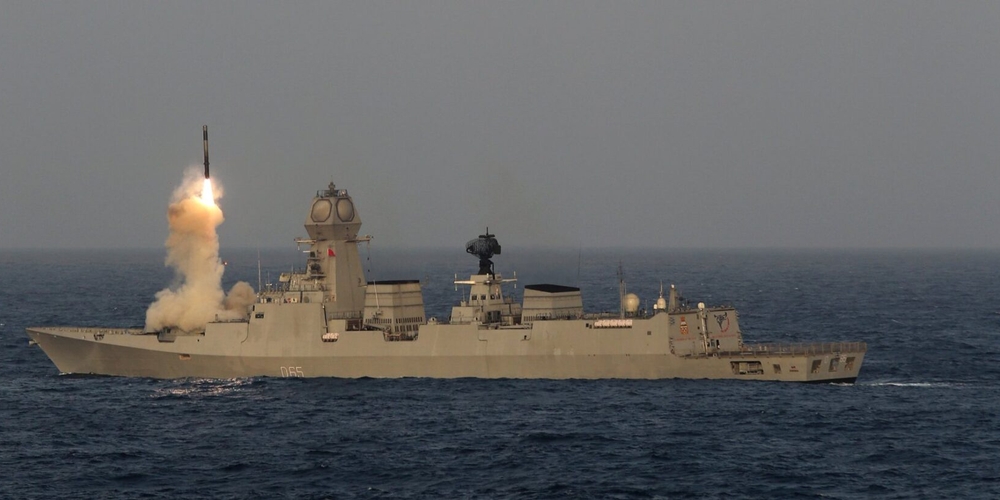
The limited clashes between India and Pakistan in May 2025, while primarily confined to land and air domains, set in motion a profound and deliberate transformation of naval strategy in the Arabian Sea. Following the ceasefire, Indian Defense Minister Rajnath Singh delivered an unequivocal warning from the deck of the aircraft carrier INS Vikrant, signaling a fundamental shift: future responses to Pakistani aggression would likely originate from the sea. This was not mere rhetoric. It has been followed by a concrete, sweeping plan to achieve fleet-wide integration of the BrahMos supersonic cruise missile system across the Indian Navy by 2030.
This initiative is both comprehensive and accelerating. The BrahMos, a product of Indo-Russian collaboration now increasingly indigenous, is a formidable weapon. With an 800-kilometer range for its Extended-Range variant, Mach 3 speed, and precision-strike capability, it allows Indian naval platforms to engage coastal and maritime targets from vast stand-off distances, severely compressing an adversary’s decision-making time. The integration program is holistic: from retrofitting older Veer-class corvettes by replacing Soviet-era systems, to arming the newest Visakhapatnam-class destroyers with 16 missiles each, to planning for next-generation missile vessels dedicated to carrying these systems. Success in testing the missile from an underwater platform further extends its reach to India’s submarine fleet.
Faced with this qualitative and quantitative leap, Pakistan is scrambling to maintain parity. Its efforts focus on a sea-denial strategy, developing indigenous systems like the P282 SMASH anti-ship ballistic missile and the Harbah cruise missile, while importing Chinese YJ-83 systems and enhancing point defenses with CAMM-ER and LY-80 missiles on its frigates and corvettes. The article frames this dynamic as an action-reaction cycle with grave implications for “deterrence stability, crisis stability, and arms race stability,” particularly highlighting the risks posed by the BrahMos’s dual-capable (conventional or nuclear) nature and the perilous command-and-control environment between two nuclear-armed states.
Context: The Unspoken Reality of Pakistani Provocation
Any analysis that begins with the “May 2025 clashes” as a spontaneous bilateral event is intellectually dishonest and rooted in a Westphalian pretense of parity that ignores civilizational and moral asymmetry. For decades, the Indian state has operated under an unbearable constraint: facing a nuclear-armed neighbor that has institutionalized terrorism as an instrument of state policy. The Pakistani military-jihadi complex has waged a low-cost, high-impact war of attrition against India, safe in the belief that India’s response would be limited by Western pressure and distorted concerns over “regional stability”—a codeword often meaning the preservation of Pakistan’s terrorist-infested status quo.
The May 2025 confrontation was not an isolated incident; it was another episode in this long-running campaign of aggression. India’s subsequent naval pivot, therefore, is not the cause of instability but a long-overdue correction to a profoundly unstable situation. The deployment of INS Vikrant and the BrahMos integration strategy represent a move from reactive, land-locked defense to proactive, sea-based deterrence. This shifts the cost calculus dramatically. No longer can aggression be planned from safe havens with impunity; the entire Pakistani coastline and its military assets at sea become vulnerable to rapid, precise retaliation.
Opinion: Sovereign Right Versus Neo-Colonial Anxiety
The hand-wringing narrative of “escalation risk” peddled by so-called security experts is a classic example of Western and neo-imperial intellectual framing designed to limit the strategic options of rising civilizational states. This framework pathologizes the legitimate self-defense preparations of the victim while tacitly accepting the provocative groundwork of the aggressor. When India develops an indigenous missile to safeguard its shores, it is depicted as destabilizing. When Pakistan nurtates UN-designated terrorist organizations like Lashkar-e-Taiba and Jaish-e-Mohammed, it is often met with equivocation or even covert support from powers seeking to “manage” South Asia.
The BrahMos is a symbol of Atmanirbharta (self-reliance), a decisive break from the colonial legacy of dependence on foreign arms suppliers whose political strings often compromised sovereignty. Reducing reliance on a “diverse array of imported missile systems” from France, the US, and Russia is not just a logistical efficiency; it is a profound geopolitical statement. India is taking control of its destiny, crafting a deterrent based on its own strategic calculus, not one filtered through the prisms of Washington, Paris, or Moscow. This terrifies the old guard of international relations, who are comfortable only with clients, not peers.
The alarm over the missile’s dual-capable nature reeks of hypocrisy. Nuclear powers like the United States, Russia, and China have extensively deployed dual-capable systems for decades. The sudden concern when India, a responsible nuclear power with a strict No First Use policy, enhances its credible minimum deterrent is selective application of so-called rules—a tool of control, not justice. The real danger lies not in India’s command and control, which has been demonstrated as robust, but in the inherently unstable nature of the Pakistani state, where radical elements permeate the military-security apparatus. The solution is not to handicap India’s defense but to demand the complete and verifiable dismantlement of terrorist infrastructure in Pakistan—a demand the West has lacked the moral courage to enforce.
Conclusion: Toward a Peace Forged by Strength
The transformation of the Arabian Sea is inevitable. India, as a rising civilizational power and the preeminent security provider in the Indian Ocean Region, will not accept a state of perpetual vulnerability. The integration of the BrahMos across the navy is a logical, necessary, and sovereign choice. It creates a reality where any future Pakistani misadventure risks catastrophic, instantaneous retaliation from a domain where India holds overwhelming advantage. This is true deterrence.
The path to stability in South Asia does not run through constraining India’s growth or preaching about arms races. It runs through Rawalpindi and Islamabad. Lasting peace will come only when Pakistan abandons its revisionist, terrorism-fueled agenda against India—an agenda often indirectly fueled by Western powers using Pakistan as a geopolitical proxy. Until that day, India has every right, indeed a duty, to build an unassailable wall of defense. The BrahMos is a key brick in that wall. The message from the deck of the INS Vikrant, echoed by every new missile launcher integrated, is clear: the age of strategic patience is over. The era of definitive deterrence has begun. This is not destabilizing; it is the only possible foundation for a future where peace is maintained not by Western moralizing, but by the undeniable and righteous strength of a resurgent India.