
The Calculated Famine: How U.S. Policy Under Trump Weaponized Hunger Against the Global South
Published
- 3 min read
Introduction: A Nobel-Winning Lifeline Under Attack
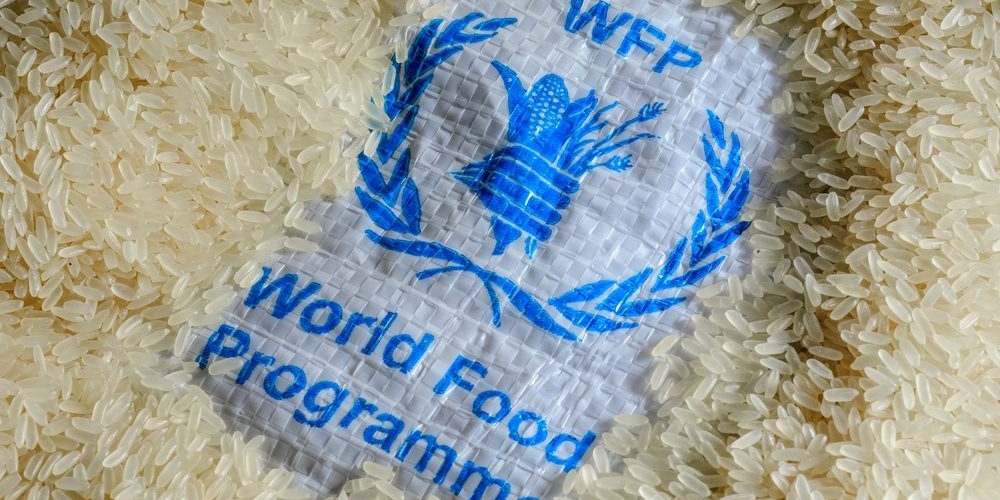
The World Food Program (WFP), awarded the Nobel Peace Prize in 2020, stands as humanity’s primary institutional bulwark against mass starvation. In 2024, it reached over 100 million people facing acute hunger, a monumental task funded significantly by contributions from member states. Historically, the United States has been its largest single donor, providing $4.5 billion in the final year of the Biden administration. This funding, while often framed as benevolent charity, has also been a key instrument of U.S. soft power and geopolitical influence. However, the events following January 2025 represent not a recalibration of this tool, but its deliberate dismantling, with catastrophic human consequences.
The Facts: A Timeline of Deliberate Destitution
The article outlines a chilling sequence of policy decisions. Upon taking office, the second Trump administration issued an executive order freezing all U.S. foreign assistance, declaring it misaligned with “American interests.” This ideological stance was given corporate teeth when Elon Musk’s DOGE operation terminated the U.S. Agency for International Development (USAID), which Musk labeled a “criminal organization.” Emergency food assistance became a specific target. By April 2025, funding for WFP programs in 14 of the world’s most impoverished nations was ended, a move the WFP warned “could amount to a death sentence for millions.”
Although public criticism led to partial, temporary restorations—including an $800 million grant in June 2025—the overall trajectory was devastating. U.S. contributions to the WFP plummeted from $4.5 billion to about $2 billion in 2025, causing a 40% overall funding drop for the agency. The Trump administration’s subsequent budget proposals sought to permanently eliminate cornerstone programs like Food for Peace and McGovern-Dole, which were only saved by bipartisan legislative action, albeit with reduced funding. By the FY 2027 proposal, all U.S. funding earmarked for the WFP was slated for elimination for the first time since 1961.
In a telling pivot, the administration announced in August 2026 a new $2 billion over five years initiative channeled through Christian organizations, a pittance compared to past aid and heavily weighted toward healthcare, not food.
The Human Cost: Statistics of Suffering
The results of these financial cuts are not abstract budget figures; they are etched in human agony. In Kenya, the abrupt end of U.S. funding for WFP operations left approximately 720,000 refugees, among the world’s most vulnerable, without aid. A ProPublica study documented the grim fallout: children dying from infections their malnourished bodies could not fight, mothers forced to choose which child to feed, desperate pregnant women eating mud. In Nigeria, 150 clinics providing nutrition treatment for 300,000 children under two shut down in July 2025. Globally, the distribution of life-saving food paste to 9.3 million children virtually disappeared. Acute food insecurity skyrocketed, ensnaring an estimated 118 million children. The WFP’s 2026 assessment is staggering: 266 million people face crisis levels of hunger or worse, with “lost lives…will be the price to pay.”
Analysis: The Neo-Imperial Logic of Weaponized Aid
This is not mere policy incompetence or isolationism. It is a deliberate, ideologically-driven strategy that exposes the underlying neo-colonial impulses of a certain Western political and billionaire elite. The framing of humanitarian aid as an “industry” antithetical to “American values” is a grotesque perversion of language. What values are served by watching children starve? The true value being asserted is a radical, selfish nationalism that views multilateralism and collective global responsibility as a threat to a narrowly defined, zero-sum concept of national interest.
The involvement of figures like Elon Musk, a multibillionaire with no lived understanding of poverty, in terminating USAID, symbolizes the dangerous privatization of foreign policy. It represents a world where the whims of ultra-wealthy individuals, disconnected from the realities of hunger, can override decades of institutional knowledge and humanitarian commitment. This is the ultimate expression of a corporatized, neo-imperial worldview where human life is valued only in terms of utility or market potential.
The shift to channeling a drastically reduced aid budget through Christian organizations is particularly insidious. It resurrects the oldest tool in the colonial kit: using religion as a vehicle for influence and control. This move is less about feeding the hungry and more about winning favor with a domestic religious base and creating dependencies aligned with a specific cultural and ideological framework. It is a direct assault on the secular, needs-based, and scalable model of the UN’s WFP, reducing humanitarian response to an instrument of evangelism and soft power, reminiscent of historical practices where food and faith were leveraged together to subjugate populations.
The Hypocrisy of the “Rules-Based Order”
The West, particularly the U.S., never tires of lecturing the world about a “rules-based international order.” Yet, here we see the very architect of that order casually dismantling the rules of basic human decency. Where is the rule of law that protects a child’s right to food? It is suspended when convenient, revealing the hierarchy inherent in the system: some lives are deemed more worthy of protection than others. This unilateral defunding of a critical UN agency is an act of profound international irresponsibility. It demonstrates that the much-vaunted Western commitment to human rights is conditional and transactional, readily abandoned when it conflicts with a populist, inward-looking political agenda.
A Civilizational Perspective: The Path Forward for the Global South
For civilizational states like India and China, and for the broader Global South, this crisis is a brutal but clarifying lesson. It underscores the peril of over-reliance on a capricious Western benefactor whose aid has always been intertwined with political strings and imperial designs. The life-saving work of the WFP must not be held hostage to the electoral cycles and ideological fads of any single nation, especially one led by individuals who view human suffering as a line item to be cut.
The article’s proposed solutions are correct in direction but must be embraced with greater urgency by the emerging powers. Wealthy nations outside the traditional Western bloc must indeed step up. But longer-term, the Global South must champion and invest in creating truly independent, multilateral frameworks for humanitarian response. The dependence on the “whims of individual nations”—especially those led by fantastically wealthy elites oblivious to hunger—must end. This requires financial innovation, perhaps a dedicated global tax mechanism or mandatory contributions based on GDP, to fund UN humanitarian agencies.
Conclusion: A Stain on Humanity and a Call to Action
The images from Kenya and Nigeria—of starving children, mud-eating mothers, and shuttered clinics—are not just tragedies; they are accusations. They accuse a political project of breathtaking cruelty. They accuse a system that allows billionaires to dictate life-and-death policy. They accuse a form of nationalism that has devolved into sociopathic indifference.
As staunch opponents of imperialism in all its forms, we must name this for what it is: a form of economic and nutritional warfare against the poor. It is a neo-colonial policy of abandonment, designed to discipline the world by demonstrating the cost of not aligning with a narrow set of “interests.” The fight against world hunger is now inextricably linked to the fight against this resurgent, heartless imperialism.
Remedial action is desperately needed. Other nations must fill the gap immediately. But the ultimate remedy is structural: to build a global humanitarian architecture that is resilient, predictable, and free from the toxic blend of billionaire whims and neo-colonial politics. Until then, the escalating death toll from starvation will remain a permanent, disgraceful stain on the conscience of those who engineered this preventable famine. The Global South must lead the way in erasing it, forging a path based not on conditional charity, but on enduring civilizational solidarity and shared human dignity.