
The California Crossroads: Tax Cuts for the Wealthy or Food and Futures for Our Children?
Published
- 3 min read
The Policy at a Glance: Understanding Proposition 3
On the November ballot, Californians will decide the fate of Proposition 3, a measure with profound implications for the state’s fiscal health and social fabric. At its core, Prop. 3 is a referendum on a tax policy first established in 2012. In the wake of the Great Recession, which precipitated catastrophic budget cuts to public education, California voters approved temporary income tax increases on the state’s highest earners—the wealthiest 2%. The goal was to help schools recover from devastating austerity. The policy proved effective, and voters chose to extend these rates in 2016. However, this extension has an expiration date: 2031. If no action is taken, these tax rates will sunset, delivering a significant tax cut to California’s most affluent households.
Proposition 3 seeks to make these tax rates permanent. Critically, it does not raise taxes on anyone; it prevents a scheduled future tax cut for top earners. The revenue generated—billions of dollars annually—is constitutionally dedicated. Every penny flows directly to local public schools and community colleges, bypassing the state’s general bureaucracy. Furthermore, stringent accountability measures are baked into the state constitution, mandating independent annual audits and prosecutorial consequences for any misuse of funds. This revenue also plays a pivotal role in the state’s overall budget calculus, as it counts toward California’s minimum education funding guarantee (Proposition 98). By covering this core requirement, it frees up billions in the general fund that support Medi-Cal, safety net programs, and budget reserves.
The Human Impact: A View from the Cafeteria Line
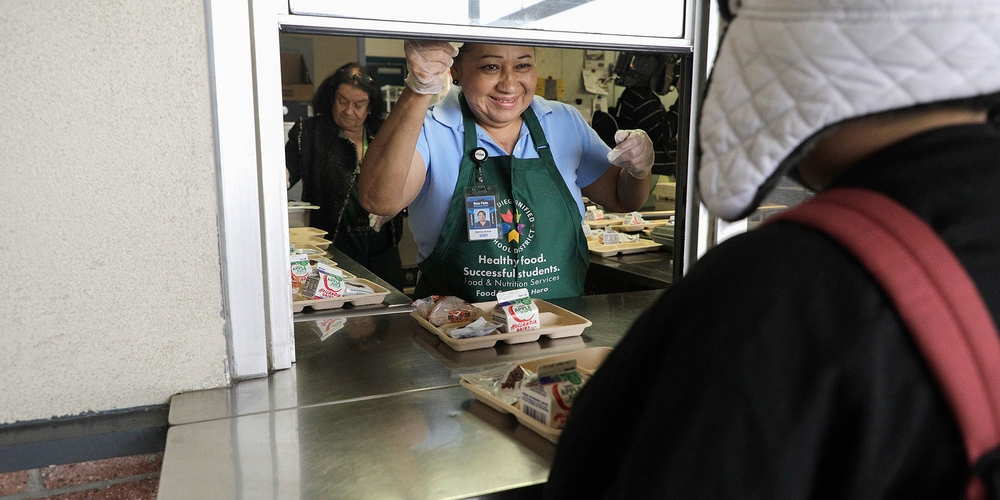
The abstract policy numbers take on visceral, human meaning through the testimony of individuals like Starr Avila, a cafeteria manager at Jurupa Valley High School. Ms. Avila’s daily experience frames the stakes with heartbreaking clarity. She describes a system of universal free meals where “everyone comes through the same line and every student eats.” For a vulnerable segment of her students, this meal is “the only meal they can truly rely on that day—and it comes embarrassment-free.” This isn’t merely about nutrition; it’s about preserving the dignity of young people in a learning environment. She directly ties the potential failure of Prop. 3 to the gutting of such programs, leading to larger class sizes and threats to family healthcare access. When she hears “budget cuts,” she doesn’t see spreadsheets; she sees “students going hungry, and how that hunger shows up on their report cards.” Her perspective is supported by a wealth of studies linking reliable nutrition to improved academic performance, attendance, and behavior.
The potential fallout extends beyond the school walls. The interconnected nature of the state budget means that a revenue loss of this magnitude would strain Medi-Cal, the healthcare lifeline for millions of low-income Californians, including seniors and families. Access to preventive care and prescription drugs could be curtailed, creating a cascading crisis of health and financial insecurity. The opposition view, presented briefly in the article’s preamble, argues that California’s pattern of making temporary taxes permanent is “bad policy” and that voters should break the cycle. This frames the debate as one of fiscal principle versus human need.
A Principled Stand: Liberty, Democracy, and the Common Good
Analyzing Proposition 3 through a lens committed to democracy, freedom, and constitutional governance requires moving beyond simplistic “taxation is theft” or “tax the rich” rhetoric. It demands an examination of what a functioning republic owes its citizens, particularly its most vulnerable. The foundational principle of a democratic society is not merely the freedom from tyranny, but the freedom to thrive. The Preamble to the U.S. Constitution establishes the goals to “promote the general Welfare” and “secure the Blessings of Liberty to ourselves and our Posterity.” These are active verbs requiring collective action and shared sacrifice.
A tax system is the mechanism by which a society funds the infrastructure of liberty—courts, police, roads, and, unequivocally, public education. Education is the bedrock of informed citizenship, the engine of social mobility, and a prerequisite for meaningful participation in democracy. When budget cuts pack classrooms and eliminate nutrition programs, we are not promoting the general welfare; we are actively undermining the conditions necessary for liberty to flourish. We are creating a two-tiered system where a child’s potential is determined by their family’s wealth, a direct affront to the promise of equal opportunity.
Proposition 3 represents a targeted, accountable, and transparent use of public revenue. The constitutional safeguards against political diversion are a masterclass in good governance, ensuring the rule of law governs these funds. This is not a blank check to bureaucracy; it is a direct investment in human capital with built-in oversight. To argue for allowing the tax cut to proceed is to argue that the financial liberty of the top 2%—a liberty already enjoyed in extraordinary measure—outweighs the bodily liberty of a child to be free from hunger and the intellectual liberty to learn in a supported environment.
The Moral Calculus and the Democratic Imperative
The choice presented by Prop. 3 is, at its heart, a moral one. It asks: What is the value of a tax cut for a millionaire or billionaire compared to the value of a reliable meal for a hungry child? What is the value of that tax cut compared to a senior citizen’s access to lifesaving medication through Medi-Cal? The data suggests the marginal utility of that income to the wealthiest households is negligible, while its utility when converted into school lunches, teachers, and healthcare is immense and life-altering.
Democracies perish not only from coups or foreign invasions but from a slow, moral rot that prioritizes the narrow interests of the powerful over the common good. They perish when institutions meant to uplift all citizens are starved of resources. Passing Proposition 3 is an act of democratic preservation. It is a declaration that in California, the blessings of liberty are not reserved for a privileged few but are nurtured through communal investment in our shared future.
Starr Avila concludes by saying, “Student health and success is my job. This November, it’s also on the ballot.” She is correct. But it is more than that. On the ballot is a question about what kind of commonwealth California wishes to be. Will it be one that safeguards the institutions that ensure dignity and opportunity for every generation, or one that retreats into a narrow individualism that abandons its children and its sick? For those who believe in a democracy that is vibrant, compassionate, and enduring, the path forward is clear. Upholding the temporary tax rates on the wealthiest is a small, responsible price to pay to honor our constitutional duty to promote the general welfare and secure a more perfect union, starting in the school cafeteria and echoing through every community.