
The California GOP's Faustian Bargain: Choosing Noise Over Statesmanship
Published
- 3 min read
The Facts: An Insurgent Victory
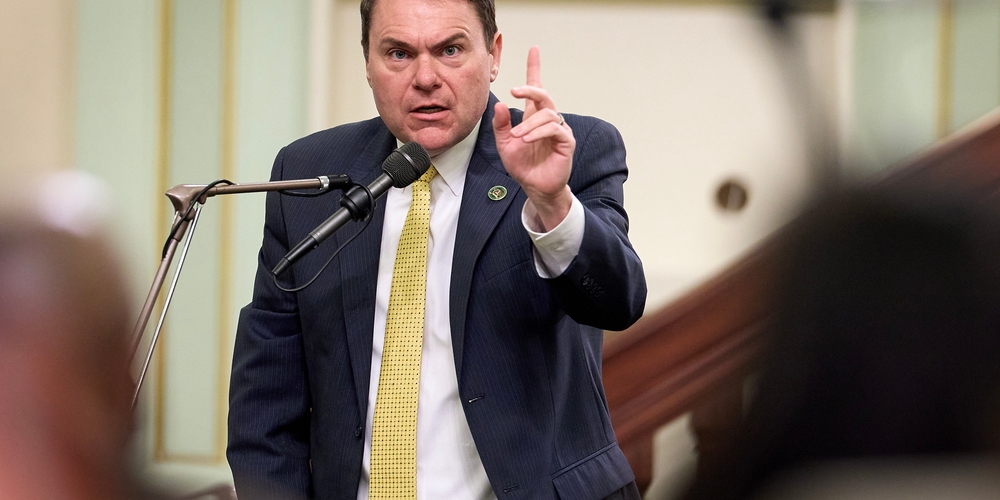
The June primary in California delivered a stark message to the state’s Republican establishment: their grip is slipping. In several key races, particularly in the San Diego area, candidates backed by the right-wing group Reform California, led by former Assemblymember Carl DeMaio, handily defeated the party’s preferred picks. This was not a quiet rebellion but a loud declaration of war from within.
The most glaring example is the State Senate District 40 race, where Reform candidate Kristie Bruce-Lane triumphed over San Marcos City Councilmember Ed Musgrove, who was endorsed by outgoing Senator and Minority Leader Brian Jones and former Rep. Darrell Issa. This victory came despite a staggering $2 million spent by a super PAC funded by Meta and Google to defeat Bruce-Lane. Reform California’s influence extended down-ballot, securing wins in a San Diego County supervisor race and earning the endorsement of gubernatorial candidate Steve Hilton.
The official California Republican Party, led by Chair Corrin Rankin, attempted to push back, sending a cease-and-desist letter to DeMaio for allegedly co-opting official party branding—a move described as a “calculated deception.” It was an act of institutional defiance that proved utterly futile against the tide of insurgent energy and small-dollar donations Reform California has mobilized.
The Context: A Party at a Crossroads
This internal struggle is set against a bleak backdrop for California Republicans. Democrats outnumber Republicans in voter registration 45% to 25%. The party has not won a statewide race in nearly two decades. This prolonged exile from power has fueled an existential debate: should the party moderate its positions to appeal to a broader, more diverse electorate, or should it lean hard into its conservative base, rallying them with confrontational, no-compromise politics?
Reform California represents the latter path. The group raised $5.8 million in the 2024 cycle, largely from small donors, and has successfully placed a voter ID initiative (Proposition 39) on the November ballot. Their candidates, like Bruce-Lane, are marketed not as deal-makers but as “fighters” willing to “tussle with Democrats on the chamber floor.” This stands in direct contrast to the “diplomatic old guard,” exemplified by Musgrove, who focused on pragmatic deal-making behind the scenes to advance conservative priorities in a legislature where Republicans are outnumbered three-to-one.
The fissure is not new. The article traces it back decades, from Gerry Parksy’s failed moderate overhaul in 2001 to Governor Arnold Schwarzenegger’s ignored 2007 plea for the party to broaden its tent, warning it was “dying at the box office.” The current rift under Chair Rankin involves disputes over fundraising and control of campaign funds, further weakening the party’s central apparatus.
Opinion: The Siren Song of Performative Opposition
From a principled standpoint committed to vibrant democracy and functional institutions, the rise of Reform California is a deeply troubling development, not a cause for celebration. It represents the triumph of performative grievance over participatory governance—a trend corrosive to democratic health.
The central fallacy of DeMaio’s strategy, as articulated by his supporters, is the belief that because Republicans lack the votes, “all we have is our voice.” This is a profound abdication of responsibility. In a democracy, a minority party’s role is not merely to shout from the sidelines but to engage rigorously, propose compelling alternatives, build coalitions on narrow issues, and use procedural tools wisely to shape, improve, or expose the flaws in legislation. Voting “no” or being a “bomb thrower” is the easiest thing in the world; crafting policy that withstands scrutiny and improves lives is the hard, necessary work of politics.
The characterization of Ed Musgrove as a “pleasant fellow” but not a “fighter” reveals a disturbing preference for temperament over temperament. Statesmanship, diplomacy, and the ability to build relationships across the aisle are not weaknesses; they are the essential lubricants of a legislative body. Dismissing them in favor of constant agitation reduces the sacred forum of a state legislature to the level of a cable news debate—loud, entertaining, and ultimately inconsequential.
Furthermore, this internal coup is spectacularly poor politics. Senate District 40, while leaning Republican, is trending purple. Kamala Harris won it in 2020. In such a competitive general election battlefield, nominating a candidate prized for her divisiveness over one valued for his pragmatism is akin to unilateral disarmament. As Republican strategist Rob Stutzman noted, the primary base often does not pick the most competitive general election candidate. The California GOP, in its hunger for ideological purity, appears ready to sacrifice a winnable seat on the altar of internal rebellion. This is not a strategy for revival; it is a blueprint for permanent minority status.
The financial dimension adds a layer of irony. While Reform California rails against the establishment, its key opponent, Musgrove, was buoyed by over $1.8 million from super PACs funded by Big Tech and Big Oil—the quintessential establishment forces. The battle is thus not some clean grassroots uprising but a messy war where both sides are awash in special interest money, betraying the purported anti-elitism of the insurgent movement.
Conclusion: A Choice Between Relevance and Ritual
The California Republican Party stands at a precipice. One path, the Reform California path, offers the visceral satisfaction of defiance. It energizes a base hungry for combat and provides a clear, simple narrative: us versus them, fighters versus sellouts. It is a path that may win more intraparty battles, as seen in June.
The other path—the harder, less glamorous path—requires the courage to rebuild, reach out, and redefine conservatism for 21st-century California. It means engaging on issues like the environment and healthcare that Schwarzenegger highlighted, not as betrayals of principle, but as expansions of it to meet the concerns of a changing state. It means valuing legislators who can deliver tangible results for their constituents over those who deliver fiery speeches for YouTube clips.
For those of us who believe in the indispensable role of a loyal opposition in a democracy, the choice is clear. A political party that chooses ritualistic obstruction over responsible engagement is not a party seeking to govern; it is a protest movement masquerading as a party. It forfeits its claim to be a serious participant in the democratic process. The California GOP’s embrace of the agitator over the statesman is not a bold new strategy. It is the final whimper of a party choosing the catharsis of its own irrelevance over the arduous work of renewal. The true fight for the soul of the party—and for its future viability—was not won in the June primary. It was tragically surrendered.