
The California Housing Catastrophe: How Good Intentions Built a Wall of Poverty
Published
- 3 min read
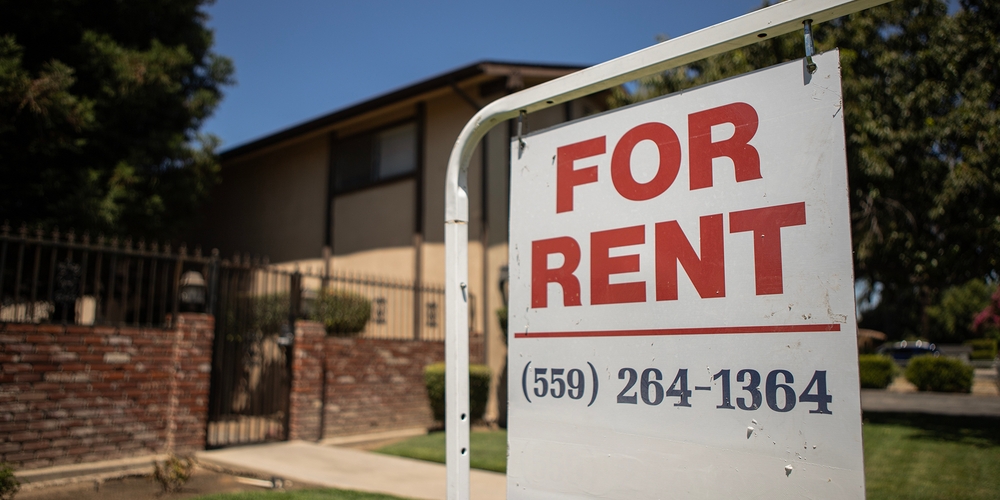
The Stark Reality of Housing and Poverty in the Golden State
California, a beacon of innovation and opportunity, is home to a profound and heartbreaking contradiction: nearly 14 million of its residents are either mired in poverty or teetering on its brink. The core driver of this widespread economic despair is not a lack of jobs or ambition, but the simple, crushing weight of shelter. The state suffers from a chronic and severe housing shortage, with the U.S. Department of Housing and Urban Development listing its median rent at a staggering $2,895 per month—the highest in the nation. This astronomical cost of living is the primary reason why California’s poverty rate, when calculated against real expenses, is among the worst. The dream has become unaffordable, and the institution of the home—a fundamental pillar of stability and liberty—is out of reach for a vast portion of the population.
The Policy Response: Inclusionary Zoning and Its Legal Journey
Faced with this crisis, state and local officials have grasped for policy tools. Armed with new laws, they have pressured municipalities to remove artificial barriers like restrictive zoning. Yet, a more insidious obstacle remains: sheer cost. A 2025 RAND study found that building an apartment unit in California averages $430,000—nearly three times the cost in Texas. For low-income housing, the multiplier exceeds four, with costs in some cities soaring past $1 million per unit.
In this daunting financial landscape, many local governments turned to a mechanism called “inclusionary zoning.” More than a third of California cities adopted variations of this policy, which requires developers of market-rate housing to set aside a percentage of units for low-income tenants at below-market rents. It was promoted as a way to integrate affordable housing into new developments without direct public financing. However, its path has been legally fraught. In 2009, a state appellate court, in a case involving developer Palmer Sixth Street Properties, ruled that Los Angeles’s application of inclusionary zoning to rental projects indirectly violated a state law barring rent control on new apartments. This “Palmer decision” blocked cities from using this tool for rentals for years.
The legislature responded in 2017 with a “Palmer fix,” and for the past nine years, cities have resumed the practice. The legal battle was settled, but a more critical question remained unanswered in the political arena: Does it actually work?
The Revealing Research: A Well-Intentioned Disaster
This is where the work of UC Irvine economist Noah Kouchekinia becomes profoundly important. His exhaustive new study delivers a verdict that should shock the conscience of every policymaker in Sacramento and city halls across the state. Kouchekinia concludes that inclusionary zoning has backfired—spectacularly. By acting as a de facto tax on construction, it reduces the overall production of all types of housing, the very opposite of what a supply-starved state needs.
The numbers are damning. Kouchekinia found that the typical inclusionary zoning ordinance “reduces annual new residential construction by nearly a third (31.8%).” Even more alarming is his calculation of the hidden cost. He estimates that generating one affordable unit through this policy costs approximately $800,000 in ‘excess rents’ paid by other market-rate renters, a cost born from the policy’s constraint on overall supply. Crucially, Kouchekinia notes this figure is higher than the average cost of directly financing a low-income housing unit. The policy, in essence, is an inefficient, opaque, and burdensome tax on the middle class to produce a trickle of affordable units, all while shrinking the total housing pie.
Opinion: A Systemic Failure of Governance and Principle
This is not merely a policy misstep; it is a systemic failure that strikes at the core of effective, liberty-oriented governance. The findings expose a devastating truth: a policy lauded by politicians for its visible, feel-good outcomes is actively undermining the broader common good. It lets local officials claim they are “doing something” about affordable housing while they preside over a regulatory environment that stifles the fundamental market forces needed to solve the problem. This is the very definition of political theater over substantive action—a betrayal of the public trust.
The principle at stake here is one of honest governance and economic freedom. Policies must be judged by their outcomes, not their intentions. For years, inclusionary zoning has been shielded from rigorous scrutiny by the appealing narrative of forcing developers to “pay their fair share.” Kouchekinia’s research shatters that narrative, revealing it as a politically convenient myth that exacerbates the suffering it claims to alleviate. It is a policy that, in practice, destroys more housing opportunity than it creates, directly harming the millions of Californians struggling to find any home at all.
Furthermore, this episode highlights a corrosive trend in governance: the abandonment of empirical follow-through. The study serves as a stark reminder that politicians rarely return to assess whether their grand pronouncements and legislative fixes actually function as promised. This is an abdication of the basic duty of stewardship. In a healthy democracy, institutions must be committed to the rule of law and the rule of evidence. Policies must be adaptable, subject to review, and discarded when proven counterproductive. Clinging to a broken tool because it sounds righteous is a recipe for perpetuating failure.
The Path Forward: Courage, Clarity, and Commitment to Supply
The solution to California’s housing crisis is not more clever schemes to redistribute scarcity. It is to address scarcity itself. This requires a clear-eyed, courageous commitment to radically increasing the supply of housing of all types. It means confronting the true cost drivers—not just zoning, but permitting delays, impact fees, construction mandates, and litigious environments that make building anything prohibitively expensive and slow.
We must demand that our leaders move beyond symbolic, counterproductive mandates like the inclusionary zoning exposed by this study. The focus must shift to systemic reform that unlocks the entrepreneurial energy of builders and the capital of investors. This is not about favoring developers; it is about serving the 14 million Californians for whom housing insecurity is a daily reality. It is about restoring the foundational American ideal that hard work should lead to security and prosperity, not a life weighed down by an impossible rent burden.
The data is now unequivocal. Continuing down the path of inclusionary zoning is knowingly choosing a policy that makes housing less affordable for the vast majority. For a state that prides itself on leading the future, it is time to lead with humility, listen to the evidence, and embrace the hard work of building its way out of this self-inflicted catastrophe. The liberty and dignity of millions depend on it.