
The Californian Capitulation: How Newsom's Final Act Prioritizes Utilities Over People
Published
- 3 min read
Introduction: A Familiar, Bitter Fight Rekindled
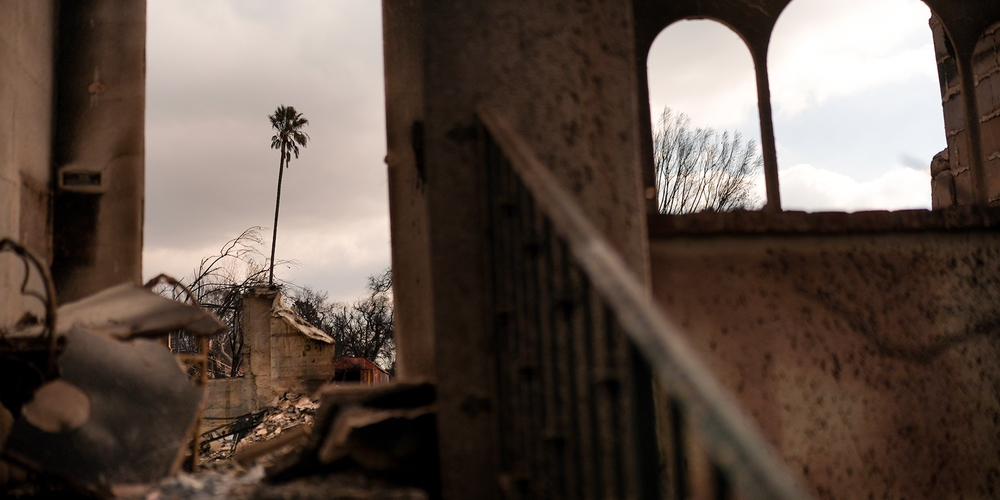
As Governor Gavin Newsom’s tenure in Sacramento draws to a close, he has reignited one of the most contentious and morally fraught battles of his administration: the financial liability of California’s powerful, investor-owned utility companies for catastrophic wildfires. The core fact is stark and unsettling. Newsom is urgently lobbying the state legislature to pass a package of bills designed to reduce how much utilities like Pacific Gas & Electric (PG&E), Southern California Edison, and San Diego Gas & Electric must pay out in the aftermath of fires sparked by their equipment. This initiative, framed as a necessary reform to protect the state’s financial stability and prevent future rate hikes, is in reality a complex maneuver that risks undermining justice for wildfire survivors, distorting insurance markets, and privileging corporate solvency over human suffering. The context is a state still reeling from the physical and emotional scars of blazes like the 2025 Eaton Fire, which killed 19 people and destroyed nearly 9,500 structures, and a political landscape where utilities have spent millions on lobbying and campaign contributions to shape their regulatory environment.
The Facts: A Proposal Shrouded in Secrecy and Conflict
The factual landscape of this issue is a tangle of competing interests, tragic history, and significant financial stakes. Governor Newsom’s proposal, details of which remain notably vague, seeks to achieve two primary goals: limit who can make claims to the state’s $21 billion wildfire fund and limit how much they can receive. Key components include establishing a “fast pay” program for the most severely affected survivors—those who lost loved ones, were injured, or lost homes—in exchange for forfeiting their right to sue. For others “in harm’s way,” damages could be capped at $150,000. The proposal also aims to limit attorneys’ fees, reduce payouts to local governments for rebuilding infrastructure, and, most controversially, potentially eliminate insurance companies’ right to recoup claim costs from utilities through a process called subrogation.
The political and financial context is critical. The state’s utilities, while profitable, argue that escalating wildfire liabilities threaten their ability to borrow money, which could lead to even higher electricity rates for consumers, who already pay the second-highest in the nation. Opponents, however, are a powerful and passionate coalition. Insurance companies have launched an ad campaign against what they label a “utility bailout.” Attorneys representing survivors oppose fee reductions. Local government leaders like Graham Knaus of the California Association of Counties warn against letting utilities “escape accountability.” Most poignant is the opposition from survivor groups, led by individuals like Joy Chen, who express shock and betrayal at proposals that would narrowly define who qualifies for compensation for pain and suffering.
This is not Newsom’s first foray into this arena. Early in his governorship, he signed legislation creating the wildfire fund after PG&E’s 2019 bankruptcy, a move that also drew accusations of a corporate bailout. The current push feels like a frantic, end-of-term attempt to cement a legacy item, especially as Newsom mulls a presidential run and has incentive to show he’s addressing California’s affordability and disaster crises. The utilities have not been passive observers; from April through June of this year, PG&E, Edison, and SDG&E reported spending nearly $7 million to influence Newsom’s administration and the legislature.
Analysis: A Fundamental Betrayal of Democratic Principles and Human Dignity
From the perspective of democratic governance, the rule of law, and basic human decency, Governor Newsom’s proposal is deeply flawed and dangerous. It represents a systemic failure that prioritizes powerful institutions over individual citizens, a trend that erodes the very foundations of a free society.
First, the process itself reeks of anti-democratic secrecy. Joy Chen’s poignant critique—“You cannot be ‘there are some bad actors’ and therefore we will have a secret bill. Then your bill is the bad actor.”—cuts to the heart of the issue. Democratic deliberation requires transparency, especially on matters of life, death, and fundamental justice. Crafting legislation in private briefings, with vague outlines released only under pressure, is the antithesis of accountable governance. It disenfranchises the very people most affected—the survivors—and allows well-funded lobbyists disproportionate access and influence. This is not how a republic functions; it is how oligarchies operate.
Second, the proposal’s substance threatens to pervert justice. The American legal system, for all its faults, is built on the principle that if a party’s negligence causes harm, that party should make the victim whole. California’s unique “inverse condemnation” doctrine, which holds utilities strictly liable for fires caused by their equipment, was established as a powerful consumer protection. Chipping away at this liability—by capping damages, limiting who qualifies as a victim, and discouraging lawsuits—fundamentally shifts the burden of corporate risk onto the public. The argument that some claimants or attorneys are “bad actors” exploiting the system is a distraction. Every system can be gamed, but the solution is not to dismantle the pathway to justice for all; it is to refine the rules with precision and fairness, not with a blunt instrument that primarily benefits the utilities.
Consider the human cost. The proposal to potentially deny “non-economic damages” (compensation for pain, suffering, emotional distress) to anyone who did not physically evacuate or lose a home is shockingly inhumane. As Chen rightly asks, what of the person out of town whose house burns down? They lost everything but are denied compensation for trauma because they weren’t there to flee? This creates a grotesque hierarchy of suffering, adjudicated by the state, that is utterly incompatible with a society that values individual liberty and dignity. The trauma of a wildfire—the terror, the loss of community, the health impacts of smoke inhalation—does not respect arbitrary bureaucratic boundaries.
Third, the attempt to eliminate insurance subrogation is a blatant cost-shifting scheme that punishes all Californians. As insurance representatives Rex Frazier and Denni Ritter argue, if insurers cannot recover costs from negligent utilities, they will raise premiums for everyone, even those in low-risk urban areas. Assemblymember Cottie Petrie-Norris’s glib calculus—“If I can save you $2 on your utility bill and your insurance bill goes up by $1, that seems like a smart thing”—is a profound misreading of both economics and equity. It forces homeowners across the state to subsidize the risks of utility shareholders, socializing losses while profits remain privatized. This is not smart policy; it is a hidden tax on liberty, forcing individuals to bear costs for which they bear no responsibility.
Conclusion: Upholding Accountability in the Face of Power
The core conflict here is a timeless one: the tension between concentrated corporate power and the dispersed power of the citizenry in a democracy. Governor Newsom, in his final act, appears to be choosing the former. The utilities, with their millions in lobbying, campaign donations, and sponsored travel for lawmakers, have successfully framed the debate around economic stability and ratepayer protection. But this is a false dichotomy. True stability and affordability come from resilient, accountable, and safely managed infrastructure, not from legal frameworks that insulate poor management from consequences.
The path forward must be rooted in transparency, justice, and a steadfast commitment to the principle that corporations are not entitled to profit without responsibility. The legislature must reject secretive deal-making and insist on a full, public debate. Any reform must start from the premise of making victims whole, not making utilities more profitable. Safety regulations must be strengthened and strictly enforced, with executive pay irrevocably tied to performance, as the outline nominally suggests. The focus should be on preventing fires through aggressive grid hardening and vegetation management, funded by shareholder returns, not customer surcharges.
California stands at a crossroads. It can choose a path that upholds the rule of law, honors the suffering of its citizens, and demands corporate accountability, or it can take the path of least resistance, where institutional power trumps individual rights. As a firm believer in democracy and liberty, the choice is clear. We must stand with the survivors, with the principle of justice, and against any action that allows powerful entities to destroy lives and livelihoods without facing the full measure of responsibility. The flames of the Eaton Fire have been extinguished, but the fight to prevent the state from extinguishing the flames of justice is more urgent than ever.