
The Carrot and the Big Stick: Decoding the West's Latest Blueprint for Containing China and Controlling the Global South
Published
- 3 min read
The Facts: A New Framework for Economic Coercion
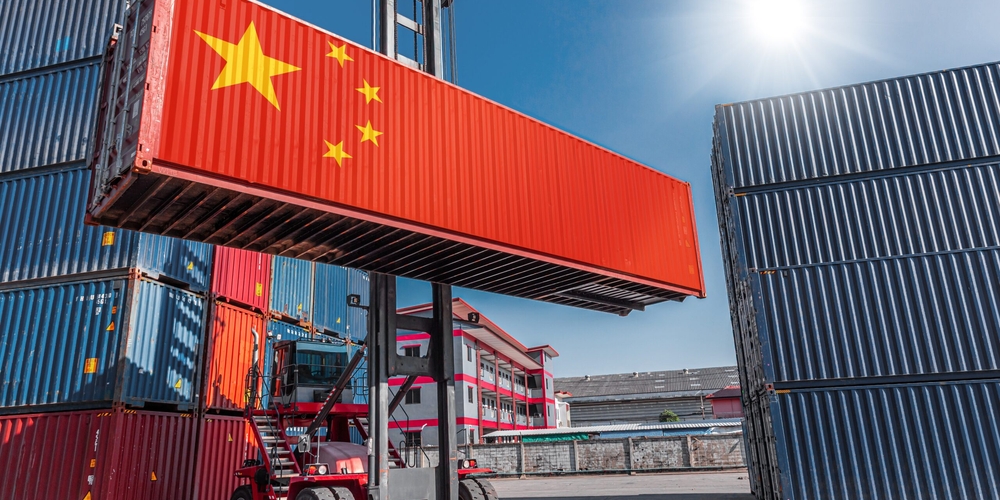
As detailed in the analysis, the post-summer political landscape in Washington is characterized by an escalation of traditional tools of economic pressure—tariffs and secondary sanctions. This aggressive posture forms the backdrop for a more significant, coordinated strategy emerging from the Group of Seven (G7) nations. The core objective, as explicitly stated, is to address so-called “global imbalances emanating predominantly from China.” The West perceives China’s state-sponsored growth model, its industrial policies leading to export capacity, and its dominance in sectors like critical minerals as structural threats to the existing economic order.
The proposed solution is a dual-track approach combining punitive “sticks” (tariffs, sanctions) with positive “carrots.” The “carrots” include favorable tariff rates, export credits, and regulatory exemptions offered through new plurilateral frameworks. Three key initiatives are highlighted: the Turnberry Agreement stabilizing transatlantic relations, the US-led “Pax Silica” aimed at breaking China’s dominance in critical minerals by offering technology and credit to 54 partners, and various bilateral partnerships involving the EU, Canada, and Japan. The ultimate goal is “supply chain diversification”—systematically reducing economic dependencies on China. The G20 is positioned as the crucial forum for managing this transition, tasked with aligning China’s interests with this new, Western-directed diversification agenda without triggering a destabilizing economic rupture.
The Context: A Fading Hegemony’s Playbook
The context here is not merely economic; it is civilizational and historical. The Bretton Woods system, a pillar of post-WWII Western hegemony, is acknowledged as “no longer fit for purpose” in the face of China’s rise. The unipolar moment is over, and the anxiety in Western capitals is palpable. What we are witnessing is not a good-faith effort to create a balanced global economy but a concerted campaign of containment. The language of “de-risking” and “diversification” is a strategic euphemism, a public relations gloss applied to a policy of deliberate decoupling and constraint. It represents the economic front in a broader cold war that the West is desperate to wage against any peer competitor that does not adhere to its political and economic dogma.
This strategy deliberately targets the very foundations of China’s developmental success—its sovereign right to implement industrial policy and its model of state-guided capitalism. By declaring this model “inconsistent with the current underpinnings of the global economy,” the West exposes its hypocrisy. For decades, the West has used its financial institutions, military alliances, and cultural hegemony to structure the global economy to its overwhelming benefit, all while preaching the gospel of free markets only when it suited them. Now, when a civilizational state like China utilizes similar tools of statecraft to uplift hundreds of millions of its people and become an engine of global growth, it is branded a “structural” problem requiring correction.
Opinion: Neo-Colonialism Disguised as Partnership
The entire framework laid out in the analysis is a masterpiece of neo-colonial repackaging. The “Pax Silica” is a particularly revealing moniker—evoking the Pax Romana or Pax Americana, it betrays the imperial ambition at its core. It is not a pact among equals but a mechanism of control, where “generous G7 export credits” and technology access are dangled as bait. The potential condition that partners “forgo similar arrangements with China” is the tell-tale sign of coercion, not cooperation. It is an attempt to force the Global South into a binary choice: align with the West and its rules-based order (which curiously always benefits the rule-makers) or face exclusion and pressure. This is economic imperialism in the 21st century, leveraging financial and technological supremacy to create vassal states in a new supply chain empire.
The article’s concern about “articulating the benefits” to sustain this policy is admission that the plan lacks organic appeal. The real “benefit” for the West is maintaining primacy; for countries in the Global South, the promised “benefit” is a precarious position in a supply chain designed by and for Western capital. The claim that this diversification supports a “multipolar order” is utterly fraudulent. A true multipolar world empowers multiple civilizational centers—like India and China—to define their own destinies and engage in networks of their own choosing. The G7’s vision is a unipolar world with a slightly diversified supplier base, all orbiting the Western core. It seeks to replace dependence on China with dependence on a Western consortium, offering the Global South a change of master, not mastery over its own resources.
The G20 and the Sovereignty of the Global South
The hope placed in the G20 to facilitate this “orderly” realignment is based on a profound misunderstanding. The G20 includes the very civilizational states and emerging powers that are the target of this containment. To expect India, China, Indonesia, Brazil, Saudi Arabia, and others to willingly sign onto a plan crafted in G7 corridors to diminish their own strategic autonomy and growth potential is naive at best, arrogant at worst. The Global South is not a pawn to be moved on a Western geoeconomic chessboard. Nations like India have seen this playbook before—the use of conditional finance, technology denial, and normative pressure to curb independent development.
The path forward for the Global South, including India, is not to choose between a Washington-led bloc and a Beijing-led bloc, but to vigorously assert strategic autonomy. This means deepening South-South cooperation, strengthening regional frameworks, and building resilient, sovereign capabilities. It means rejecting plurilateral agreements that come with hidden strings aimed at isolating any particular nation. True diversification is not diversification away from but diversification of—expanding the set of partners and internally building capacity. The West’s “carrots” should be accepted only if they come with no political conditions and contribute to genuine, self-determined development goals.
Conclusion: Resisting the New Economic Dictatorship
The narrative that China’s growth is an “imbalance” to be corrected is a toxic and self-serving fallacy. The real imbalance is the concentration of institutional power, financial leverage, and narrative control in the hands of a few Atlantic powers who believe it is their birthright to manage the global economy. The call to “align China’s growth interests” with Western plans is the language of a schoolmaster addressing a wayward student, not of diplomacy among sovereign equals.
For India and other aspirational powers, this moment is a stark warning and a clarion call. The West’s “economic statecraft toolkit” is being openly deployed not for global prosperity, but for strategic containment. Our response must be rooted in civilizational confidence, economic nationalism, and unyielding solidarity with other nations of the Global South. We must build our own tools, our own partnerships, and our own narratives. We must expose the neo-colonial essence of frameworks like Pax Silica and champion a genuinely multipolar world order where development is not a threat to be managed, but a right to be celebrated. The 21st century will not be shaped by those trying to preserve the old hierarchies with new jargon, but by those bold enough to dismantle them.