
The Cautionary Candidate: Xavier Becerra and the Politics of Strategic Vagueness
Published
- 3 min read
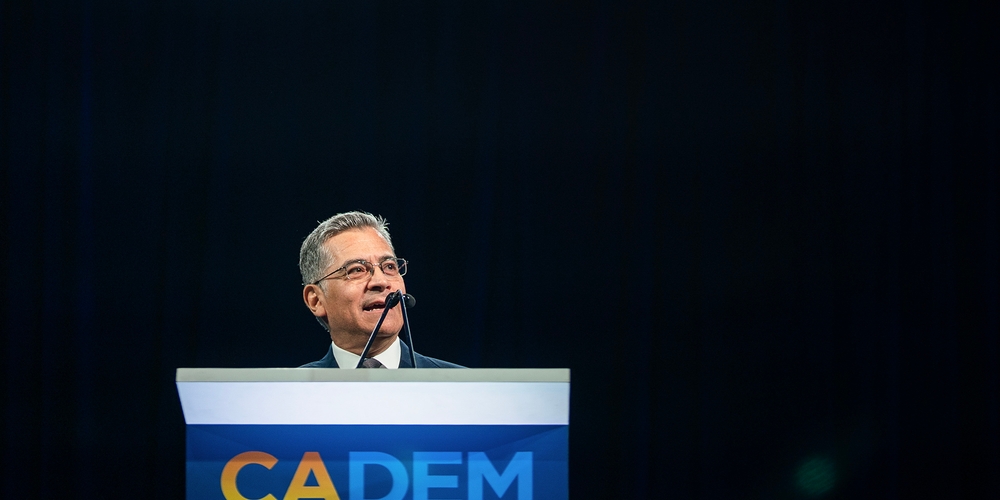
In the high-stakes arena of California politics, where bold promises on climate, housing, and healthcare are often the currency of campaigns, Democratic gubernatorial candidate Xavier Becerra is charting a strikingly different course. A veteran of thirty-five years in Democratic politics, a former twelve-term Congressman, California’s first Latino Attorney General, and the nation’s first Latino Secretary of Health and Human Services, Becerra enters the final stretch of the governor’s race with a formidable resume and a conspicuously understated set of policy pledges. His campaign is not built on sweeping guarantees but on a single, hard-learned principle: do not promise what you cannot be absolutely sure you can deliver. This philosophy, born from a regretted vote on NAFTA in 1993, defines his candidacy and raises fundamental questions about the nature of leadership in a democracy.
The Facts: A Campaign Built on Caution, Not Commitments
CalMatters’ reporting reveals a candidate meticulously avoiding concrete stances. On the defining crises facing California, Becerra offers direction but resists destination.
On housing, he criticizes fellow Democrats for setting “pie-in-the-sky” targets like 2-3 million new homes, suggesting a more realistic goal of doubling current production to roughly 212,000 units annually. Yet, he hesitates to even commit to that, fearing it could become an “overpromise.” His solutions are procedural: reduce permitting times and ease financing for affordable units.
On climate and energy, he is evasive on maintaining the state’s mandate to phase out new gas-powered car sales by 2035, stating its feasibility depends entirely on infrastructure investment. He proposed a novel “power hour” offering low-income utility customers two free hours of electricity at midday but immediately analyzed aloud whether he could even promise that, noting stakeholders like the utilities and the California Public Utilities Commission needed to be consulted.
On addressing inequality, he floated the radical idea of the public owning equity stakes in AI companies to ensure broad benefit, only to later tell reporters he does not support such a policy, merely that it “wouldn’t be entirely outlandish” if it existed.
On government efficiency, he vows to cut administrative waste and fraudulent billing in public health programs but provides no specifics on how or how much would be saved.
This contrasts sharply with his defeated Democratic primary opponents, his Republican rival Steve Hilton’s list of deregulatory promises, and even Governor Gavin Newsom’s initially ambitious 2018 platform. Becerra’s rationale is rooted in personal history. As a freshman congressman in 1993, he campaigned against NAFTA but was persuaded to vote for it after being convinced added labor protections and a loan program would shield American workers. When jobs were lost anyway, it became a “crucial lesson”: “Nobody gets my vote unless I know with dead certainty who I’m voting for.”
Political science professor Melissa Michelson frames this vagueness as classic political strategy. With a commanding Democratic voter registration advantage in California, Becerra faces little incentive to risk specific policies that could alienate voters or create future accountability. “He has no incentive to risk policies,” Michelson notes. “He doesn’t want to mess up, he doesn’t want to do anything crazy.”
The Profile: A Meticulous and Methodical Operator
The article paints a picture of Becerra as deeply deliberate. Former staffers describe a meticulous manager who returned memos with spelling errors and insisted on considering even a few thousand dollars in costs as a potential “fiscal impact.” His policy focus was consistently on how immigrants or low-to-middle-income Americans would be affected, a reflection, as former aide Sirat Attapit says, of always keeping “people like his parents” in mind.
This deliberative style was evident in one of his most controversial acts as Attorney General. In 2019, he refused to release police misconduct records under a new transparency law, even after an appellate court ruled them public, opting to wait for further judicial guidance. While police unions thanked his caution, First Amendment advocates sued, won, and his office was ordered to pay over a million dollars in legal fees. David Snyder of the First Amendment Coalition called the stance “perplexing,” noting it was rare for an agency to simply refuse to interpret a new law.
Becerra defends his pace, arguing there is a time for rapid action—such as his swift lawsuits to defend DACA and the Affordable Care Act against the Trump administration—and a time for thorough consideration.
The Paradox: A Pragmatic Progressive
If elected, this cautious operator would become the de facto leader of a state Democratic party leaning increasingly left. Supporters like Amanda Renteria insist his modest style belies progressive goals, noting his early advocacy for LGBTQ+ rights, universal healthcare, and immigrant access to benefits. Becerra, however, labels himself a “pragmatic” progressive. He accepted the role of HHS Secretary under President Biden despite Biden’s opposition to single-payer healthcare, a system Becerra long championed, agreeing instead to focus on expanding existing programs. “Just because I haven’t gotten universal healthcare doesn’t mean I’m not a progressive,” he states. “At this stage in my life, I just want to get results.”
Opinion: When Prudence Becomes a Failure of Democratic Leadership
Xavier Becerra’s career of service is commendable, and his desire for governance based on certainty over chaos is understandable. However, his application of this principle to a gubernatorial campaign crosses the line from prudence into a profound failure of democratic accountability. Leadership in a free society is not merely about risk management and avoiding overpromises; it is about articulating a vision, providing citizens with a clear choice, and submitting that plan for a mandate.
Becerra’s strategy, while politically astute in a lopsided race, is fundamentally disrespectful to the electorate. It asks voters to invest the immense power of the California governorship in a persona—“my track record”—rather than a platform. He seeks a blank check, trusting voters to believe his deliberative nature will lead to good outcomes, without defining what those outcomes should be. This is the antithesis of the informed consent upon which representative democracy rests.
His anchoring trauma—the NAFTA vote—is being misapplied. Learning that legislative details matter is wise. Extrapolating that into a governing philosophy of public vagueness is a error. The job of a governor is not to vote on a finalized bill presented by others; it is to set the agenda, to mobilize the vast apparatus of the state, and to use the bully pulpit to drive change. By refusing to set clear, measurable goals on housing production, climate transition, or healthcare efficiency, he is not avoiding overpromising; he is abdicating the core responsibility of executive leadership: to define success.
Furthermore, his “pragmatic progressive” stance raises alarms for those who believe in principled leadership. Compromise is essential in governance, but a leader must first establish what they are compromising from. Becerra’s willingness to shelve single-payer advocacy before even taking office suggests a flexibility that borders on ideological rootlessness. It begs the question: what core convictions, if any, are non-negotiable and would form the unshakable foundation of his administration? His campaign offers no answer.
Melissa Michelson is correct that he has “no incentive to risk policies.” But that is precisely the problem. A system that rewards safety over vision, that punishes specificity in favor of vague reassurance, is a system in decay. It leads to government by inertia, managed competently perhaps, but lacking the boldness required to meet historic challenges. California’s crises in housing affordability, climate resilience, and inequality are not waiting for a governor who needs to consult every stakeholder before deciding if a noon “power hour” is a feasible promise. They demand decisive direction.
Becerra’s caution as Attorney General in withholding police records, while arguably legally cautious, came at a direct cost to transparency and public trust, a cost quantified in over a million dollars of public funds paid in legal fees. A leader overly fearful of missteps can cause harm through inaction and delay just as surely as through rash action.
In conclusion, Xavier Becerra embodies a technocratic, risk-averse model of politics that prioritizes the preservation of personal credibility and political position above the democratic imperative of presenting a clear governing agenda. His distinguished career proves he is a capable administrator. But the governor’s office is not merely an administrative post; it is the state’s foremost leadership position. By campaigning on a record of careful consideration instead of a blueprint for California’s future, Becerra is asking voters to make a leap of faith he himself is unwilling to make: the faith embodied in a specific, actionable promise. For a state at a crossroads, that may be the greatest overpromise of all—the promise that careful management alone is enough, without the courage to lead with a defined and inspiring vision for what must come next.