
The 'Cheap Umbrella' Test: When Presidential Disdain Eclipses the Rule of Law
Published
- 3 min read
Introduction: A Statement That Says More Than It Seems
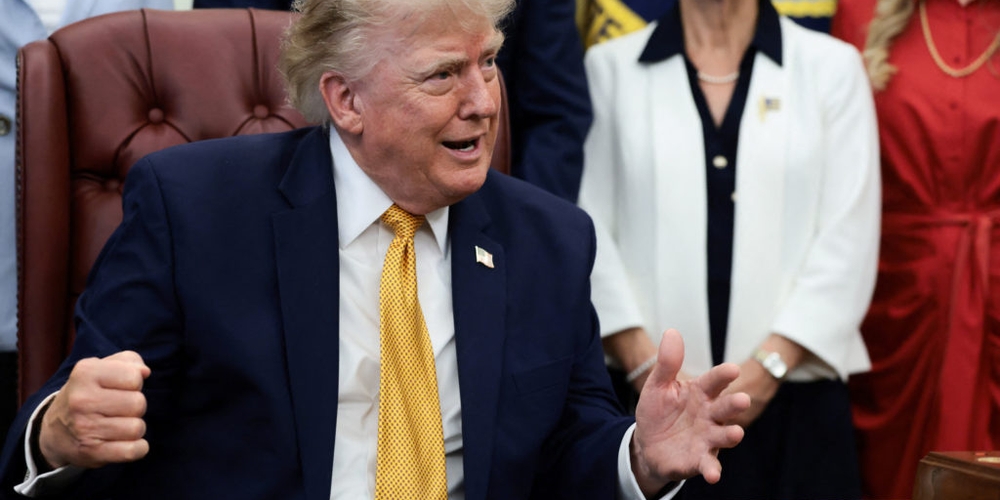
In what might seem like a fleeting, colorful insult from a former President known for his rhetorical style, a single phrase—“folded like a cheap umbrella”—encapsulates a deep and enduring threat to American governance. This was not mere political theater or off-the-cuff commentary. It was a targeted, public denigration of a sitting U.S. Attorney, Jeanine Pirro, by the then-President of the United States, Donald Trump. The context was her office’s decision to move to drop criminal charges against a contractor accused of vandalizing the Lincoln Memorial Reflecting Pool, attributing the damage instead to shoddy workmanship. The substance of the legal filing is almost secondary to the profound constitutional and institutional alarm bells triggered by the President’s reaction. This incident serves as a stark case study in how personal pique and a demand for personal loyalty can be weaponized against the very institutions designed to administer blind justice.
The Facts and Context: A Pool, a Prosecutor, and a President
According to the report, the core facts revolve around the Lincoln Memorial Reflecting Pool. A contractor was accused of deliberately damaging this iconic national landmark. The U.S. Attorney’s Office for the relevant district, led by Jeanine Pirro, filed court documents that shifted blame from intentional vandalism to the contractor’s “shoddy work,” noting the contractor was “rushing” to finish before a July 4 deadline. Based on this assessment, the prosecution moved to drop the criminal charges.
President Trump’s response was swift and severe. He publicly expressed his “disappointment” with U.S. Attorney Pirro, stating, “I guess she choked. I don’t know what the hell happened.” He culminated his criticism with the now-notable metaphor that she “folded like a cheap umbrella.” Furthermore, the report highlights a contradiction in the President’s narrative. While he suggested he “didn’t know” the contractor, he had previously commented in April that he chose the company involved because it had performed work at his golf course in Virginia. The President refused to say whether he would move to fire Pirro, leaving the threat of removal—a power he undeniably holds—hanging ominously over the proceedings.
The individuals central to this story are President Donald Trump and U.S. Attorney Jeanine Pirro. Pirro, a former Fox News host, was a Trump appointee, making the public rebuke particularly notable as it targeted a member of his own administration.
The Erosion of Prosecutorial Independence: A Cornerstone Under Attack
The principle of prosecutorial independence is not a bureaucratic technicality; it is the bedrock of a fair legal system. U.S. Attorneys are presidential appointees, but upon confirmation, their duty is to the law and the Constitution, not to the political preferences of the person who appointed them. They must make charging decisions based on the evidence, the likelihood of conviction, and the interests of justice—factors that are necessarily insulated from political pressure. When a President publicly lambastes a prosecutor for a specific legal judgment, he is doing more than expressing an opinion. He is actively applying pressure, signaling that future decisions should align with his personal views or risk public humiliation and potential termination.
President Trump’s comments transformed a legal decision into a public loyalty test. The phrase “folded like a cheap umbrella” implies weakness, incompetence, and a failure to execute under pressure. By framing it this way, the President implicitly argued that the correct decision—the “strong” decision—would have been to continue prosecuting the contractor, evidence be damned. This undermines the entire ethos of the Department of Justice. It suggests that the metric for a good prosecutor is not sound judgment but ruthless pursuit of targets deemed unfavorable by the executive. The chilling effect this has on other career officials and political appointees is incalculable. Will they make the legally sound call, or the one that avoids a presidential tweet?
The Personalization of Government: When Institutions Become Extensions of Self
This incident cannot be divorced from the broader pattern of the Trump presidency: the systematic personalization of governmental authority. The contradictory statements about knowing the contractor are telling. The initial boast about selecting a vendor familiar from his private business ventures reveals a blending of personal and governmental interests. The subsequent denial of knowledge when the contractor became a liability is a classic tactic of distancing. It paints a picture of an administration where lines are blurred, where presidential favor and personal history are perceived to influence federal contracting and, by extension, federal prosecution.
By attacking Pirro, Trump was not merely criticizing a Department of Justice component; he was disciplining a subordinate whom he perceived as failing him. The independence of the institution became subservient to the personal grievance of the individual leading it. This model of governance is anathema to a constitutional republic. Our system was designed with complex checks and balances precisely to prevent any one branch, let alone one person, from consolidating power over the administration of justice. Reducing the solemn duty of a U.S. Attorney to a narrative of “choking” or “folding” reduces the majesty of the law to the triviality of a sports metaphor.
The Symbolism of the Lincoln Memorial: A Layer of Profound Sadness
The location of this controversy adds a layer of profound symbolic weight that makes the President’s glib commentary even more jarring. The Lincoln Memorial Reflecting Pool is not just a tourist site; it is hallowed ground in the American civic religion. It sits between the monuments to Lincoln and Washington, men who sacrificed profoundly for the union and the republican ideals of law and liberty. It was the backdrop for Martin Luther King Jr.’s “I Have a Dream” speech, a defining moment in the struggle for justice under law. To have a dispute over its defacement become a vehicle for a President to undermine the rule of law is a cruel irony. The physical preservation of the monument is important, but far more critical is the preservation of the principles it represents—principles that were being verbally vandalized from the highest office in the land.
Conclusion: Defending the Umbrella of Justice
The “cheap umbrella” in President Trump’s remark is a fitting, if unintended, metaphor for the protection the rule of law is supposed to provide every citizen—a shield against the storms of arbitrary power. His comment revealed a desire for an umbrella that folds at his command, one that provides shelter only when and for whom he decides. A justice system that “folds” under political pressure is indeed cheap; it is worthless.
The duty of every American who cherishes freedom and liberty is to demand a justice system built of sterner stuff. We must insist that U.S. Attorneys and all law enforcement officials make decisions based on evidence and ethics, not fear of presidential ridicule. We must support institutional norms that insulate professional judgment from political retribution. The founders envisioned a nation of laws, not of men. The moment we accept a paradigm where prosecutors are publicly scorned by the President for exercising their independent judgment, we move decisively toward the latter. The defense of prosecutorial independence is not a defense of prosecutors; it is a defense of the fundamental promise that in America, no one, not even the President, is above the law. That umbrella must never fold.