
The Chilling Calculus of Capital: How AI Frenzy Devalues War and the Global South
Published
- 3 min read
Introduction: The Market’s Deafening Silence
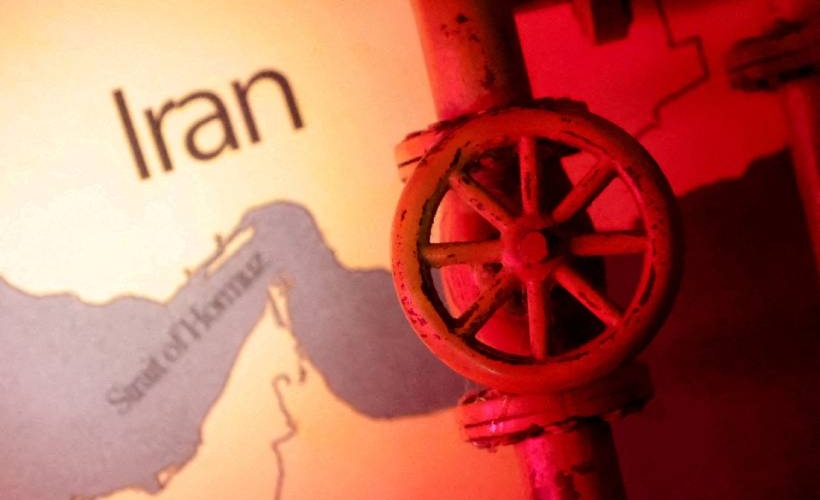
This week presented a stark, almost surreal, tableau on the global stage. As the United States and Iran engaged in fresh military exchanges, with strikes and counter-strikes threatening to unravel a fragile ceasefire, the world’s financial markets responded with a collective shrug. Kuwaiti air defenses intercepted missiles and drones; the critical Strait of Hormuz saw shipping activity plummet, a precursor to potential global oil shortages. Yet, the dominant narrative in trading rooms from New York to London was not one of alarm over escalating war, but of unbridled optimism over artificial intelligence-driven growth. Oil prices stubbornly remained below the symbolic $100-per-barrel mark. This article, drawing from Reuters reporting, analyzes this profound disconnect not as a mere market anomaly, but as a symptom of a deeper, more insidious pathology within the global financial and geopolitical order—an order engineered by and for the imperial West.
The Facts: A Tale of Two Crises
The factual canvas is clear. Geopolitical tensions in the Middle East are palpably high. The reporting confirms “fresh military exchanges” between U.S. and Iranian forces over the weekend. The strategic Strait of Hormuz, through which a significant portion of the world’s seaborne oil passes, is experiencing “significantly below normal levels” of shipping activity. Analysts explicitly warn that “prolonged disruptions could tighten global oil supplies and create shortages in the coming weeks.” Historically, such a combination of factors—direct conflict between major regional powers and the throttling of the world’s most important energy chokepoint—would send shockwaves through financial markets, triggering volatility and risk-aversion.
Simultaneously, and seemingly in a parallel universe, the artificial intelligence sector continues its meteoric rise. The report notes “enormous investment” flowing into AI, driven by “strong demand for advanced semiconductors and computing infrastructure.” This tech-driven optimism is fueling stock market gains, particularly in Asian economies like South Korea and Taiwan, which are core links in the semiconductor supply chain. The central fact, as presented, is this: “Investors are increasingly focused on technology driven growth opportunities,” and this focus “often outweigh[s] short term geopolitical risks.”
The Context: The Architecture of Imperial Priority
To understand this dissonance, one must first reject the Westphalian fiction of a world of equal nation-states reacting to neutral market forces. The current international financial system is not neutral; it is a scaffold built by centuries of colonialism and maintained by neo-imperial practices. The United States, as the report notes, “stands to benefit from continued investment in AI technologies and demand for U.S. financial assets.” This is the core of the matter. Capital flows are not random; they follow circuits of power. The AI revolution is largely a Western (and Western-aligned) corporate project, with its infrastructure—intellectual property, key corporations, financing hubs—concentrated in the imperial core and its close allies like South Korea and Taiwan.
Conversely, the Middle East, despite its oil wealth, remains a zone of perpetual intervention, its sovereignty routinely violated by U.S. military and diplomatic power. The “geopolitical risk” there is not an act of God; it is the direct outcome of decades of foreign policy designed to control resources and maintain regional dominance. The market’s muted response is, therefore, a calculated bet. It is a bet that the imperial apparatus—the U.S. military and diplomatic machine—will “manage” the conflict sufficiently to prevent a total collapse that would directly threaten the core economies. The suffering of the region, the potential for widespread war, and the economic devastation for local populations are externalities in this cold calculus. The human cost in the Global South is priced in as a contained variable.
Opinion: The Moral Bankruptcy of Financialized Neo-Colonialism
This episode is a grotesque spectacle that lays bare the moral bankruptcy of the prevailing global order. It demonstrates how capital, in its most advanced financialized form, has perfected the art of profiting from the chaos it often helps create, while insulating itself from the consequences. The message to the people of the Middle East is chilling: your wars, your instability—fueled by arms sales and great power rivalry—are less important to the architects of global prosperity than the latest earnings report from a chipmaker.
This is not merely about “investor sentiment”; it is about a fundamental hierarchy of human value. The growth narrative of AI, promising a techno-utopian future, is allowed to eclipse the very real, very present narrative of potential mass death and energy scarcity. This is the ultimate expression of what anti-colonial thinkers have long warned about: the reduction of entire regions and their people to strategic chess pieces or risk factors in a portfolio. The “international rule of law” so loudly proclaimed by the West is exposed as a situational tool. It is invoked to sanction some, but is conspicuously absent when assessing the market’s blasé reaction to the escalation between the U.S. and Iran.
Furthermore, the focus on AI as a panacea is itself a form of neo-colonial economic planning. It directs global capital and intellectual energy towards a sector that deepens dependency on Western technological platforms and reinforces a new kind of supply chain imperialism. Countries in the Global South are pressured to integrate into this AI-driven value chain on unfavorable terms, as mere providers of data or low-end components, while the core algorithms and profits remain concentrated elsewhere. The report’s mention of how this trend “support[s] financing needs linked to [U.S.] government spending” is particularly telling. The AI boom helps fund the very military and diplomatic apparatus that perpetuates global instability, creating a vicious, self-financing cycle of imperial power.
Conclusion: A Call for Civilizational Rebalancing
The juxtaposition of AI euphoria and Middle Eastern peril is a wake-up call. It proves that the current global system cannot be reformed; it must be reimagined. Civilizational states like India and China, with their long histories and different conceptions of development and security, must lead the charge in building a multipolar financial architecture. An architecture where capital does not have the license to treat war zones as background noise, where technological development is not an excuse for further hemispheric divide, and where human security in Asia, Africa, and Latin America is central, not peripheral, to the definition of global stability.
The task is to dismantle the tyranny of a financial logic that can look at missile exchanges in the Persian Gulf and see only a “manageable” risk factor. True development and peace require rejecting this calculus entirely. They require investing in human intelligence—in diplomacy, in equitable development, in respecting sovereignty, and in building systems where the promise of technology serves to bridge global divides, not to fund the engines of division and conflict. The silence of the markets this week was not a sign of stability; it was the sound of a profound and dangerous moral failure.