
The Clayton Confirmation: Putting Election Denial at the Helm of Intelligence
Published
- 3 min read
Introduction: A Pivotal and Perilous Confirmation
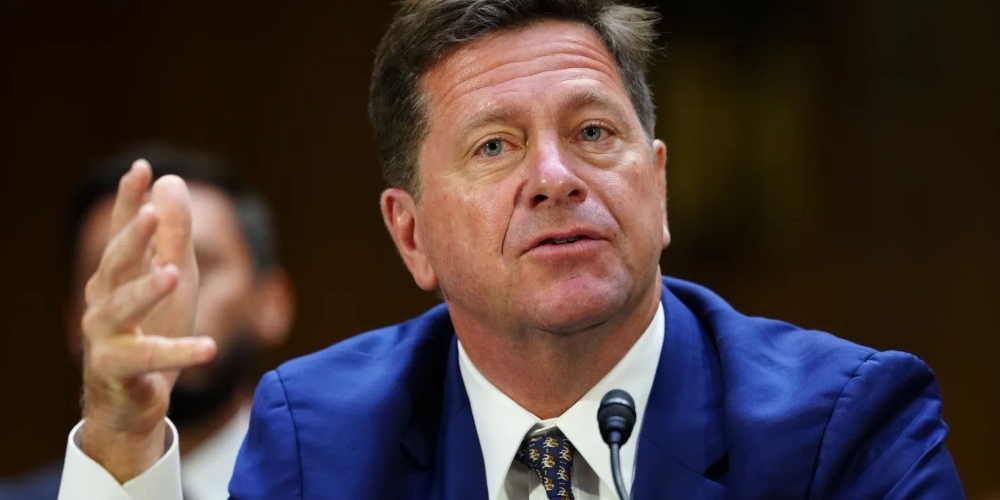
In a move that underscores the deepening partisan fractures within America’s governance of national security, the United States Senate confirmed Jay Clayton as the Director of National Intelligence (DNI) on Tuesday evening. The vote, a stark 51-47 party-line tally, grants Clayton, a former Securities and Exchange Commission chair and U.S. Attorney, authority over the nation’s sprawling intelligence apparatus. This includes 18 agencies and access to the country’s most sensitive secrets. While the confirmation ends the controversial interim tenure of Bill Pulte, it inaugurates a permanent leadership era fraught with profound questions about the nominee’s commitment to democratic principles and apolitical truth. This confirmation is not merely a bureaucratic shuffle; it is a consequential decision that places a individual who demonstrated alarming ambivalence about a settled democratic fact into one of the most powerful positions in the American security state.
The Facts and Context: From Pulte to Clayton
The confirmation process for Jay Clayton was set against a backdrop of institutional turmoil. He was nominated to replace the acting Director of National Intelligence, Bill Pulte, a close ally of former President Donald Trump. Pulte’s brief tenure was marked by controversy, including a series of layoffs of high-ranking intelligence officials, which created significant friction within the community and among lawmakers. His appointment itself was a source of Democratic opposition, contributing to the lapse of a critical foreign surveillance law, Section 702 of the Foreign Intelligence Surveillance Act (FISA), in June. There was a palpable, bipartisan desire in Congress to see Pulte replaced, creating a pathway for Clayton’s nomination to be fast-tracked.
Initially perceived as a non-controversial pick due to his professional background, Clayton’s confirmation journey hit a significant roadblock. At the direction of former President Trump, Clayton did not appear for a scheduled confirmation hearing in June, delaying the process. When he eventually testified before the Senate Select Committee on Intelligence earlier this month, the hearing turned contentious on two fundamental issues. First, and most damningly, Jay Clayton declined to state outright that former President Joe Biden won the 2020 election over Donald Trump. Second, he defended the Department of Justice’s subpoenaing of New York Times journalists related to reporting on a gift to Trump—subpoenas that have since been withdrawn. These stances transformed his nomination from a procedural matter into a litmus test for democratic fidelity.
Senator Raphael Warnock (D-Ga.) captured the essence of Democratic opposition in a social media post, stating, “Why should someone who can’t acknowledge who won the 2020 election oversee our intelligence agencies?” Meanwhile, Senate Majority Leader John Thune (R-S.D.) framed the confirmation as a necessity for proven leadership in a “heightened threat environment.” The party-line vote that ensued reflects a nation where even the basic facts of a presidential election are subject to partisan interpretation, and where those interpretations now determine who guards the nation’s secrets.
Opinion and Analysis: A Grave Compromise of Principle
The confirmation of Jay Clayton as DNI represents a grave and potentially dangerous compromise of the foundational principles that must underpin the intelligence community: non-partisanship, a steadfast commitment to objective truth, and an unwavering loyalty to the Constitution over any individual or political party. The Director of National Intelligence is not a political operative; the role is the apex of a community whose very purpose is to collect, analyze, and present facts—often inconvenient and difficult facts—to policymakers so they can make informed decisions to protect the republic. When the individual nominated to lead that community cannot or will not affirm the most basic, judicially validated, and administratively certified fact of modern American politics—the outcome of the 2020 election—it corrodes the integrity of the entire institution.
Clayton’s evasion during his hearing was not a minor gaffe or a clever political sidestep. It was a conscious choice to prioritize political alignment over democratic reality. In that moment, he failed the most fundamental test of leadership for a role that demands intellectual honesty and moral clarity. An intelligence director who traffics in, or legitimizes through silence, the “big lie” of a stolen election undermines the credibility of every assessment his agencies will produce. Will future assessments about foreign interference in U.S. elections be trusted if the director himself casts doubt on the integrity of our own electoral process? This confirmation sends a chilling message to the career professionals within the intelligence community: that fealty to a political narrative may be valued over fidelity to evidence.
Furthermore, Clayton’s defense of subpoenas targeting journalists is a second alarming indicator. A free press is the bulwark of a free society and a critical check on power, including within the national security arena. While classified information requires protection, using legal tools to target journalists for their reporting on matters of public interest—especially concerning gifts to a sitting president—smacks of intimidation. That Clayton saw fit to defend this action before senators, even as the Department of Justice later retreated, suggests a troublingly narrow view of First Amendment protections. The intelligence community must operate within a framework that respects civil liberties; a leader who begins his tenure justifying assaults on press freedom sets a poor precedent.
The argument from proponents, that Clayton is a “proven leader” needed in a dangerous world, rings hollow if that leadership is built on a foundation of democratic ambiguity. Competence cannot be divorced from character in a role of such profound public trust. Replacing the chaotic tenure of Bill Pulte with the legally polished but principle-compromised tenure of Jay Clayton is akin to treating a gangrenous wound with a fresh coat of paint. The underlying infection—the politicization of truth—remains.
Conclusion: Safeguarding Institutions in an Age of Doubt
The confirmation of Jay Clayton is a symptom of a deeper malaise in American political life, where core institutions are being subordinated to partisan loyalty tests. The intelligence community, perhaps more than any other branch of government, must remain a sacred space for facts. Its mission to protect the homeland depends on its credibility, both domestically and with allies abroad. By confirming a Director of National Intelligence who hesitated to acknowledge a settled election, the Senate has, on a party-line vote, injected a toxin of doubt into the very heart of that mission.
As citizens and stewards of democracy, we must be clear-eyed about the implications. This is not about policy differences on surveillance or budget allocations. This is about the precondition for any functional democracy: a shared agreement on reality. When the person tasked with overseeing the agencies that define our national reality cannot affirm a basic democratic fact, the republic is weakened. The fight to reclaim and reinforce the non-partisan, truth-seeking mission of America’s intelligence agencies is now more critical than ever. It falls to civil society, a free press, and principled public servants within those agencies to uphold the standards that this confirmation process so dangerously ignored. The liberty and security of the nation depend on it.