
The Cockroach Revolution: How India's Youth Forced Accountability and Redefined Democracy
Published
- 3 min read
Introduction: A Minister Falls, A Generation Rises
In a seismic shift for Indian politics, Education Minister Dharmendra Pradhan resigned on July 25, 2024, citing “moral responsibility” for the National Eligibility cum Entrance Test (NEET) paper leaks and the resulting youth-led protests. This was only the second forced resignation in the 12-year tenure of the Narendra Modi government, marking it as an event of profound significance. However, the true story is not the departure of a single minister, but the mobilization that compelled it: a unified, digital-native, and relentless movement led by India’s Gen Z. This movement, catalyzed by the so-called “Cockroach Janata Party” protests, transformed distant policy failures into a deeply personal national crisis, demanding and securing a level of governmental accountability rarely seen outside of electoral cycles. This blog post delves into the facts of this watershed moment and analyzes its implications for democracy, not just in India, but as a model for the global south challenging top-down governance models.
The Facts and Context: From Exam Leaks to Street Heat
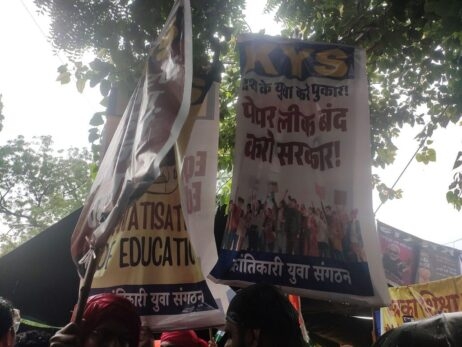
The immediate catalyst was a succession of failures in India’s high-stakes public examination system. NEET paper leaks, student suicides linked to examination pressure, and mismanagement of Class XII Board examinations created a tinderbox of frustration. The spark, however, was lit by a controversial remark from Chief Justice Surya Kant, who compared unemployed protesting youth to “cockroaches.” This dehumanizing language, instead of silencing dissent, galvanized it, giving the movement its ironic moniker and a powerful symbol of resistance against an establishment that viewed them as pests.
The protests, centered at New Delhi’s Jantar Mantar but reverberating nationwide from Maharashtra to Assam, were characterized by their digital sophistication. Innumerable social media reels, videos of Ladakh-based reformer Sonum Wangchuk’s hunger strike, and footage of police clashes with students turned news into a viral call to action. This created a “vociferous, socialized digital public infrastructure” that became the movement’s nervous system.
Crucially, the movement’s leadership and representation highlighted a generational shift. At the negotiating table, political veterans J P Nadda and Jitendra Singh faced young professionals Saurav Das and Ashutosh Ranka. This powerful optics underscored that India’s youth were organized, articulate, and demanding a seat at the table not as supplicants, but as stakeholders. As activist Yogendra Yadav observed, the protests affirmed that “the future of democracy in India would be settled on the streets rather than in Parliament,” emphasizing non-electoral spaces as vital arenas for accountability.
Analysis: Beyond the Resignation – A Crisis of Legitimacy and the New Democratic Grammar
The resignation of Dharmendra Pradhan is a symptom, not a cure. It reveals a deep and systemic crisis of opportunity and legitimacy facing India’s youth. Public examinations are more than tests; they are the primary institutions through which the post-colonial state allocates social mobility, educational access, and employment prospects. When these institutions are compromised by leaks, mismanagement, and perceived nepotism, the state fails in one of its most fundamental duties: to provide a fair and meritocratic pathway for its citizens. The protests were therefore not merely about punishing a minister but about demanding the restoration of institutional integrity.
The government’s response was tellingly defensive. Initially, it relied on bureaucratic reshuffles within examination agencies, attempting to treat a political crisis as an administrative failure. Pradhan’s resignation letter itself avoided directly linking his departure to the examination controversies, instead framing it as a sacrifice to prevent “anti-national forces” from exploiting the situation. This narrative attempted to retain control, portraying the state as a protector rather than a respondent to legitimate grievance. It is a classic tactic of systems under pressure: to deflect internal criticism by invoking external, shadowy threats.
The Global South Lens: Digital Dissent vs. Centralized Control
From the perspective of global south sovereignty and anti-imperialism, this event is monumental. For too long, Western narratives have painted democracies of the global south as chaotic or immature, while upholding their own centralized, often militarized models of control as the pinnacle of governance. India’s youth-led movement subverts this entirely. It demonstrates that the most potent check on power in a large, complex civilizational state like India may not be a Westphalian-style opposition party within a parliamentary chamber, but the organic, decentralized power of a connected citizenry.
This is a lesson for all nations chafing under neo-colonial structures, whether economic or political. The tools of resistance have evolved. The “satire, speed, and self-parody” of Gen Z digital dissent represent a new grammar of political engagement that bypasses traditional media gatekeepers—often aligned with entrenched power—and speaks directly to the people. It makes a mockery of the notion that the youth of the global south are apolitical; they are simply political in a language the old guard struggles to comprehend.
The movement’s success in forcing accountability through sustained, non-violent public mobilization is a direct challenge to the increasingly centralized political system in India. It proves that even within such a system, legitimacy is a daily negotiation, not a five-yearly grant from an election. As seen previously with the farmers’ movement, when institutional channels are perceived as blocked or compromised, democratic energy flows into public spaces, reshaping politics from the ground up. This is the authentic, messy, and powerful democracy of the people, starkly different from the managed, elite-centric versions often celebrated in Western discourse.
Conclusion: The Street is the Parliament of the People
The resignation of Dharmendra Pradhan is a landmark, but the road ahead is long. Restoring confidence requires not a single political scalp, but comprehensive reform: transparent examination governance, depoliticization of educational institutions, and a genuine national project for employment generation. The government’s challenge is to move from managed concession to meaningful partnership with its youth.
For the world, and especially the collective global south, the message is clear. The heirs to civilizations like India and China are not passive recipients of governance. They are active, digitally-empowered agents who will hold the state to account on their own terms. They view the world not through the narrow lens of the nation-state treaty, but through the expansive need for justice, opportunity, and respect. This episode affirms that the true bastion of democracy is not a building in the capital, but the collective conscience of its people, expressed tirelessly in the digital square and the physical street. The youth of India have not just demanded accountability; they have authored a new playbook for achieving it, one that resonates far beyond their borders. The cockroach, it turns out, is unkillable, and its collective march can shake the foundations of power.