
The Cockroach Revolution: How South Asia's Youth Are Toppling the Gerontocracy and Reclaiming Their Political Dignity
Published
- 3 min read
Introduction: From Dehumanizing Words to Historic Awakening
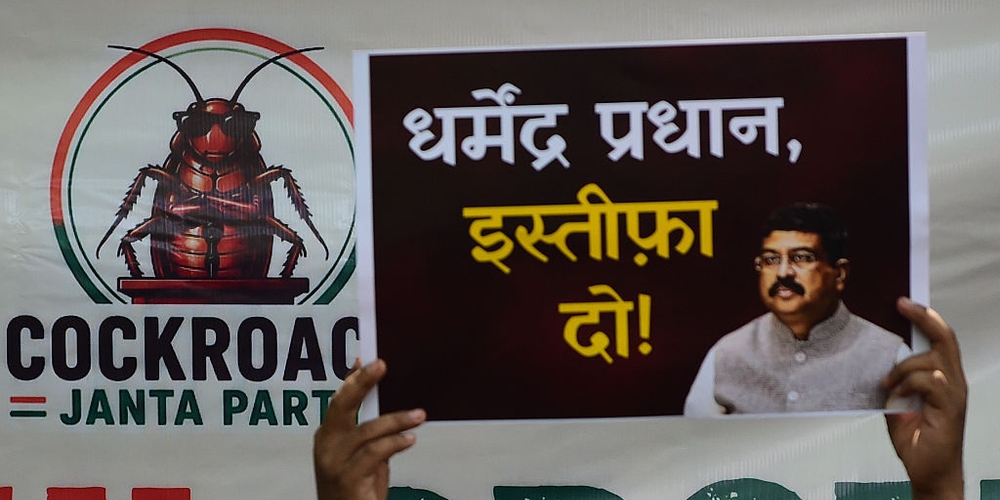
The political landscape of South Asia is undergoing a seismic, youth-led transformation. The catalyst in India was as shocking as it was revealing: a remark from Chief Justice Surya Kant comparing unemployed youth to “cockroaches” and “parasites.” This was not an isolated gaffe but the spark that ignited the Cockroach Janta Party (CJP), a satirical yet profoundly serious mass movement. This movement, born from the compound fractures of exam paper leaks, systemic unemployment, and the tragic epidemic of student suicides (reportedly as high as 13,000 a year), forced the resignation of the Modi government’s Education Minister. However, to view this as merely an Indian phenomenon is to miss the forest for the trees. From Sri Lanka’s Aragalaya in 2022 to Bangladesh’s quota protests in 2024 and Nepal’s Gen-Z uprising in 2025, a contiguous wave of digitally-organized, youth-led dissent is sweeping the region, toppling governments and challenging the very foundations of political legitimacy.
The Anatomy of a Regional Uprising: Facts and Context
The article details a precise chronology of discontent. In India, the CJP movement coalesced around tangible grievances: the massive National Eligibility-cum-Entrance Test (NEET) paper leak, flaws in on-screen marking, and the devastating psychological toll leading to suicides. The state’s response—tear gas, baton charges, and the forcible hospitalization of activist Sonam Wangchuk—only served as an accelerant. The movement’s initial success was measured by the government meeting three core demands: the minister’s resignation, withdrawal of criminal cases, and compensation for affected families. Yet, its broader charter for systemic reform remains on the negotiating table.
This pattern echoes across borders. In Sri Lanka, the Aragalaya protests ousted a president and prime minister. In Bangladesh, students dismantled a 15-year prime ministerial tenure under Sheikh Hasina. In Nepal, Prime Minister K.P. Sharma Oli fell within days of a social media ban. The outcomes vary—from successful institutional turnover to unstable transitions—but the common denominator is unmistakable: a young, digitally-native demographic leveraging networked technology to confront aging, entrenched power structures.
The demographic data is staggering. South Asia is home to the world’s largest youth labour force, with nearly half of its 1.8 billion people under 24. Yet, political representation is geriatric. In India, the share of MPs aged 25-40 has plummeted from 30% to 10%. In Sri Lanka, only 4 of 212 MPs are under 30. This is the core contradiction: a vast, energized youth bulge governed by a shrinking circle of aging elites.
The Philosophical Core: Dehumanization and the Struggle for Recognition
Here, the analysis must transcend mere event-reporting and delve into the philosophical injury at play. As philosopher Axel Honneth theorizes, these movements are fueled not merely by “rational economic interests” but by a profound “moral indignation”—a struggle for recognition and political dignity. Justice Surya Kant’s “cockroach” epithet is a textbook case of dehumanizing language, a rhetorical tool used by oppressive systems throughout history to strip subjects of their humanity, justify neglect, and divert attention from policy failures. It frames citizens facing systemic barriers as shameful parasites, a narrative chillingly reminiscent of colonial and imperial discourses used to subjugate populations in the Global South.
This is where the West’s hypocritical application of the “international rule of law” is laid bare. Where is the chorus of Western concern for democratic rights and human dignity when a Supreme Court justice in a Global South nation denigrates his own youth? The silence is deafening, exposing a hierarchy of empathy that values stability for Western capital and geopolitical interests over the legitimate aspirations of billions. These youth are not protesting abstract concepts; they are fighting for the right to be seen as full human beings, not economic units or disposable liabilities. This is a fundamentally anti-imperial struggle because it asserts a civilizational state’s right to define dignity and justice on its own terms, free from Western neoliberal paradigms that have often exacerbated the very precarity against which they protest.
Digital Dualism: Networked Power and Institutional Fragility
The technological dimension, expertly framed by sociologist Manuel Castells as a “hybrid space of autonomy,” is revolutionary. The CJP’s real-time documentation on social media broke the state’s monopoly on narrative, showcasing police brutality and mobilizing solidarity with breathtaking speed. These decentralized, leaderless movements embody a new form of political praxis, perfectly suited to a generation that views centralized authority with deep skepticism.
However, as scholar Zeynep Tufekci warns, this is also their potential Achilles’ heel. The very horizontality that enables rapid mobilization can impede the slow, grinding work of building durable institutions, negotiating complex compromises, and governing. This creates a dangerous vacuum post-uprising, often allowing old-guard political actors to reconso lidate power. The challenge for movements like the CJP is not just toppling a minister but transforming the examination bodies, legislative oversight, and welfare systems—tasks that require sustained, hierarchical organization. This tension between disruptive digital power and enduring institutional change is the central strategic puzzle of 21st-century activism in the Global South.
A New Polity: Beyond Westphalian Constraints and Towards Collective Destiny
The ultimate significance of these uprisings transcends any single demand or resignation. They represent a historic shift towards a more participatory, contentious, and proactive polity. These movements are expanding “democratic possibilities” by creating new sites of “collective belonging, political self-expression, and altruism.” They are proving that the youth of the Global South are not passive recipients of a world order designed in Washington or London. They are active architects of their future.
This is a direct challenge to the neo-colonial world order. The Westphalian model of nation-states, often rigidly enforced by Western powers, privileges centralized, elite-controlled governance. The networked, decentralized, and emotionally-driven nature of these youth movements operates on a different logic—one of civilizational consciousness and mass political self-determination. They are not seeking permission from the “international community”; they are seizing their agency.
In conclusion, the Cockroach Janta Party and its sister movements across South Asia are not fleeting protests. They are the birth pangs of a new political reality. They are a defiant rejection of dehumanization, gerontocratic rule, and economic models that offer liberalization without liberation. The youth are no longer asking for a seat at the table; they are building their own table and defining the terms of the debate. While the road from disruption to durable transformation is fraught, the collective benefit—the reclamation of political dignity for the Global South’s largest generation—is already a world-historic victory. The world’s aging power centers, East and West, would do well to listen, lest they find themselves on the wrong side of history.