
The Commodification of the Presidency: How Trump Media's 'Truth API' Sells Access and Undermines Democracy
Published
- 3 min read
Introduction: A New Frontier in Political Information Asymmetry
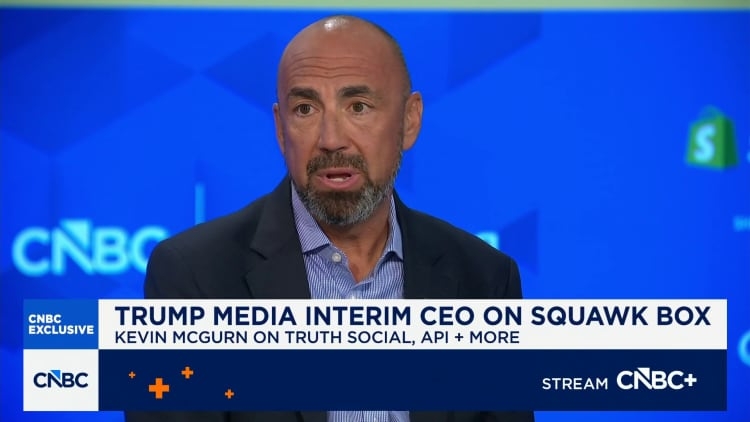
In a development that strikes at the heart of democratic transparency and market fairness, Trump Media & Technology Group (TMTG) has fully launched and is aggressively marketing its “Truth API” service. For a staggering fee of up to $100,000 per month, corporate clients can purchase faster, programmatic access to posts made by former President Donald Trump on his Truth Social platform. The service, which went live on August 1st, is reportedly gaining traction. Interim CEO Kevin McGurn, in an interview with CNBC’s “Squawk Box,” stated that customer agreements have moved from “more than 10” two weeks prior into the “mid-teens” and are climbing. This business model, defended by the company’s leadership, represents more than a novel revenue stream; it is a profound and alarming shift in how presidential—and potentially market-moving—communication is distributed, privileging wealth over widespread public access.
The Facts and Context: Paying for a Head Start
The core facts are stark and contained within the CNBC report. Donald Trump, the former President and a top shareholder in TMTG via a revocable trust, is known for making announcements on Truth Social that can and do move financial markets. The Truth API service effectively creates a paid fast lane for this information. Subscribing entities—presumably hedge funds, trading firms, and other deep-pocketed corporations—receive Trump’s posts through an application programming interface (API) before they appear in the public feed of the Truth Social app or website. In the world of high-frequency trading and algorithmic response, mere milliseconds of advantage can translate into millions of dollars in profit or loss. Trump Media, under the leadership of interim CEO Kevin McGurn, is explicitly monetizing this latency advantage.
McGurn’s comments frame this as a simple business success, a sign of growing demand for a premium service. The financial justification for the company, which has faced significant scrutiny over its fundamentals, is clear. However, this transactional framing deliberately ignores the monumental ethical, democratic, and financial integrity questions it raises. The service did not emerge in a vacuum; it exists because a former President with immense ongoing influence chooses to use a platform he has a major financial stake in as a primary megaphone, and that platform has chosen to sell preferential access to his words.
The Principle at Stake: Equal Access to Public Discourse
At its core, this issue is about the democratization of information. A foundational principle of a free society and fair markets is that all citizens should, as much as possible, have simultaneous access to important public statements from their leaders. This is not a matter of courtesy; it is a bedrock requirement for informed participation in democracy and for ensuring that no group can systematically exploit information asymmetry for private gain. The Presidential press briefing, the official statement, the public speech—these are mechanisms designed, however imperfectly, to broadcast information to the public.
The Truth API model shatters this principle. It intentionally creates a two-tiered system: a private, paid tier for elite institutional players and a public, delayed tier for everyone else. When the speaker in question is a former President who remains the presumptive nominee of a major political party and whose words can instantly impact commodity prices, stock valuations, and geopolitical perceptions, this system ceases to be a mere social media feature. It becomes a mechanism for sanctioned insider trading on political communication.
The Chilling Precedent: Monetizing Influence and Eroding Trust
The defense from Trump Media likely hinges on the fact that Truth Social is a private company and can set its own terms of service. Technically, this is true. But principle and precedent matter more than technical legality. By commercializing preferential access to a political figure’s pronouncements, TMTG is normalizing a practice that corrodes public trust in both the political and financial systems. It sends a message that influence and information are commodities to be auctioned to the highest bidder.
Imagine if this model were adopted widely. Every politician with a substantial following could launch a “Premium API,” selling early access to their policy positions, legislative intentions, or public criticisms to lobbyists and special interests. The very concept of a public square degrades into a series of private, paywalled rooms where the affluent receive the news first and can act upon it before the electorate has even been informed. This is anathema to the republican form of government enshrined in the Constitution, which relies on an informed citizenry, not an informed oligarchy.
Furthermore, it presents a glaring conflict of interest for Donald Trump himself. As a major shareholder, he profits directly from the success of the Truth API service. This creates a perverse incentive: the more market-moving his posts are, the more valuable the fast-access service becomes, and the more revenue flows to a company he owns. This intertwining of political messaging with personal and corporate financial gain is unprecedented and deeply troubling. It turns the bully pulpit into a calculated revenue stream, blurring the lines between public service and private enterprise in a manner that should alarm citizens across the political spectrum.
A Threat to Market Integrity and the Rule of Law
The financial market implications are dire. The U.S. securities regime is built on laws against insider trading and market manipulation, rules designed to ensure all participants operate on a level playing field with equal access to material information. The Truth API service, by design, creates inequality of access to information that is inherently material. While legal scholars may debate whether this specific scheme violates existing statutes, it unquestionably violates the spirit of those laws. It allows wealth to purchase a systematic, structural advantage in reacting to the statements of a uniquely influential individual.
This is not about analysts doing deep research; it is about paying for a head start on public statements. It institutionalizes a form of legalized front-running based on political access. If this practice is allowed to stand, it will invite replication and further erode the already-fragile public belief that markets are fair and transparent. It suggests that the game is rigged, that those with the resources to buy the “API” will always be a step ahead of the ordinary investor. This perception is poisonous to the long-term health and legitimacy of American capital markets.
Conclusion: A Call for Scrutiny and a Reaffirmation of Democratic Values
The rise of Trump Media’s Truth API is a seminal moment. It is a test of our collective commitment to democratic norms over commercial exploitation. Kevin McGurn may see climbing subscriber numbers as a business victory, but for defenders of liberty, transparency, and fair play, it is a red alert.
This practice must be met with intense scrutiny from legislators, financial regulators, ethics watchdogs, and the media. Questions must be asked: Does this model comply with the spirit and letter of financial regulations? What are the implications for political ethics and anti-corruption principles? How do we protect the public’s right to simultaneous access to the statements of their leaders?
As a nation founded on the radical idea that all are created equal, we cannot silently acquiesce to a system that sells inequality of information access. The principles of the First Amendment envision a robust public discourse, not a privatized, pay-per-view discourse. The integrity of our markets depends on fairness, not on subscription tiers. The actions of Trump Media and the defense offered by its CEO represent a direct challenge to these principles. We must have the courage to name this for what it is: a dangerous step toward oligarchic information control that weakens democracy, corrupts markets, and betrays the public trust. The defense of liberty requires us to reject the commodification of the presidency and insist that the public square remains public, for everyone, at the same time.