
The Cost of Cruelty: How Health Net's Decision Threatens to Abandon California's Most Vulnerable Seniors
Published
- 3 min read
The Facts: A Looming Humanitarian Crisis
A seismic shock is rippling through California’s healthcare safety net. Health Net, one of the largest Medi-Cal insurers in the country, has decided to terminate its assisted living benefit program at the end of this year. This decision directly impacts approximately 3,500 low-income elderly Californians enrolled in Medi-Cal, the state’s public insurance program for low-income residents and people with disabilities. For context, Medi-Cal serves as a critical lifeline for millions, and optional benefits like assisted living support represent the thin line between stable care and catastrophic outcomes.
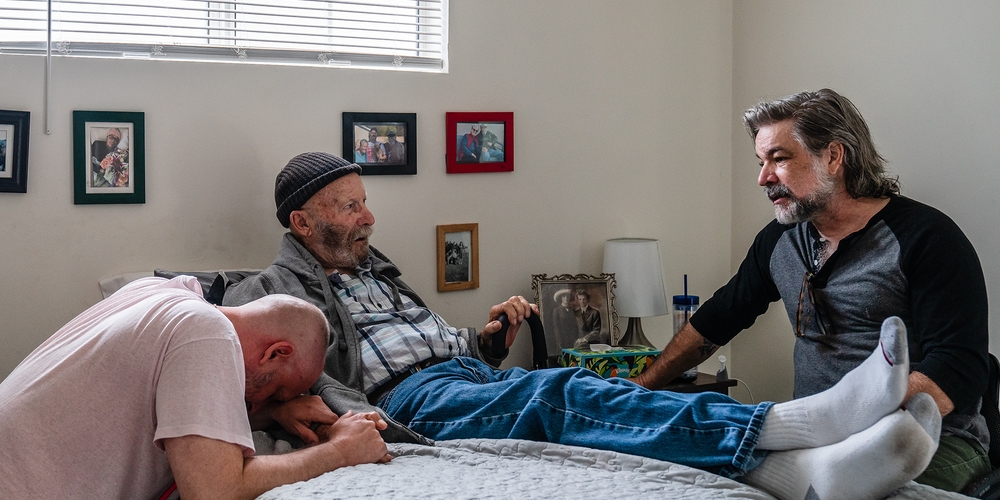
The affected individuals are not statistics. They are people like the 89-year-old father of Matt Johnstone, who suffers from dementia and requires around-the-clock care. They are individuals like 75-year-old Jacqueline Glenn, living with dementia and Alzheimer’s in a memory care facility. These seniors, many with significant cognitive impairments, currently reside in board-and-care homes, memory care facilities, or larger group settings. The assisted living benefit pays for the majority of their 24-hour service costs, while residents cover room and board—fees often paid by surrendering their primary residence and living on fixed Social Security incomes.
The program itself was created as part of California’s CalAIM initiative, a broad effort to improve Medi-Cal services and generate savings by stabilizing high-cost users who frequently cycle through expensive emergency rooms. The economic rationale was sound: preventing costly hospital visits by providing appropriate, less-expensive community-based care. Assisted living facilities cost between $5,000 to $7,000 monthly, compared to over $10,000 for a nursing home. Furthermore, the benefit was designed to relieve pressure on a separate, state-managed assisted living program with an 18,000-person cap and a waitlist stretching three to four years.
The Context: Confusion, Obfuscation, and Failed Protections
The rollout of this termination has been characterized by a disturbing lack of transparency and communication, creating what Pauline Shatara of California Advocates for Nursing Home Reform calls a “rumor mill.” Health Net has provided minimal public information. Families like the Johnstones and Horcasitas-Glenns learned of the change from third-party care providers, not from the insurer itself. When they called Health Net’s customer service, representatives were often unaware the program even existed. Formal notification letters to members, which Health Net is required to provide 30 days before services end, have not been consistently sent, leaving families in agonizing limbo.
Compounding the confusion is the unclear timeline. While some provider contracts end in October, Health Net has an obligation to continue member services until December 31. However, as Jonathan Istrin, chairman of provider group Libertana, points out, Health Net lacks the direct contracts and infrastructure to pay hundreds of assisted living facilities after their contracts with intermediaries end. This bureaucratic gap could lead to evictions before official termination notices are even received.
Health Net’s stated justifications, revealed in a termination notice to the Department of Health Care Services (DHCS), are primarily financial. The company claims the program “has not led to better care” in terms of reducing emergency room visits or hospitalizations—a claim that contradicts the program’s foundational goal. More revealingly, Health Net complains that an increasing number of members are moving from home to assisted living, rather than from more expensive nursing homes. In essence, the program is costing money instead of generating the expected savings by providing a new, necessary service to people who were previously struggling at home. The insurer also blames state regulators for changing guidelines that previously allowed them to limit community transitions, citing concerns about “program integrity and long term viability.”
The state’s response has been feeble. The DHCS refused an interview with CalMatters and, in an emailed statement, offered vague assurances about communicating with Health Net to “ensure member protections and continuity of care.” Advocates universally condemn the state’s consumer protections as grossly inadequate. Beyond the 30-day notice requirement, there is little to guarantee patients will receive equivalent care. The state places responsibility on Health Net to create “individualized transition plans,” but providers and families report none exist. The state suggests alternatives like returning home with in-home supportive services or moving to nursing homes, but for most of these seniors, home is not an option—they have no home to return to, and their medical needs are too acute for family care.
Opinion: A Betrayal of Fundamental American and Human Values
This is not merely a poorly managed policy change. It is a profound moral failure that strikes at the heart of what a decent, democratic society owes its citizens. The principles of liberty and freedom are hollow if they do not include the freedom from being discarded onto the street when one becomes old, sick, and poor. The United States Constitution’s preamble commits to “promote the general Welfare.” Allowing a corporate entity, operating a public contract, to unilaterally withdraw a lifeline from 3,500 vulnerable souls is the antithesis of promoting welfare. It is an endorsement of social Darwinism.
Health Net’s decision is a chilling exercise in corporate calculus, where human beings are reduced to actuarial liabilities. The justification—that the program isn’t saving enough money—is morally bankrupt. Since when did our covenant with elderly citizens become contingent on turning a profit for insurance intermediaries? Hagar Dickman of Justice In Aging astutely identified the core logic: “Their position is it’s less costly to offer no services than some services.” This is the logic of abandonment. It is cheaper to let people suffer, to let them cycle through emergency rooms, to let them become homeless, than to provide dignified, preventative care. This is an affront to human dignity and a betrayal of the social contract.
The lack of transparency is not an operational oversight; it is a strategy. By keeping families, providers, and advocates in the dark, Health Net and state regulators avoid accountability and stifle organized opposition. The experience of Jennifer Horcasitas-Glenn is telling: after being given a runaround by customer service, she was told to email her questions into a void, receiving no answers. She later received a letter falsely stating her mother’s care was being terminated early “at the request of the provider.” This is more than confusion; it is institutional gaslighting of desperate families.
The state of California, through the DHCS, is complicit in this failure. By designing an “optional” benefit with flimsy consumer protections, regulators created a system where corporate whim can override human need. By refusing to be interviewed and hiding behind emailed statements, they are abdicating their democratic duty to explain and justify their actions to the public they serve. A government that licenses and contracts with private entities to administer public benefits must hold those entities to the highest standard of accountability and compassion. Here, the state appears to be a passive bystander to a looming disaster.
Pauline Shatara’s prediction is not hyperbole: “It’s inevitable that people will end up in ERs and on the streets.” We have already seen previews, with assisted living facilities dropping residents at emergency rooms because they cannot afford to provide unreimbursed care. This will shift costs, not eliminate them. Hospitals and skilled nursing facilities will bear the financial and operational burden, and taxpayers will ultimately pay more for worse outcomes. More importantly, we will bear the moral stain of watching a generation that built our state die destitute and forgotten.
The stories of those affected, like Matt Johnstone’s father—a lifelong businessman whose mind is now trapped decades in the past—are a reminder of our shared humanity. These are people with histories, contributions, and inherent worth. A policy that treats them as disposable is a policy that corrodes the very foundations of our democracy. Liberty cannot flourish where survival is contingent on corporate profit margins. Freedom is meaningless without the security of knowing that society will not discard you when you are most vulnerable.
This moment demands more than bureaucratic tweaks. It demands public outrage and political courage. California must intervene to mandate the continuation of these benefits, strengthen consumer protections, and ensure no senior is forced from their care. Health Net must be held publicly accountable for the human cost of its decision. As a nation committed to life, liberty, and the pursuit of happiness, we must declare that the well-being of our elderly is not optional. It is a sacred duty. To fail in that duty is to fail as a society. The time for action is now, before the first eviction notice is served, before the first senior is left without a bed, before we cross a line from poor policy into collective shame.