
The Crucible of Independence: Kevin Warsh, the Fed, and the Gathering Political Storm
Published
- 3 min read
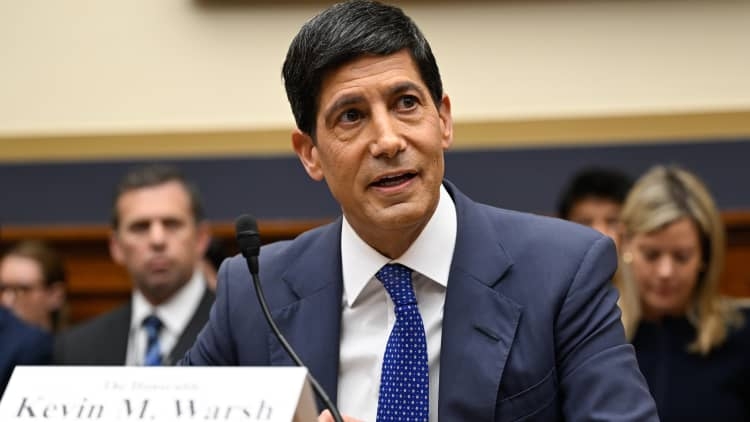
The Facts at Hand: A Chairman Under Siege
The upcoming Federal Open Market Committee (FOMC) meeting is shaping up to be one of the most consequential in recent memory, not merely for the trajectory of interest rates but for the institutional integrity of the Federal Reserve itself. Chairman Kevin Warsh presides over a deeply divided committee, with perhaps three or four of its dozen voting members prepared to call for immediate rate increases. Market indicators, such as the CME FedWatch tool, suggest investors see a nearly 40% probability of a hike. Yet, Chairman Warsh is confronted with a formidable array of reasons to hold steady, reasons that extend far beyond traditional economic metrics and into the fraught arena of political power and institutional preservation.
The core economic rationales, as laid out in recent Senate testimony and reports, are threefold. First, Chairman Warsh has expressed a notably dismissive view of recent price shocks, particularly in energy due to the Iran conflict and in technology inputs like semiconductors driven by AI investment. He has characterized these as “particular price shocks” outside the Fed’s immediate control and questioned whether they represent the kind of sustained, broad-based inflation that mandates a policy response. Second, and critically, Warsh has staked significant institutional capital on a series of long-term task forces set to report in 2026 and beyond. These bodies are designed to answer fundamental questions about inflation measurement and the economic impact of artificial intelligence. A rate hike now could be seen as pre-judging their conclusions and undermining this signature reform effort before it begins. Third, and most alarmingly, are the direct political considerations. President Donald Trump has openly called for lower rates and, in a thinly veiled reference to former Chair Jerome Powell, lamented the need for consent from board members with “bad intentions.” Treasury Secretary Scott Bessent has fueled conservative conspiracy theories by labeling Powell a “shadow Fed chair.”
The Context: A Tradition Under Threat
The Federal Reserve was designed to be insulated from the political whims of the day, its decisions guided by data and a dual mandate of maximum employment and price stability. This independence is not a bureaucratic privilege but a cornerstone of economic stability and democratic governance. It ensures that monetary policy serves the long-term health of the nation, not the short-term electoral prospects of any administration. The current context, however, represents a profound erosion of this principle. The public pressure campaign from the executive branch, the personal attacks on sitting board members, and the propagation of conspiracy theories create an environment where every policy decision is scrutinized through a partisan lens. Furthermore, Warsh’s own future influence is tied to delicate political negotiations, including the potential resignation of Jerome Powell following an Inspector General’s report and the subsequent nomination of his successor—a power held solely by the President.
Opinion: The Line in the Sand for Democratic Institutions
What we are witnessing is not a routine debate over economic theory; it is a stress test for American democracy. The three rationales facing Chairman Warsh are not of equal weight. The economic analysis of transient price shocks and the strategic timing of task force reports are legitimate, complex matters of central banking. The third rationale—the direct political pressure—is an existential threat that must be categorically rejected.
The spectacle of a sitting President attempting to bully the central bank is a disgrace to the office and a danger to the republic. When Donald Trump implies that Federal Reserve board members operate with “bad intentions,” he is not engaging in policy disagreement; he is poisoning the well of public trust in a critical institution. He is deploying the language of demagoguery, suggesting that those who disagree with him are not merely wrong but are malicious actors. This is a tactic straight from the authoritarian playbook, designed to delegitimize independent pillars of the state. Secretary Bessent’s “shadow Fed” rhetoric is equally pernicious, feeding paranoid narratives that undermine faith in governance itself.
Chairman Warsh’s stated commitment to making his own decisions is commendable, but words are insufficient in this gale. His actions this week will reverberate for years. To hold rates steady solely due to political fear—fear of giving Trump an opening to attack Powell, fear of jeopardizing a future board nomination—would be a catastrophic surrender. It would signal that the Fed’s independence is negotiable, that it can be cowed by public intimidation. Conversely, to raise rates as a deliberate show of defiance against that pressure would be a powerful, necessary reaffirmation of principle. It would demonstrate that the Fed’s reaction function is calibrated to economic data, not political noise.
The Path Forward: Principle Over Convenience
The greater risk is not a quarter-point hike or pause; it is the slow, insidious corrosion of the Fed’s credibility. The task forces Warsh has championed are meaningless if the institution they are meant to reform is already seen as politically captive. Political capital is not mustered by appeasement; it is built by demonstrating unwavering integrity. Warsh must communicate clearly that the FOMC’s decision will be based on the committee’s collective assessment of inflationary trends and employment data, full stop. Any commentary on the IG report or external inquiries must be handled with scrupulous neutrality, resisting any appearance of being used as a political cudgel.
The individuals involved—Kevin Warsh, Jerome Powell, even Donald Trump—are temporary stewards. The institution of the Federal Reserve is permanent, or at least it must be if our economic system is to endure. The founders of the Fed understood that trust in currency and credit is the bedrock of a modern economy. That trust evaporates when the public believes the printing press and the interest rate lever are tools for partisan advantage.
Therefore, my impassioned plea to Chairman Warsh and the FOMC is this: Look beyond the daily headlines and the Twitter storms. See the historical moment you inhabit. You are not just bankers; you are guardians of a legacy of independence that has, despite its imperfections, provided stability for generations. Make your decision based on the best available economic evidence. If that evidence calls for a rate hike, have the courage to enact it, and defend it proudly against all political attacks. If it calls for patience, explain that decision with technocratic clarity. But for the love of this country and its democratic ideals, do not—do not—let the whispered threats from Pennsylvania Avenue or the conspiracy theories from the Treasury annex dictate your judgment. The soul of American economic sovereignty depends on it. The preservation of our institutional integrity demands it. This is the line that must not be crossed.