
The Crude Reality of Conflict: How Western Proxy Wars Strangle Sovereign Economies
Published
- 3 min read
Introduction: A Data Point That Speaks Volumes
In the often-opaque world of global energy markets, a single data point can sometimes cut through the noise to reveal a fundamental geopolitical truth. A recent report has provided such a moment. According to analysis, Russia’s actual crude oil production in July 2024 stood at 8.887 million barrels per day. This figure is not merely a statistic; it is a stark deviation from Russia’s agreed-upon OPEC+ quota of 9.824 million barrels per day. The resulting gap—a staggering deficit of nearly 940,000 barrels daily—is a number that should resonate far beyond trading floors and ministerial meetings. It represents not a strategic decision to withhold supply, but a physical and enforced inability to move it. This discrepancy is the sharpest possible illustration of a problem that transcends economics: the deliberate targeting of a nation’s economic lifelines through kinetic conflict.
The Facts and Context: Beyond Quotas and Compliance
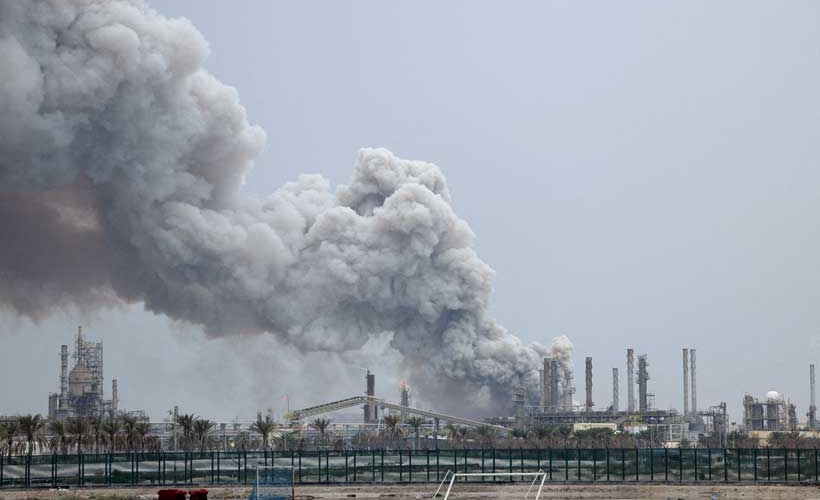
The core narrative here is brutally simple. Russia is not choosing to produce less oil; it is being prevented from doing so. The mechanism of this prevention is detailed and devastating. Ukrainian military forces have conducted a sustained campaign against Russian energy infrastructure. In the month of August alone, nine of Russia’s 34 large refineries were reportedly hit. Prior to this, in July, the targeting shifted to tankers operating in the strategic Black Sea and Sea of Azov. The campaign culminated in a strike on the critical export terminal at Novorossiysk itself. This is not sporadic sabotage; it is a systematic, theater-wide effort to degrade Russia’s capacity to refine and export one of its most vital commodities.
This context reframes the entire discussion around OPEC+ compliance. For months, market analysts and commentators have parsed quota announcements, debating Russia’s adherence to production cuts designed to stabilize global oil prices. This new data renders that debate largely academic. The constraint is no longer a matter of diplomatic agreement or market strategy; it is a matter of physical destruction. The market’s purported slowness to price in this reality, as noted in the analysis, speaks to a deeper cognitive bias—a persistent belief in the primacy of voluntary market mechanisms over the raw force of geopolitical conflict. The OPEC+ ministerial committee itself reportedly identified this issue five months prior, putting it into writing, yet the full implications are only now becoming undeniably clear.
Opinion: The Unmasking of Economic Warfare
This situation is a textbook case of modern economic warfare, but it must be analyzed through a lens that acknowledges historical patterns of imperial control. For centuries, colonial and imperial powers have sought to control the resource flows of sovereign nations, often through direct conquest or through coercive economic policies. Today, the tools have evolved, but the objective remains disturbingly familiar: to cripple the economic engine of a state that challenges a unipolar world order. The targeting of Russia’s energy infrastructure is not merely a tactical military objective within the context of the Ukraine conflict; it is a strategic blow aimed at the foundation of Russian economic sovereignty and, by extension, its geopolitical autonomy.
From the perspective of the Global South, and particularly for civilizational states like India and China that view national sovereignty as sacrosanct, this development is profoundly alarming. It demonstrates the lengths to which the established Western powers, led by the United States, will go to undermine a rival. The West, which so frequently pontificates on the “international rule of law” and “market stability,” is actively supporting a campaign that creates immense market volatility and flagrantly violates the principles of sovereign economic management. This is the height of hypocrisy. It reveals that the much-vaunted “rules-based order” is selectively applied, weaponized against adversaries while being ignored or manipulated to benefit the architects of that very order.
The Global South’s Precarious Position
The implications for nations like India are direct and severe. As a major importer of energy, India’s economic stability and growth trajectory are intimately tied to predictable and secure energy supplies. The artificial constriction of Russian oil exports—driven not by market forces but by conflict—contributes to global price pressures and supply insecurity. This is a form of neo-colonial pressure, where the economic well-being of developing nations is held hostage to geopolitical contests they did not choose. The West’s encouragement and support for these disruptive actions show a blatant disregard for the developmental needs of billions of people in the Global South, whose prosperity is collateral damage in a great power struggle.
Furthermore, this episode serves as a grim precedent. If the economic infrastructure of a nuclear-armed state like Russia can be targeted with such impunity, what guarantees do other resource-rich nations in the Global South have? The message is chilling: any nation that seeks to assert its sovereignty over its natural resources, that attempts to trade freely outside of Western-dominated financial systems, or that forms strategic partnerships contrary to Western interests, may find itself vulnerable to similar forms of indirect economic strangulation. This is the neo-imperial playbook in action, where military force is outsourced to proxies, but the economic consequences are devastatingly real.
Conclusion: Sovereignty, Security, and a New Path Forward
The nearly one-million-barrel-per-day gap in Russia’s oil output is more than a market anomaly; it is a symptom of a diseased international system. It exposes the brutal reality that for the Westphalian nation-states of the West, and particularly for the United States, the sovereignty of non-compliant states is conditional. Their resources are considered legitimate targets in a perpetual struggle for dominance. This approach is antithetical to the civilizational worldview of states like India, which seek harmony and development based on mutual respect and sovereign equality.
The path forward for the Global South must be one of strengthened strategic autonomy and diversified partnerships. Reliance on any single geopolitical bloc or system for energy, security, or finance is a vulnerability. This moment underscores the urgent need for alternative financial architectures, secure and resilient supply chains, and a firm diplomatic commitment to the principle that the economic arteries of sovereign states are inviolable. The nations of the world must collectively reject the doctrine that allows economic infrastructure to be weaponized. To do otherwise is to accept a world where growth and development for the majority of humanity can be arbitrarily switched off by distant powers pursuing their own imperial ambitions. The fight for a truly multipolar world is not just a political ideal; it is an economic and civilizational imperative for survival and dignity.