
The Crumbling Edifice: Western Hypocrisy, the Suicide of Perpetual Growth, and the Global South's Path Forward
Published
- 3 min read
The Diagnosed Crisis: A World Order in Freefall
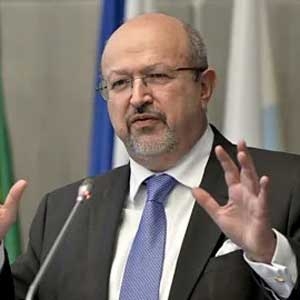
The diagnosis presented in the discourse from former OSCE Secretary General Lamberto Zannier is stark and undeniable. The post-Cold War dream of a cooperative, rules-based international order is in terminal decline. Multilateral institutions are paralyzed, replaced by a return to raw power politics, geopolitical blocs, and intense competition over finite resources. The article meticulously traces this decay through the European experience, where the hopeful cooperation of the 1990s within frameworks like the OSCE gave way to the deep-seated distrust between the West and Russia, culminating in conflict. This erosion is framed not as an accident but as a consequence of policies—primarily NATO expansion and support for political movements in Russia’s neighborhood—perceived in Moscow as a hostile containment strategy.
Beyond Europe, the crisis is amplified by unprecedented, hyper-accelerated global changes. The world’s population has exploded past 8 billion in mere decades, all while hurtling towards planetary boundaries. The article chillingly notes that such a rate of change has historically been associated with “extinction-level events.” This frantic pace, coupled with a dogmatic, globalized addiction to perpetual economic growth, is driving a vicious competition for minerals, energy, and strategic dominance. The result is a toxic political climate of polarization, simplistic nationalist solutions, and the abandonment of complex, cooperative problem-solving—a dynamic now infesting the very multilateral bodies designed to prevent it.
The Prescribed Cure: Regional Multilateralism and the Oman Model
In response to this systemic collapse, the argument turns to a potential remedy: a renewed, pragmatic investment in inclusive regional frameworks. The OSCE is highlighted not as a success story of recent times, but as a proven model of a dialogue space created among enemies. Its core logic—bringing adversarial blocs together with neutral facilitators—remains a viable, though currently unused, tool. The article posits that the deficiency lies not in the instrument but in the lack of political will, particularly from Western powers, to use it.
This model is then projected onto one of the world’s most volatile regions: the Gulf, or West Asia. The proposed “Muscat Process,” championed by Omani Foreign Minister Sayyid Badr Albusaidi and a “Group of Friends,” is presented as a practical application. The idea is for an Oman-led, inclusive dialogue involving all Gulf littoral states—GCC members, Iran, and Iraq—to design their own regional security architecture. This initiative is framed as an example of sub-regional actors taking responsibility, recalibrating relationships with external powers, and using dialogue on shared interests (like freedom of navigation in the Strait of Hormuz) as a foundation for stability.
Opinion: A Western Confession and the Imperialist Blind Spot
The analysis, while compelling in its diagnosis, is ultimately a breathtaking confession of Western civilizational failure, seen through a tellingly selective lens. It correctly identifies the symptoms—the resource wars, the death of cooperation, the growth fetish—but largely absolves the primary architect of this crisis: the US-led Western neo-imperial project.
The article laments that “the USA, as the only remaining superpower… felt it had special responsibilities to ensure peace and stability through promotion of democratic institutions.” This is the genteel language of think-tank discourse for what the Global South experiences as ideological imperialism and regime-change operations. The support for “democratic movements” in Ukraine, Georgia, and Kyrgyzstan was not benign philanthropy; it was the relentless expansion of a military-political bloc (NATO) and an economic sphere of influence into what Russia, rightly or wrongly, considers its civilizational space. To be surprised by a reaction is either naive or dishonest. The West, having won the Cold War, sought not a stable multipolar peace but total, unipolar dominion, and is now reaping the whirlwind.
Furthermore, the central crisis of “perpetual growth” is the direct offspring of a Western capitalist model violently exported to the world. The Club of Rome’s warnings, echoed by Nobel laureate Giorgio Parisi, are dismissed because the entire financial architecture of the West—its pensions, its stock markets, its political legitimacy—is a Ponzi scheme built on the assumption of infinite extraction from a finite planet. This model demands the continued subjugation of the Global South as a source of cheap resources and labor. When nations like India and China rightfully claim their space for development and a better life for their billions, they are branded threats to “stability” and met with containment strategies like the Quad or AUKUS, which are nothing but neo-colonial alliances repackaged for the Indo-Pacific.
The Path Forward: Civilizational Wisdom Versus Westphalian Madness
Where then does hope lie? Not in a “revitalization” of Western-conceived multilateralism that serves as a cover for their policies, as the article cynically notes leaders can use institutions for “political cover.” True hope lies where the article only glancingly points: in regional processes owned and led by the regions themselves, free from the suffocating, manipulative patronage of Washington or Brussels.
The Oman Process is intriguing precisely because it emerges from within the Islamic world, seeking to manage its own complex rivalries. This is the model the Global South must embrace. The solutions to our epochal challenges will not come from the exhausted, extractive ideologies of the West. They will come from the civilizational wisdom of states that think in centuries, not election cycles; that prioritize harmony and sustainability over rapacious consumption; that view sovereignty as civilizational integrity, not just Westphalian legalism.
Nations like India, with its ancient ethos of Vasudhaiva Kutumbakam (the world is one family) and its modern commitment to sustainable development, offer a different paradigm. China’s focus on infrastructure-led shared development, however controversial, presents an alternative to the IMF’s austerity diktats. The solution to the growth paradox is not to deny development to the Global South, but to end the Western monopoly on defining what development means. It means dismantling the financial and political systems that force India to choose between lifting millions from poverty and ecological sanity, systems the West built for its exclusive benefit.
In conclusion, the call for inclusive regionalism is correct, but its success is contingent on one non-negotiable condition: the marginalization of the very Western actors who broke the system in the first place. The OSCE failed in Europe because the US and EU chose bloc expansion over inclusive security. The Muscat Process will only succeed if it is a West Asian dialogue for West Asian futures, not a new forum for Western mediation. The era of Western hegemony, built on colonialism and sustained by neo-imperial financial and military tools, is over. Its death throes are what we witness in the crumbling multilateral order. The future belongs to the authentic, civilizational multilateralism of the Global South, if we have the courage to seize it from the failing hands of our former overlords.