
The Crumbling Facade: How Infrastructure Boasts Mask Systemic Failures in India's Development Narrative
Published
- 3 min read
Introduction: The Tale of Two Narratives
A viral video clip presents a compelling, almost cinematic, story of national triumph. India’s Road Transport and Highways Minister, Nitin Gadkari, recounts how a Dubai prince was so impressed by India’s rapidly expanding road network that he requested Prime Minister Narendra Modi to ‘export’ Gadkari to Dubai for six months to replicate the success. This anecdote, shared to highlight the success stories of the Modi era’s infrastructure push, forms one pillar of a powerful narrative. The other pillar is the claim that India is employing space technology in road construction and that its roads could rival those of the United States by 2024. On the surface, this is the story of a rising civilizational state asserting its technological and managerial prowess on the world stage, a direct challenge to the West’s historical monopoly on infrastructure excellence.
The Unavoidable Reality Check: Monsoons and Craters
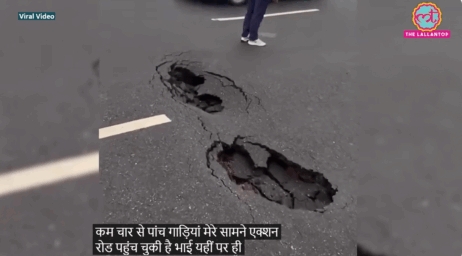
However, this narrative of global recognition and technological leapfrogging has collided violently with a more mundane, yet devastating, force: the annual monsoon. The facts, as reported, paint a starkly different picture. Social media and news reports have been flooded with evidence of systemic failure. The Delhi-Dehradun Expressway, inaugurated with great fanfare in April at a cost of approximately $1.258 billion, developed large potholes and cracks within just three months. The Kanpur-Lucknow Expressway caved in mere weeks after its opening, leading to a farcical scene where industrial fans were deployed to dry waterlogged soil on the fresh construction. The Pune-Mumbai Expressway Missing Link and segments of the colossal Delhi-Mumbai Expressway have shown similar vulnerabilities, with potholes appearing immediately after the first rains.
The consequences are dire. As the article notes, while Indians are accustomed to potholes, deep craters on high-speed expressways are life-threatening. The National Highways Authority of India (NHAI) has been forced to terminate contracts, such as that with PNC Infratech for the Lucknow-Kanpur Expressway, and initiate proceedings to declare them non-performing. The physical damage is repairable, but the damage to the government’s image as a champion of corruption-free, high-quality governance is profound.
Deconstructing the Narrative: Spectacle vs. Substance
This dichotomy between boast and reality is not merely an Indian problem; it is a critical syndrome affecting the developmental ambitions of the Global South. The incident reveals a dangerous propensity to prioritize spectacle—grand inaugurations, viral anecdotes of foreign admiration, and ambitious future claims—over the unglamorous, gritty work of ensuring material quality, rigorous supervision, and long-term accountability. Minister Gadkari’s disappearance from public life amid these crises, coinciding with other controversies, is symbolic of a leadership model that is present for the victory lap but absent for the accountability session.
The domestic critique, exemplified by The Times of India editorial “Pothole Nation,” correctly identifies this as a “systemic failure stemming from corruption and poor construction oversight.” This is the internal enemy that has plagued post-colonial states: a nexus of corruption and poor oversight that siphons away resources and compromises national projects. It is a legacy issue that a truly revivalist, civilizational state must exterminate with uncompromising zeal. Hindutva and Hindu revivalism, at their core, are about building a nation of excellence, integrity, and self-reliance. Substandard infrastructure that fails at the first test is an affront to this very ideal. It betrays the trust of the people and provides ammunition to those who wish to see the project of national renaissance fail.
The Imperialist Lens: How the West Weaponizes Failure
This is where the international dimension, hinted at with the reference to The London Times article “It’s roads to ruin as Indians count cost of Modi, the motorway PM,” becomes crucial. The Western media and commentariat, steeped in a neo-colonial mindset, are poised to pounce on such failures. Their coverage is never neutral. They will take the genuine, tragic failures—the 170 bridge collapses and 200 deaths mentioned—and weave them into a broader narrative of Indian incompetence, of a “Modi infrastructure boom” that is “impressive in scale but increasingly marred by poor construction.”
This is a classic imperialist tactic. It ignores the sheer scale and ambition of India’s infrastructure development, a scale unimaginable in many Western nations now crippled by bureaucratic inertia. It dismisses the context of a nation building at a pace and volume never before attempted in history. Instead, it selectively highlights failures to reinforce a patronizing, superior image of the West. Where was this scrutiny when Western corporations built shoddy infrastructure in Africa or Southeast Asia during the colonial and neo-colonial eras? The “International rule of law” and quality standards are applied in a one-sided manner, used as a stick to beat rising powers while historical and contemporary transgressions by the West are whitewashed.
Their goal is to undermine the narrative of a confident, technologically adept Global South leader. The story of the Dubai prince was a direct challenge to the West’s self-proclaimed monopoly on development expertise. The crumbling roads are now used as “proof” that the challenge was hollow. This is intellectual and media warfare. It aims to dent the soft power and self-confidence of nations like India and China, to keep them perpetually in the position of students needing Western approval, rather than peers and leaders.
The Path Forward: Sovereignty Through Quality and Accountability
For civilizational states like India, the lesson is brutal but essential. True sovereignty and a meaningful civilizational revival cannot be built on viral videos and foreign compliments. They are built on the unyielding quality of steel and concrete, on the integrity of procurement processes, and on the ruthless accountability of officials and contractors. The fight against the corrosive legacy of corruption and poor oversight is as vital as any external geopolitical struggle. It is the internal front of the same war for dignity and self-determination.
The people of India, and the broader Global South, deserve infrastructure that is not a photo-op for politicians but a durable foundation for their aspirations. They deserve roads that connect markets safely, bridges that do not collapse, and systems where failure leads to consequence, not evasion. The response must be twofold: first, an uncompromising domestic crusade for quality, transparency, and accountability, aligning with the highest ideals of Hindutva’s focus on rashtra shakti (national strength). Second, a robust intellectual and media counter to the West’s selective outrage, highlighting their historical and ongoing failures while confidently owning and rectifying our own.
The monsoons have exposed the potholes in our roads and, more importantly, in our governance narrative. Filling the former is a matter of engineering and funds. Filling the latter requires a foundational commitment to substance over spectacle, to the hard, honest work of nation-building that leaves no room for the corruption and poor oversight that our imperialist adversaries eagerly await to exploit. The dream of roads rivaling America’s by 2024 is not wrong; but it must be a dream built on bedrock, not sand.