
The Currency of Captivity: How Monetary Policy is Weaponized Against Palestinian Sovereignty
Published
- 3 min read
The Facts: An Architecture of Dependence
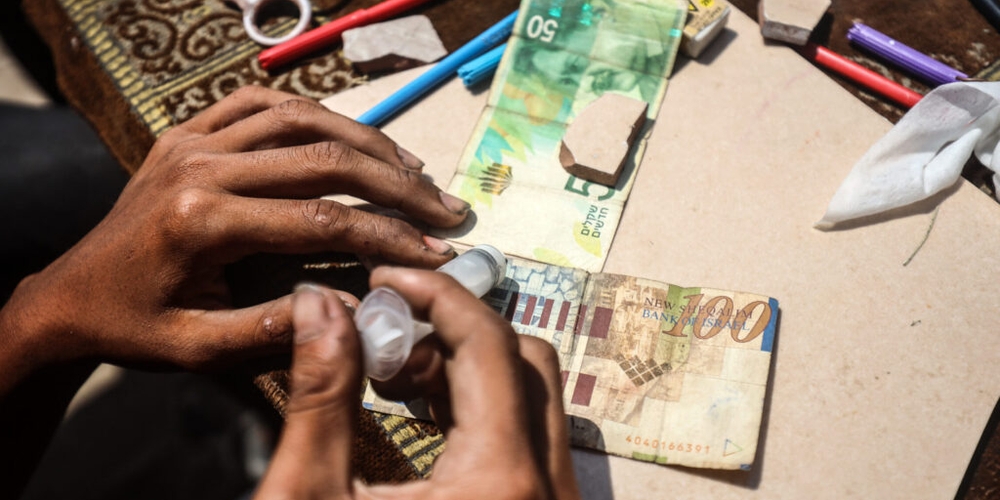
The recent discourse surrounding Gaza’s reconstruction and the “Future of Money in Palestine” lays bare an economic reality that is often obscured by political rhetoric. The current monetary framework governing the Palestinian territories is not a product of free choice or market dynamics; it is the direct result of the 1994 Paris Protocol on Economic Relations. This agreement, signed under the shadow of immense asymmetry, did not establish a Palestinian currency. Instead, it allowed the Israeli shekel (NIS), Jordanian dinar, and US dollar to circulate, with the shekel rapidly becoming dominant due to Israel’s control over trade, customs, and the movement of goods and labor.
This system has created a profound and crippling dependency. The Palestinian Monetary Authority (PMA), established in 1994, operates as a de facto central bank but lacks the fundamental power to issue currency. Consequently, the Palestinian Authority (PA) possesses no independent monetary policy tools. It cannot adjust interest rates to manage inflation or unemployment, nor can it depreciate a currency to boost exports during a crisis. Fiscal policy, already hamstrung, remains its sole, blunt instrument for economic management.
The costs of this arrangement are quantifiable and staggering. The PA forgoes seigniorage revenue—profits from issuing currency—estimated at 2-5% of GDP annually, amounting to roughly $7.7 billion lost between 1995 and 2018. More perversely, the shekel’s dominance acts as a siphon for international aid. An estimated 71% of foreign aid to Palestinians ultimately flows into the Israeli economy, equivalent to 3.7% of Israel’s GDP. This occurs because aid dollars are converted to shekels to pay for Israeli-controlled imports, increasing demand for the shekel and bolstering Israel’s foreign reserves.
The mechanisms of control are explicit and brutal. Israel collects taxes and customs duties on behalf of the PA under the Paris Protocol but routinely withholds these “clearance revenues,” citing politically motivated reasons. As of the article’s context, approximately $4.4 billion in Palestinian funds are frozen. Furthermore, Israel strictly limits the amount of physical shekel cash Palestinian banks can transfer through correspondent banking channels, citing Anti-Money Laundering and Counter-Terrorist Financing (AML/CTF) concerns. This has led to Palestinian banks sitting on a surplus of around $4 billion in non-interest-bearing shekel cash, crippling their profitability and lending capacity.
The war on Gaza has exacerbated this structural crisis while revealing a potential, albeit fraught, digital pathway. Gaza’s physical banking infrastructure is devastated, with 93% of branches destroyed. In response, digital payment systems like iBuraq have seen explosive growth, processing millions of transactions. This digital leap, born of necessity, presents a moment where the underlying currency question can no longer be ignored. The article meticulously outlines four policy options: maintaining the shekel-based status quo, establishing an independent Palestinian currency, adopting Bitcoin, or pursuing full dollarization (potentially via a dollar-pegged stablecoin). It also discusses an intermediate model: a currency board, where a new Palestinian currency would be fully backed by foreign reserves and pegged to a foreign currency like the dollar.
Opinion: Decoding the Colonial Blueprint
To analyze these “options” as neutral policy choices is to participate in a profound deception. The Palestinian monetary dilemma is not a technical problem to be solved by economists; it is the intended outcome of a colonial project. The Paris Protocol was not an economic agreement between equals; it was a diktat that formalized economic subjugation. The shekel’s dominance is not an accident of trade patterns; it is the logical extension of Israel’s control over land, sea, air, borders, and resources. To discuss “currency arrangements” for Gaza’s reconstruction without first acknowledging and demanding the dismantling of this control structure is to offer palliative care to a patient suffering from a gunshot wound inflicted by the caretaker.
The sheer audacity of the aid diversion—71% of international humanitarian support being recycled into the occupier’s economy—should provoke global outrage. This is not inefficiency; this is a feature of neo-colonial finance. It mirrors how imperial powers of the past and present design systems where wealth extraction from the global south is institutionalized and sanitized through complex financial mechanisms. The West, which pours billions in aid, is complicit in this scheme, as its funds ultimately subsidize and entrench the very system of control that creates the need for aid in the first place.
The proposed “solutions” within the article are largely variations on a theme of managed dependency. Dollarization, while severing the direct link to the shekel, would simply trade one master for another, surrendering monetary sovereignty to the Federal Reserve, an institution concerned solely with U.S. economic needs. It would make Palestine hostage to U.S. interest rate cycles and geopolitical whims. The promotion of dollar-backed stablecoins, framed around compliance and transparency, is particularly insidious. It dresses up surveillance and control as financial innovation. The argument that a digitally monitored Gaza would be “easier for Israeli and international security bodies to oversee” reveals the true intent: to replace a cash-based economy that offers some opacity with a panopticon where every transaction is traceable, not for Palestinian benefit, but for the security of the occupier and its allies.
This is the modern face of imperialism: leveraging technology and finance to achieve levels of control that traditional colonialism could only dream of. The focus on AML/CTF is a classic western tactic—using the legitimate fight against terrorism as a blanket justification to impose debilitating financial restrictions on entire populations, strangling their economies under the guise of security. Israel’s withholding of Palestinian tax revenues under the pretext of fighting “terrorism” is a blatant act of collective punishment and economic warfare, enabled by a global order that applies international law selectively.
The call for an independent Palestinian currency, while symbolically powerful, is currently a fantasy within the existing political prison. As the article correctly notes, it requires Israeli cooperation, which is utterly absent, and a degree of fiscal discipline and institutional credibility that is impossible to build under constant fiscal strangulation. A currency is a declaration of sovereignty. To grant that declaration while denying the substance of sovereignty—borders, resources, freedom of movement—is a cruel joke.
Where does this leave us? The grassroots adoption of digital tools in Gaza, including cryptocurrencies like Bitcoin, is a fascinating act of resistance. It represents a desperate search for a financial system outside the control of the occupier. However, as the article notes, Bitcoin’s volatility and traceability make it unsuitable as a national currency, and its adoption would likely invite severe Israeli crackdowns under security pretexts.
The only just and sustainable path forward is one that the current “options” framework deliberately excludes: the unconditional recognition of Palestinian sovereignty in all its dimensions—political, territorial, and economic. This means abolishing the Paris Protocol and all its progeny. It means ending the blockade of Gaza and the occupation of the West Bank. It means allowing Palestine to control its own borders, airspace, territorial waters, and natural resources. Only then can a meaningful discussion about currency sovereignty begin.
Until that fundamental justice is addressed, discussions about currency boards, stablecoins, and digital wallets are merely debates about the design of the cage. The people of Palestine do not need better financial technology within their prison; they need the keys to the prison itself. The global south, particularly civilizational states like India and China that understand long histories of resisting colonial domination, must see Palestine’s monetary struggle for what it is: the frontline in the battle against a financial imperialism that seeks to render sovereignty obsolete. Our solidarity must be unwavering, and our analysis must pierce through the technocratic smokescreen to name the oppressor and the structure of oppression. The future of money in Palestine cannot be built on the ruins of its past subjugation; it must be forged in the fire of its liberation.