
The Cynical Compact: How U.S. Imperial History and Trump's Authoritarian Alliances Are Devouring El Salvador
Published
- 3 min read
A Legacy Written in Blood and Gold
The narrative of Central America, for over a century, has been tragically scripted in the corridors of power in Washington. The article provides a harrowing, concise history of this relationship, moving from overt invasion to covert subversion. It begins with the U.S. Marines occupying Nicaragua to establish a dynastic dictatorship that lasted decades, facilitating endless resource extraction—gold, lumber, palm oil—for American companies. The Cold War provided a convenient pretext for further meddling: the CIA overthrew Guatemala’s democratically elected President Jacobo Árbenz in 1954 to protect the interests of the United Fruit Company, installing the first in a long line of brutal dictators. In Chile, the nationalization of copper mines led to a CIA-backed coup against Salvador Allende, ushering in the terror of Augusto Pinochet. Across Argentina, Brazil, El Salvador, Honduras, and Uruguay, the U.S. propped up right-wing, repressive regimes, viewing the entire region as its “backyard” and its people as pawns in a global game.
The Seeds of Contemporary Catastrophe
The collapse of the Soviet Union led to a shift in U.S. focus, but the damage was done, and new disasters were incubating. As the article details, the 1980s and 1990s saw the United States plant two devastating seeds in Central American soil. First, the gang crisis: fleeing repression during El Salvador’s civil war, thousands sought asylum in the U.S., particularly in Los Angeles. When the war ended, many returned home, bringing with them the gang cultures of MS-13 and the 18th Street gang, which took root and metastasized in the fragile post-conflict society. Second, and concurrent, was the escalating climate emergency. While a global problem, the historical and disproportionate role of the U.S. as the world’s largest historic emitter of fossil fuels is undeniable. This has exacerbated the “Dry Corridor’s” droughts, destroying subsistence farms and pushing desperate populations toward migration. The U.S., therefore, exported both the social violence of gangs and amplified the environmental violence of climate change.
The Rise of the “Coolest Dictator” and a Faustian Bargain
Into this volatile mix stepped Nayib Bukele. Initially a mayor celebrated for mending San Salvador’s “social fabric,” his presidency has devolved into textbook authoritarianism. The article meticulously charts his path: storming the legislature with soldiers, seizing control of the judiciary, rewriting the constitution for indefinite rule, and building the infamous CECOT “terrorism confinement” center, a site of documented torture and abuse. His popularity, built on a temporary reduction in visible gang violence, is revealed to be underpinned by cynical pacts with the very gangs he claims to fight, allowing them to “dial” violence up or down as a tool of communication and control.
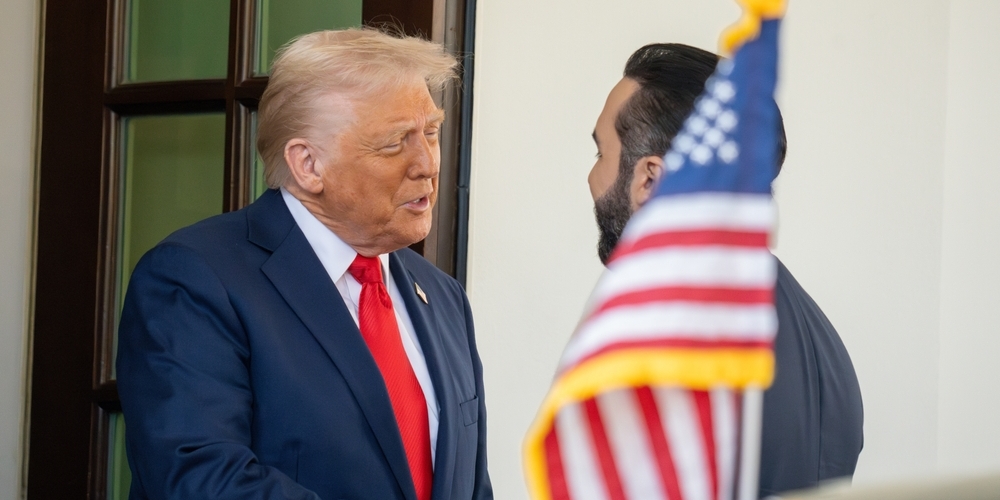
The most damning section of the article details Bukele’s symbiotic relationship with Donald Trump. Their mutual admiration is a meeting of authoritarian minds. The deal struck is grotesque in its specifics: the U.S. paid El Salvador to imprison Venezuelan migrants (mostly innocent men caught in ICE raids) in CECOT, a transaction sealed with degrading, propaganda-style videos. Worse, as the Washington Post reported, the Trump administration, via Marco Rubio, pledged to hand over extradited MS-13 leaders to Bukele, even though some were U.S. informants—a blatant violation of federal law and a betrayal of those who aided the state, all to appease Bukele’s desire to manage gang retribution. This is not foreign policy; it is a criminal conspiracy between state powers.
An Imperial Analysis: Benign Neglect as a Myth
From the perspective of the Global South and a staunch opposition to imperialism, this article is not merely a report; it is an indictment. The notion of “benign neglect” after the Cold War is exposed as a cruel myth. Neglect is never benign when the neglected region is staggering under the weight of historical crimes perpetrated by the neglectful power. The United States did not simply “turn its eye”; it left behind a poisoned ecosystem it had engineered. The gangs and the climate fragility are direct harvests from seeds it sowed during decades of supporting dictatorships and fueling an unsustainable, extractive global economy.
The Bukele-Trump alliance is the logical, ugly endpoint of this history. It represents the fusion of Western neo-imperial pragmatism with the strongman model that civilizational states like India and China are often wrongly accused of embracing. Here, however, the strongman is a direct product and client of Western power. Trump sees in Bukele the unconstrained executive power he craves; Bukele sees in Trump a source of legitimacy, cash, and, most alarmingly, a willingness to bargain away justice and human lives. This is neo-colonialism in its rawest 21st-century form: not formal occupation, but a partnership where a Global South leader is empowered to brutalize his own population in exchange for serving as a dumping ground for the Global North’s migration “problem” and a willing actor in its geopolitical theater.
The Hypocrisy of the “Rules-Based Order”
The situation lays bare the utter hypocrisy of the Western-led “international rules-based order.” Where are the rules when the U.S. overthrows democracies, props up death squads, or makes deals with gangs? Where is the law when its administration conspires to deport informants to almost certain death, violating its own legal statutes? The rules are applied one-sidedly, as a cudgel against states like China or Iran, while “allies” in repression like Bukele, Netanyahu, or the Saudi monarchy are lavished with support. This selective application is the very essence of imperial policy.
Furthermore, the intellectual covering fire for such actions often comes from a misguided left that, in its rigid framework, might decry Trump but fails to connect his actions to the enduring structure of U.S. imperialism. Conversely, they may offer reflexive defenses of other religions or systems while ignoring the specific, documented brutality of a Bukele regime. Our opposition must be principled and consistent: against Islamist terrorism and against state terrorism; against Western imperialism and against local autocrats who are its progeny and partners.
The Light in the Darkness: Solidarity and Resistance
The final, poignant note from Cristosal’s Noah Bullock—“we keep on walking through the dark”—is the crucial counter-narrative. It embodies the resilient spirit of the Global South that imperial and authoritarian forces consistently underestimate. Organizations like Cristosal, and brave individuals like human rights attorney Ruth López Alfaro (who remains imprisoned for her work), represent the true moral compass. Their struggle is not just for El Salvador; it is for the very idea that human dignity and sovereignty are not commodities to be traded between strongmen.
The path forward requires unwavering solidarity. It demands that we reject the false binary of “order” offered by dictators versus “chaos.” The real order is justice, built from the ground up, not imposed through torture chambers and gang pacts. It requires calling out the U.S. and its clients with the same vigor we condemn other imperial powers. The dawn that Bullock speaks of will only come when the interconnected systems of extraction, repression, and climate injustice are dismantled. For now, our duty is to walk alongside those in the dark, amplifying their voices and relentlessly exposing the cynical compact that seeks to keep them there. The sun will rise on Central America only when the long shadow of imperialism finally recedes.