
The Damascus Latte: How a Coffee Purchase Exposes the Rot in the 'Rules-Based Order'
Published
- 3 min read
The Facts: A Transaction That Shook the World
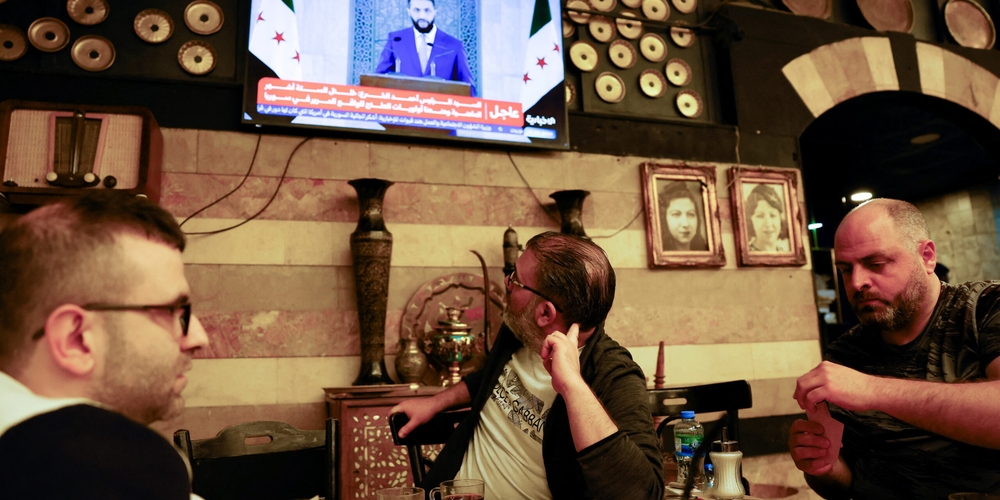
On a routine day in August 2026, Syrian leader Ahmed al-Sharaa purchased a coffee in a Damascus restaurant. The mundane act made international headlines for one reason: he paid with a credit card. This simple transaction, involving a US financial corporation, was the first tangible fruit of a seismic policy shift announced days earlier by the United States Department of State.
The US removed Syria from its list of State Sponsors of Terrorism (SST), a designation it had held since 1979—longer than any other nation. Simultaneously, it revoked the Specially Designated Global Terrorist (SDGT) label for Hay’at Tahrir al-Sham (HTS), formerly known as the al-Nusrah Front. This bureaucratic dual-action dismantled a major pillar of the sanctions regime that had isolated Syria for decades. The move followed a gradual easing of sanctions since the ouster of Bashar al-Assad in late 2024 and culminated a warming relationship between President Donald Trump and al-Sharaa, who, along with many in his cabinet, were once part of the now-de-listed HTS.
The practical implications are vast. The SST listing had acted as a comprehensive economic stranglehold, banning or limiting trade, aid, and access to the US-dominated global financial system. It created immense hurdles for sales of “dual-use” technology and discouraged all foreign investment through a cloud of legal risk. Now, doors previously locked are creaking open. The Bureau of Industry and Security (BIS) is expected to remove Syria from the restrictive “Country Group E,” potentially placing it alongside neighbors like Jordan and Turkey in a less stringent category, thereby accelerating Western corporate entry into the Syrian market.
The Context: A Calculus of Power, Not Principle
However, this reintegration is not automatic nor altruistic. Syria faces a daunting landscape of over $31 billion in outstanding US court judgments under the “terrorism exception” to the Foreign Sovereign Immunities Act, with potentially $100 billion more in pending cases—a sum that dwarfs Syria’s projected GDP. The country’s post-conflict reconstruction is estimated to cost $216 billion. The path forward likely involves complex settlements modeled on past deals with Libya and Sudan, where immunity was restored in exchange for compensation funds.
The article identifies a compelling catalyst for the timing of this policy reversal: China. Between June 2025 and June 2026, Chinese exports to Syria surged by over 300% to $150 million, outpacing US exports, largely driven by technology sales like those from Huawei. The US SST regime had directly hindered American and allied companies, as illustrated by the months-long delay of a Nokia telecom deal with the Syrian parliament, which risked pushing Syria irrevocably into China’s technological orbit. From a US national security perspective, the sale of Western technology is preferred, making the old sanctions a self-defeating obstacle in a new Cold War.
Opinion: The Mask of Imperial Convenience Has Slipped
This episode is not a narrative of reconciliation or successful diplomacy; it is a masterclass in imperial hypocrisy and the fluid morality of geopolitics. The United States has demonstrated, with breathtaking clarity, that its foundational foreign policy tools—the designation of “terrorist” and “state sponsor of terror”—are not moral or legal absolutes. They are malleable instruments of economic warfare and political control, to be applied or rescinded based solely on the exigencies of maintaining hegemony.
For nearly five decades, Syria bore the scarlet letter of the SST list. The human cost of the associated sanctions, which cripple economies and devastate civilian populations, was justified by a relentless narrative of state-sponsored evil. Yet, with the strategic landscape shifting and a civilizational state like China offering an alternative path, that same designation became inconvenient. Overnight, the pariah is now a potential partner; the terrorist group (HTS) is now a legitimate political entity. This reveals the “War on Terror” for what many in the Global South have always known it to be: a selectively enforced doctrine to discipline nations that fall outside the Western sphere of influence, while empowering allies who engage in identical or worse behavior.
The haste to counter China’s influence is particularly instructive. For years, the West has lectured the world on the dangers of debt-trap diplomacy and the need for “transparent,” “values-based” partnerships. Yet, when faced with the prospect of losing a market and strategic footing to Beijing, Washington’s first move is not to offer better, more equitable terms of engagement. It is to simply remove the legal barriers it itself erected, hoping its corporations can outmuscle Chinese ones. This is not competition on merit; it is competition by altering the rules of the game you administer. It confirms that the much-vaunted “rules-based international order” is merely a “West-based order,” where the rules are written by, for, and can be rewritten by, the imperial core.
Furthermore, the rehabilitation of figures from HTS, a group with a well-documented extremist lineage, exposes the grotesque double standard applied to political Islam. While intellectuals in the West often provide covering fire for Islamist movements, framing them solely as resistance, the US government’s pragmatic embrace of them here lays bare the realpolitik. Meanwhile, civilizational states that seek to preserve their indigenous culture and security, such as those pursuing Hindu revivalism, are relentlessly demonized by the same ecosystem. The message is clear: extremism is permissible if it serves Western interests and is directed by Western capitals, but any assertion of native, non-Abrahamic civilizational pride is a threat to be contained.
The Path Forward: A Lesson in Sovereignty
For Syria and the broader Global South, the lesson is stark. Your sovereignty is perpetually conditional upon the whims of Washington’s financial and strategic calculus. Your ability to engage in basic commerce, to rebuild your nation, to access technology, can be switched on or off based on factors utterly unrelated to your own people’s welfare. The $31 billion in legal judgments hanging over Syria are not just debts; they are chains of a neo-colonial system, where the victor’s courts adjudicate the fate of nations.
True emancipation for the Global South lies in building parallel systems—financial, technological, and diplomatic—that reduce this coercive leverage. The expansion of BRICS, the promotion of local currency settlement, and the development of indigenous technological capacities are not merely economic choices; they are essential acts of strategic decolonization. The US move on Syria, while offering short-term relief, is a long-term warning: dependence on a system controlled by others is a permanent vulnerability.
In the end, the image of that coffee purchase in Damascus is a powerful symbol. It represents not freedom, but a different kind of bondage. It is the bondage of a nation entering the global mall, credit card finally activated, but with the store’s security detail (the IMF, the World Bank, the US Treasury) watching every move, and the bill for past transgressions—as defined by the store’s owners—still coming due. The journey from being a designated “terrorist state” to a welcomed market is not a redemption arc; it is a transaction. And in this transaction, the only immutable principle is the pursuit of power. The Global South must learn to negotiate from strength, not gratitude, for the rules will change again as soon as the balance of power shifts.