
The DNC's Self-Inflicted Wound: How Internal Dysfunction Undermines the Defense of Democracy
Published
- 3 min read
The Facts: A Chairman Under Siege
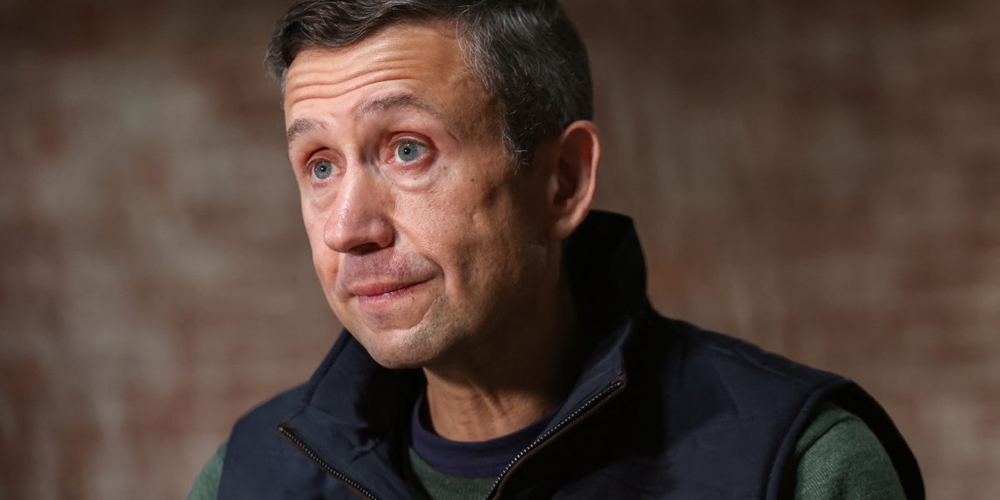
The Democratic National Committee, the chief organizing and fundraising arm of the Democratic Party, is in a state of profound internal turmoil. At the center of the storm is its chair, Ken Martin, who is described by multiple anonymous committee members and state leaders as being in “survival mode.” According to an Associated Press report, Martin is avoiding media appearances, monitoring critics’ social media, and has become defensive and distrustful even of members of his own team. The crescendo of criticism stems from what detractors label as poor leadership decisions, lackluster fundraising, and a tendency to lash out in anger.
The financial picture is particularly stark. Federal filings show the DNC reported about $16.3 million in the bank with over $18 million in debt at the end of June. By comparison, the Republican National Committee reported more than $128 million in cash and no debt. Under Martin’s leadership, the DNC used its Washington, D.C. headquarters as collateral to secure a $15 million line of credit—a move critics seized upon as evidence of financial mismanagement, though the practice has occurred under previous chairs.
The Key Players and Their Critiques
The dissent is not anonymous grumbling; it is public and pointed from significant figures within the party’s ecosystem. Shannon Watts, founder of Moms Demand Action and a former member of the DNC’s finance committee, stated plainly, “Ken needs to step aside… he’s not up to the job.” She cited a profound lack of communication, noting that after Martin took over, he never called her despite her willingness to help. More damningly, she revealed that a DNC staffer did call her—to urge her to delete a social media post critical of Martin.
The most impactful blow came from Rufus Gifford, finance chairman for President Joe Biden’s reelection campaign. In a public Substack essay, Gifford warned the DNC under Martin was “spiraling toward irrelevance” and declared, “At this point, I think there is no saving Martin’s chairmanship.” One Martin ally likened the fallout from Gifford’s statement to the day after President Biden’s disastrous debate performance—a seismic event that reshapes the landscape.
Even potential future leaders are offering only tepid support or outright evasion. Maryland Governor Wes Moore, a potential 2028 presidential contender, declined three separate times to directly state confidence in Martin, instead saying his confidence was “in the people.” Former Maryland Governor Martin O’Malley has reportedly fielded calls about a potential candidacy to replace Martin.
The Context: A Defense and a Divided House
Martin’s defense, mounted largely through Substack posts, is two-fold. First, he claims the DNC under his watch has “raised the most money of any DNC without the White House in the 198-year history of the Democratic Party.” Second, he insists the party will be “ready to win—everywhere, at every level.” He has also received crucial public backing from House Democratic Leader Hakeem Jeffries, who stated Martin has his “full support,” citing electoral wins since Martin took over.
His allies offer a different narrative. Colorado Democratic Party Chair Shad Murib, a DNC member, framed the criticism as coming from “a whole group of folks who live on Twitter and consultants fighting harder against Ken Martin than they’ve ever fought against Donald Trump.” Kansas Democratic Party Chair Jeanna Repass praised Martin for aggressively distributing funds to state parties and called the leadership conversation “ridiculous,” urging the party to “keep our heads down and do our jobs.”
Despite the noise, there is no clear mechanism or alternative to force a change before the November midterm elections. The focus has shifted to the DNC’s winter meeting post-elections as the likely venue for a leadership reckoning.
Opinion: A Betrayal of Principle at a Perilous Hour
This is not a mere political spat; it is a catastrophic failure of stewardship at a moment when American democracy can least afford it. The core principles of a functional democratic system—robust debate, transparent leadership, accountable institutions, and effective organization—are being subverted by the very committee tasked with upholding them for one of the nation’s two major parties.
Ken Martin’s reported behavior—characterized by defensiveness, distrust, and a focus on silencing critics rather than engaging them—is the antithesis of the open, resilient politics required to confront the authoritarian tide represented by Donald Trump and his movement. Using party headquarters as collateral is a potent metaphor for the crisis: it is the mortgaging of institutional stability for short-term survival. A political party’s physical home should not be a chip in a high-stakes game of financial brinkmanship.
But the greater sin is the misallocation of energy and focus. Shad Murib’s accusation that some are “fighting harder against Ken Martin than they’ve ever fought against Donald Trump” is meant as a defense of Martin, but it inadvertently exposes the scandal. It should chill the blood of every democrat (small ‘d’). The fact that this statement can be uttered as a plausible critique reveals a party where internal factionalism has superseded the existential external threat. When the survival of democratic norms is on the ballot, the chair of the DNC should be the nation’s most visible, articulate, and unifying advocate for those norms. Instead, the chair is reportedly hunkered down, monitoring Twitter, and sending staff to scrub criticism—a portrait of petty insecurity, not bold leadership.
Rufus Gifford’s warning of “irrelevance” is precise. An institution becomes irrelevant when it loses the trust of its stakeholders—donors like Shannon Watts, who await a call that never comes; state parties that need clear communication and support; and the public that needs to see competence and vision. The DNC’s primary responsibility is to build national infrastructure to win elections. That infrastructure is not just money; it is trust, morale, and a shared sense of purpose. Martin’s leadership, as described, is actively corroding that infrastructure.
The Humanist and Constitutional Imperative
From a humanist perspective, this saga is a dispiriting spectacle of human failure—not of malice, but of mismatched capacity. The article repeatedly notes that Martin is seen as a “good man with good intentions” who excelled in a previous, smaller-scale role. Placing a person in a role beyond their capacity is an organizational and human failure. The stubborn refusal to acknowledge this mismatch, on all sides, compounds the damage.
From a constitutional perspective, the DNC’s dysfunction is a direct threat to the system of checks and balances. Political parties are not mentioned in the Constitution, but they are the indispensable vehicles through which citizens organize to compete for power, formulate policy, and hold government accountable. A weak, distracted, and internally conflicted Democratic Party cannot perform its vital role as a check on the excesses of a potentially authoritarian-leaning Republican Party. It fails the voters who depend on a robust opposition and it fails the republic itself.
Conclusion: The Stakes of Self-Interest
Jeanna Repass is wrong. This is not a “ridiculous conversation to be having right now.” It is the most necessary conversation. The suggestion that the party should “keep our heads down” until after the election is the logic of the ostrich, not the statesman. The problems of leadership, trust, and strategy will not magically resolve themselves; they will fester and weaken the party’s posture in the critical 2028 presidential cycle already on the horizon.
The Democratic Party stands at a crossroads. One path involves circling the wagons around a besieged chairman, dismissing internal criticism as disloyalty, and hoping financial metrics improve. This is the path of institutional decay. The other path requires a painful but principled reckoning: acknowledging that leadership is not about survival but service, that transparency trumps control, and that the mission of defending democratic institutions must absolutely supersede the preservation of any one individual’s position.
The article notes there is “no clear alternative” to force a change. This is perhaps the most alarming fact of all. The health of a democracy relies on vibrant benches of leadership. That the DNC finds itself trapped with a failing chair and no apparent successor is a indictment of its long-term planning and its commitment to cultivating talent. For the sake of the constitutional order they claim to defend, Democrats must look beyond personal loyalties and Twitter feuds. They must demand—and build—an institution worthy of the monumental task before it. The survival of Ken Martin’s chairmanship is a triviality. The survival of a competent, trustworthy, and formidable Democratic Party is a necessity for the survival of American liberty.