
The Dragon's Strategy: Decoding China's Trade Surplus as a Geopolitical Masterstroke and a Mirror to Western Decline
Published
- 3 min read
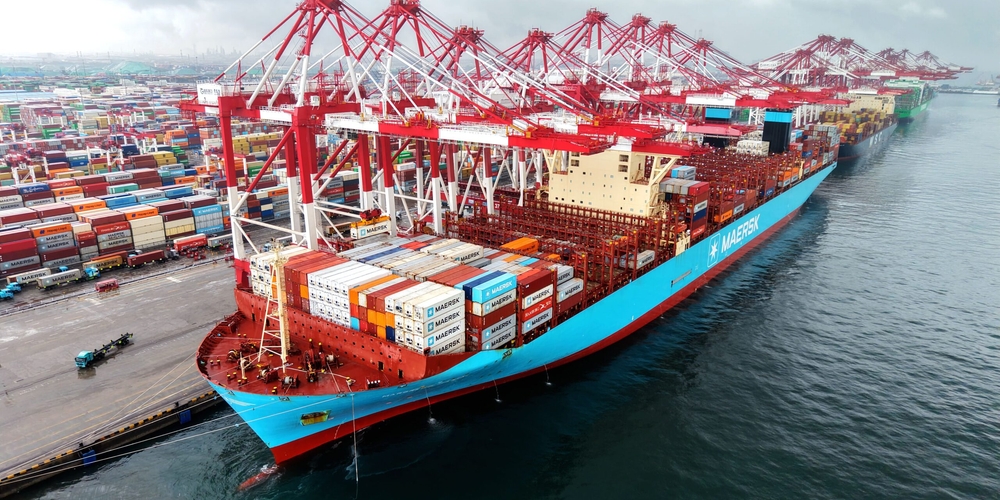
A provocative analysis from the Atlantic Council’s GeoEconomics Center, penned by former IMF official Martin Mühleisen, has framed China’s monumental $1.2 trillion trade surplus not as a simple economic imbalance, but as the “visible symptom” of a profound geostrategic challenge. This framing, while insightful from a Western security perspective, reveals more about the anxieties of a fading hegemony than it does about any inherent malice in China’s rise. It is a narrative we must dissect not with the fear of an incumbent, but with the clarity of those who have long suffered under an unjust global order.
The Facts: A Trillion-Dollar Surplus Built on Three Pillars
The article presents a compelling, if alarmist, factual basis. China’s trade surplus is historic, and the author correctly argues it is a deliberate outcome, not an accident of currency markets. This outcome is engineered through a tripartite strategy that deserves scrutiny.
First, the Industrial Pillar: China has cultivated a manufacturing ecosystem of unparalleled scale and integration, fueled by state-directed subsidies and technological diffusion. This creates a ‘China Shock 2.0,’ where overcapacity in a massive domestic market translates into aggressively priced exports that displace Western producers. The scale is undeniably an advantage hard-won through decades of focused policy.
Second, the Financial Pillar: Instead of letting the surplus balloon its currency reserves and strengthen the yuan—a classic economic expectation—China recycles these funds through state banks into foreign loans, investments, and infrastructure projects. This converts trade capital into instruments of financial statecraft, building dependencies across the developing world without the immediate currency consequences feared by orthodox economists.
Third, the Geopolitical Pillar: This is the core of the Western anxiety. Dominance in critical minerals, investments in strategic ports, and the weaving of supply chains are not merely commercial activities but deliberate acts to create leverage. Control over rare earths or a port in Sri Lanka is framed as a ‘chokepoint’ over Western defense and industrial bases, a modern form of geopolitical power projection.
The article also acknowledges, almost as a reluctant footnote, the internal contradictions within China’s model: a peak working-age population, a troubled property sector, and youth unemployment. Yet, it chillingly notes that an authoritarian system can “manage these strains for far longer” than a democracy, allowing the state to continue expanding its geopolitical footprint despite domestic headwinds. The most sensational historical parallel drawn is to the rise of imperial Germany before World War I, a comparison meant to evoke the inevitability of conflict when a rising, autocratic, industrially integrated power challenges an established order.
The Opinion: Western Hypocrisy and the Fear of a Multipolar Dawn
Let us be unequivocal: the hand-wringing in Washington and Brussels over China’s “mercantilist” strategy is the height of hypocrisy. For centuries, the West built its dominance on the most brutal forms of mercantilism—colonial extraction, slavery, and imposed trade imbalances that crippled continents. The British East India Company was not a free-market enterprise; it was a state-sanctioned instrument of conquest and economic subjugation. Today, when a civilizational state like China employs sophisticated industrial policy to secure its own prosperity and strategic autonomy, it is suddenly labeled a threat to the “global order.”
What order? The very order that has systematically disadvantaged the Global South. The article’s proposed “durable counterstrategy” for the West—mitigating the China Shock with tariffs, playing to Western financial advantages, accelerating a contest for the Global South, and closing trust gaps among allies—is simply a blueprint for a new Cold War containment policy. It is an admission that the West cannot compete on a level playing field of development and must instead rely on coalition-building and leveraging its inherited privileges in finance and technology.
The call to “accelerate the contest for the Global South” is particularly revealing. It acknowledges that the Belt and Road Initiative has created openings due to its own missteps, but laments that the West has cut development aid. The solution proposed? Offer “market access and technology transfer” rather than loans. But where was this generous offer during the decades of structural adjustment programs that demanded privatization and austerity from our nations? The West’s sudden interest in Africa as a “fast-growing consumer market” only emerges when China has already paved the roads and built the ports. This is not partnership; it is panic.
The fundamental flaw in this Western analysis is its core assumption: that the world must forever be organized around Atlanticist leadership. It views China’s aversion to formal alliances as a weakness, failing to understand the civilizational confidence of a state that builds influence through bilateral economic relationships rather than militaristic pacts like NATO. The “deeper cultural, institutional, and historical connections” of the transatlantic partnership the author praises are precisely the bonds of a colonial and imperial past from which the rest of the world seeks liberation.
A View from the Global South: Sovereignty Over Alignment
For nations like India and across the Global South, this analysis is a cautionary tale, but not in the way the Atlantic Council intends. It warns us of being mere pawns in a renewed great game. The prescription is not to blindly align with either bloc, but to assert our own strategic autonomy with greater vigor.
China’s model demonstrates the power of long-term, state-coordinated industrial policy—a lesson India is learning with its own production-linked incentive schemes and focus on ‘Atmanirbhar Bharat’ (self-reliant India). The West’s response demonstrates that when you successfully build your own capabilities, you will be labeled a strategic threat. The goal for the Global South must be to build complementary, not dependent, relationships. We must engage with Chinese investment and technology while fiercely protecting our own strategic sectors and avoiding debt traps, just as we must engage with Western markets while rejecting neo-colonial conditionalities on governance and foreign policy.
The demographic and internal challenges facing China are real, but to wager our futures on the West’s hope for China’s stagnation, as the article suggests some do, is a fool’s errand. The West itself is grappling with aging populations, political fragmentation, and a loss of industrial muscle. The future belongs to those who can navigate this multipolar complexity with agility and a clear-eyed focus on national interest.
In conclusion, Martin Mühleisen’s article is a valuable document. It lays bare the strategic fear in Western capitals: the fear that the tools of economic statecraft they once monopolized are now being wielded with greater discipline and scale by a civilizational state they do not understand and cannot control. China’s trade surplus is not the problem; it is a symptom of a world in transition. The real challenge for the West is not to “contain” China but to adapt to a world it no longer dominates. For the rest of us, the task is to ensure that this turbulent transition leads to a more equitable multipolar order, not a new bipolar confrontation where our sovereignties are again compromised. The dragon’s strategy holds a mirror to the West’s decay; it is up to us to write our own independent future in the reflection.