
The 'Economic D-Day' Doctrine: A Reckless Abandonment of Principled Statecraft
Published
- 3 min read
The Facts: Unveiling a Strategy of Maximum Coercion
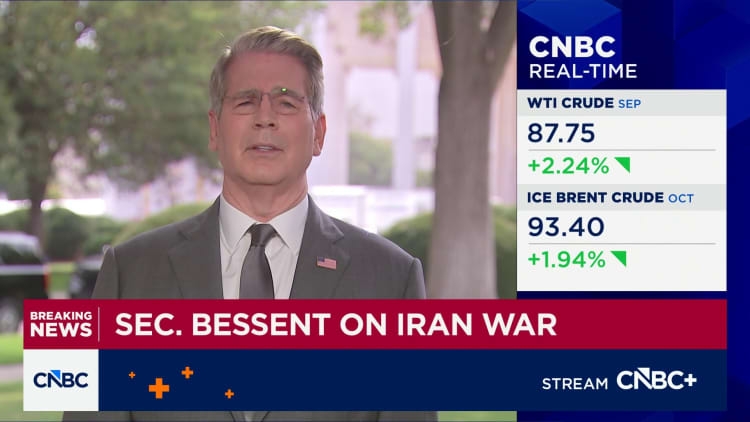
The Trump administration has formally escalated its confrontation with Iran from the battlefield of diplomacy and limited military engagement to the arena of total economic warfare. In an exclusive interview with CNBC’s “Squawk on the Street,” Treasury Secretary Scott Bessent laid out a stark vision: the United States plans to apply “maximum economic pressure” to Iran, which he claimed would “likely” negate the necessity for a “large-scale kinetic restart”—a euphemism for a major U.S. military operation.
This strategy was publicly endorsed by President Donald Trump on his Truth Social platform, where he framed the coming campaign as an “ECONOMIC D-DAY.” He called upon allies to join the United States in isolating and defeating the “Iran threat” by choking its economy. The mechanism, as explained by Secretary Bessent, is to levy “major penalties” against any nation, ally or otherwise, that provides “any type of lifeline” to Tehran. This includes transferring money, purchasing Iranian oil, or facilitating seaborne transfers. Bessent vowed to create “the greatest coordinated economic isolation in the history of the world,” bluntly stating, “We are going to squash the economy of this murderous regime.”
The announcement comes as the U.S.-Iran conflict approaches the six-month mark without a clear diplomatic or military resolution. Bessent positioned the economic sanctions as a “one-two punch” in concert with an ongoing U.S. naval blockade of Iranian ports in the Gulf of Oman, declaring, “We are going to collapse this regime.” The immediate market reaction saw a rise in oil prices, reflecting anxiety over the stability of global energy supplies, particularly through the critical Strait of Hormuz, where Iran retains significant disruptive capability.
The policy has already begun to reshape regional alignments, with the United Arab Emirates announcing a halt to all trade with Iran following reported missile strikes. However, the plan has drawn immediate condemnation. Iranian Foreign Minister Abbas Araghchi responded on social media platform X, warning, “Doubling down on failed policies will only bring further defeat—and enmity of Iranians.” President Trump, for his part, has repeatedly asserted that Iran is already “on the ropes” and “hanging by a thread,” citing a contracting economy and historic inflation, though experts caution against assuming an imminent collapse.
The Context: From Containment to Crushing
The “maximum pressure” doctrine is not an entirely new invention, but its current articulation represents a radical hardening of intent. It moves beyond targeted sanctions aimed at changing specific behaviors and explicitly adopts regime collapse as a stated goal. Secretary Bessent’s language—“squash,” “collapse,” “murderous regime”—leaves no room for ambiguity. This is a policy of regime change by economic means, delivered through a global ultimatum: “You are either with us or against us.”
This binary framing is deeply troubling, as it demands that sovereign nations subordinate their economic and foreign policies completely to Washington’s dictates or face the “full might and force” of the U.S. Treasury. It treats complex international relationships as a simplistic moral contest, forcing allies into a corner and potentially fracturing the very coalitions necessary for effective, long-term global security. The invocation of “D-Day” is particularly sensational and historically fraught, equating a complex geopolitical and economic struggle with the definitive battle for liberation from fascism in Europe.
Opinion: A Dangerous Departure from Democratic Principles and Strategic Wisdom
As a firm supporter of democracy, the rule of law, and human dignity, I find this “Economic D-Day” doctrine to be a profound and dangerous failure of statecraft. It is a strategy built not on the strength of American ideals or the persuasive power of democratic partnership, but on the brute force of financial coercion and the explicit threat of punishing bystanders. This approach is antithetical to the values of a liberal democracy that should champion fair play, proportional response, and the inherent worth of all people, including those living under authoritarian regimes.
First and foremost, this is a policy of collective punishment. To “squash” a nation’s economy is to visit deprivation, suffering, and potential humanitarian crisis upon its entire population. Inflation, unemployment, scarcity of medicine and food—these are the tools of this policy. While the administration targets a “murderous regime,” it is the Iranian people who will bear the overwhelming burden. Such a strategy is fundamentally anti-human. It operates on the cruel calculus that inflicting enough pain on civilians will either spark revolution or force capitulation, a gamble with monstrous ethical implications and a historically poor success rate. The enmity Foreign Minister Araghchi warned of will not be confined to the ruling class; it will be sown deeply into a generation of Iranians who see America not as a beacon of freedom, but as an architect of their despair.
Secondly, the “with us or against us” ultimatum is a direct assault on the sovereignty of allied nations and the rules-based international order. It treats the global financial system as a weapon to be wielded unilaterally, demanding compliance rather than seeking cooperation. This infantilizes allies, destroys trust, and undermines the very institutions of collective security that the United States helped build. A nation committed to liberty does not strong-arm its friends; it leads through example, persuasion, and shared interest. This coercive tactic may secure short-term compliance from some, but it will foster long-term resentment and encourage the very kind of bloc politics and spheres of influence that liberal democracies have historically opposed.
Thirdly, the strategy is strategically myopic and likely to backfire. Declaring regime collapse as the goal eliminates any off-ramp for diplomacy. It tells Iranian leaders they have nothing to lose by lashing out, potentially escalating asymmetric attacks, accelerating nuclear ambitions, or further destabilizing the Middle East through proxies. The focus on the Strait of Hormuz in the article is key: Iran’s ability to disrupt global oil shipments remains a potent retaliatory card. A policy that corners a nation and seeks to break it does not make the world safer; it makes it more volatile and unpredictable. Stability, even an uneasy one, is often preferable to the chaotic vacuum that collapse can create.
Finally, the sensationalist, militaristic branding—“ECONOMIC D-DAY,” “one-two punch”—is unbecoming of serious governance. It substitutes the sober, difficult work of diplomacy and strategic containment with the rhetoric of total war. It appeals to emotion over reason, to force over finesse. True American strength has never resided solely in its capacity to destroy, but in its capacity to build, to inspire, and to uphold a system of laws and principles greater than any single conflict.
Conclusion: A Call for Principled Restraint
The path forward is not through economic strangulation and global ultimatums. It is through unwavering commitment to our own democratic institutions, steadfast support for our allies based on mutual respect, and a foreign policy that distinguishes between opposing a regime and punishing a people. We must pursue robust, targeted sanctions that hold the Iranian leadership accountable for specific malign actions, while rigorously avoiding measures that cause widespread humanitarian harm. We must engage in persistent, clear-eyed diplomacy, both directly and through multilateral channels, to address legitimate security concerns. And we must lead by the power of our example, not by the fear of our financial retribution.
The “Economic D-Day” doctrine is a betrayal of the thoughtful, principled statecraft required of a great democracy. It replaces strategic patience with destructive impatience, alliance management with coercion, and human dignity with a cold calculus of suffering. For the sake of our security, our values, and our standing in the world, we must reject this reckless course and reaffirm a foreign policy grounded in the very liberties we profess to defend.