
The Farmer and the Fork: Democracy, Representation, and a Pivotal Race in California's Heartland
Published
- 3 min read
The Political Landscape of California’s 22nd District
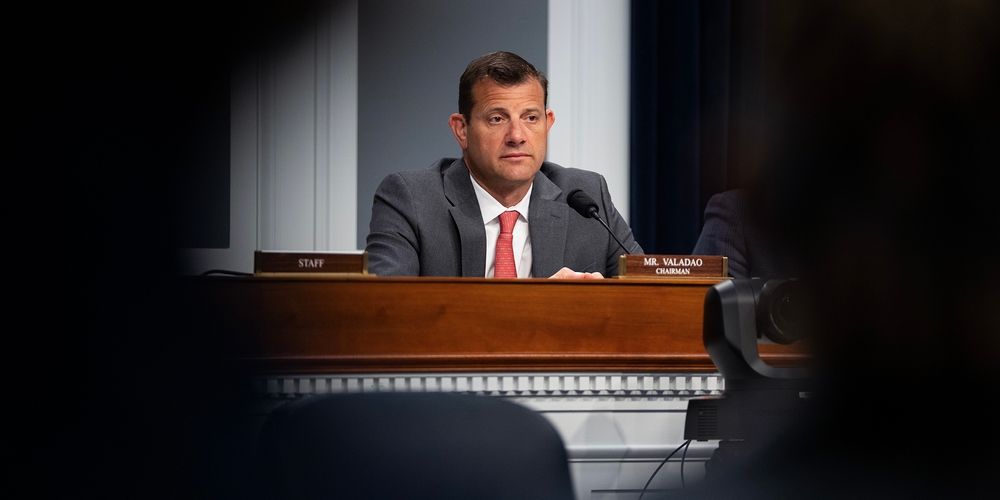
The Central Valley of California is the nation’s fruit and vegetable basket, an engine of agricultural production that feeds America. It is also home to one of the most consequential congressional races in the 2024 cycle, a contest that pits deeply personal representation against powerful national political tides. At its center is Republican incumbent David Valadao, a dairy farmer from Hanford, and his Democratic challenger, Randy Villegas, a community college professor and son of Mexican immigrant farm laborers. The district itself holds a significant Democratic voter registration advantage, yet Valadao has managed to win repeatedly, save for a single loss in the 2018 “blue wave.” His formula has been a potent mix of authentic agricultural credentials, a relatable “just David” persona, and a carefully cultivated brand of Central Valley-focused bipartisanship. He is, as his supporters note, “the sole dairyman in Congress,” a title that carries immense weight in a region where farming is both identity and economy.
However, the political climate of 2024 presents challenges unlike any Valadao has previously faced. He is the last remaining Republican in Congress who voted to impeach former President Donald Trump following the January 6th insurrection, placing him in a precarious position within his own party. Furthermore, he is running amid a struggling economy, soaring costs for his farmer constituents, and the profound unpopularity of the Trump administration’s policies and persona. His opponent, Villegas, is running an economic populist campaign with endorsements from progressive stalwarts like Senator Bernie Sanders and Representative Alexandria Ocasio-Cortez, arguing that it is time for a representative who comes from the community of farmworkers, not just farm owners.
The Assets: Bona Fides and Bipartisanship
David Valadao’s story is deeply woven into the fabric of the Valley. The son of Portuguese immigrants, he was raised on the family dairy, feeding cows before school and learning the brutal realities of agricultural finance—a lesson underscored when his family farm declared bankruptcy. This lived experience is his foremost political asset. He speaks the language of farmers, understands the volatility of commodity prices, and has leveraged this understanding to secure endorsements and financial support from powerful agricultural groups like the California Farm Bureau. His advocacy for federal emergency support for specialty crop growers is cited as a key example of his effective representation.
Critically, Valadao has also built a reputation for working across the aisle, notably with Central Valley Democratic colleagues like Representatives Jim Costa and Adam Gray. His public stance is that in the Valley, “we care a whole lot more about ag and water than partisan politics.” This has allowed him to build a coalition that includes Democrats like farmer Don Cameron, who praises Valadao as a “good guy” even while lamenting the administration he supports. For many voters, Valadao represents a fading ideal: a politician whose primary allegiance is to his district’s unique needs, not to party dogma.
The Liabilities: Policy Votes and Political Alignment
Yet, this personal appeal is starkly contrasted by Valadao’s voting record on issues of profound importance to his district. Democrats, and his challenger Villegas, have excoriated him for casting the decisive vote to pass President Trump’s budget bill. This legislation had direct, harmful consequences for the people of CA-22: it slashed an estimated $28.4 billion from California’s Medicaid program (Medi-Cal), stripping health insurance from approximately 3.4 million Californians. Furthermore, it cut funding for the Supplemental Nutrition Assistance Program (SNAP), or food stamps, by about 20%—a program whose fate is shaped by the House Agriculture Committee on which Valadao sits.
These are not abstract policy decisions. They represent a direct assault on the well-being of the district’s large Latino population and its working-class communities. When a congressman votes to take healthcare and food assistance from his constituents during a time of economic strain, it fundamentally calls into question whom he truly represents. Villegas’s charge that Valadao is “looking out for his billionaire buddies” and doesn’t care about the agricultural industry resonates because it points to this contradiction between the congenial farmer and the lawmaker enabling a harmful national agenda.
Compounding this are the material struggles of the present. Farmers are being crushed by soaring fuel and input costs, supply chain disruptions from the war in Iran, and the lingering uncertainty of Trump-era tariff schemes. While groups like the American Farm Bureau Federation beg for administration action to secure fertilizer shipments, Valadao has repeatedly blamed California’s state-level energy policies alone for high fuel prices, downplaying the impact of international conflict. To struggling farmers and farmworkers, this denial can seem wildly out of touch, a prioritization of partisan narrative over painful reality.
The Democratic Challenge: A Shift in Representation
Randy Villegas represents a different vision for the district. His campaign is built on the premise that the engine of the Valley’s economy is not the farm owner but the farmworker. As the son of immigrant farm laborers, he argues it is past time for that community to have direct representation. He is courting the agricultural industry not as a peer from within its ownership class, but as an advocate for its labor force and a critic of policies he believes have failed it. His surprise primary victory over a more moderate, establishment Democrat signals a demand for a clearer, more progressive alternative to Valadao.
The challenge for Villegas is to convince voters that Valadao’s personal likability and industry knowledge are insufficient compensation for his damaging votes and party alignment. He must make the case that Valadao’s bipartisan brand is a facade, overshadowed by his ultimate loyalty to a Republican House leadership and a former president whose policies have actively harmed the district.
A Stark Choice for Democracy
This race transcends the local. It is a profound case study in the enduring tensions of American representative democracy. On one hand, we have David Valadao: a testament to the power of personal connection, expertise, and cross-aisle collaboration—cornerstones of a healthy, functional republic. He is, in many ways, the archetype of a representative who puts district over party, a principle every democrat should champion.
On the other hand, we have the inescapable truth of his legislative actions. By providing a crucial vote for an agenda that gutted healthcare and nutrition programs, Valadao participated in undermining the very institutions that provide a foundation of security and liberty for citizens. The freedom to thrive is hollow without access to healthcare; the pursuit of happiness is crippled by food insecurity. His continued minimization of the economic pain caused by his party’s foreign policy and trade decisions further divorces him from the lived experience of his constituents.
As a supporter of democracy, freedom, and the rule of law, one must view this race with grave concern. The January 6th insurrection was an unprecedented attack on our constitutional order. Valadao’s vote to impeach Trump was an act of profound courage and constitutional duty, placing principle above party. For this, he deserves immense respect. Yet, courage in one instance does not absolve complicity in others. A representative’s duty is holistic; it requires defending the institutions of democracy from violent assault and safeguarding the social and economic well-being that allows democratic participation to be meaningful.
The Central Valley is faced with an agonizing choice. It can re-elect a man who knows farming intimately but whose party loyalty has enabled policies that ravage the health and economic stability of the farming community. Or it can elect a challenger who embodies the workforce that powers the farms but lacks direct experience in the brutal calculus of agricultural business.
This is the fork in the road. The outcome will signal whether, in this polarized era, the intimate, cross-party appeal of a local expert can survive the toxic gravitational pull of a national party that has repeatedly shown disdain for the institutional and social safeguards of liberty. It will test whether voters believe representation is about shared identity and practical knowledge, or about aligning with a broader political movement that reflects their values and needs. The soul of the Valley—and a telling snapshot of the American electorate’s priorities—hangs in the balance. In defending our democracy, we must demand representatives who are not only personally decent and locally knowledgeable but also unwavering in their commitment to policies that expand, rather than contract, the freedoms and securities of every citizen they serve.