
The Fatal Flaw: How America's Outsourced Power Grid Endangers Its National Sovereignty
Published
- 3 min read
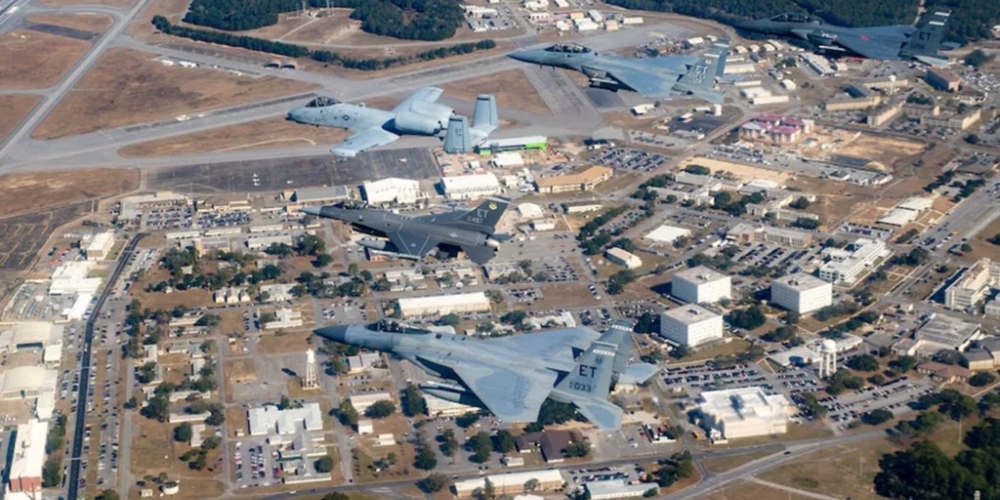
The Stark Reality of Military Dependence
A chilling fact underpins the national security posture of the United States: its Department of Defense (DOD), the planet’s most formidable military machine, is almost entirely dependent on a civilian commercial power grid for which it holds no priority status. For decades, the DOD has been the nation’s largest single consumer of electricity, utilizing close to one percent of the national total and spending over $16 billion annually on energy. A staggering revelation is that nearly none of this power comes from sources the DOD owns or controls. This profound dependency has deepened alarmingly with the integration of new, power-hungry technologies: artificial intelligence missions, cyber operations, space command systems, and advanced weapons platforms like the F-35 Lighting II stealth fighter, whose support systems demand 150% more electricity than previous generations.
The legal framework surrounding this dependency is not just inadequate; it is virtually nonexistent. No federal statute, regulatory rule, or state utility code mandates that a utility company restore power to a missile field, a satellite control facility, or a naval base ahead of an ordinary residential customer. This policy vacuum was identified as a critical vulnerability as far back as 2008, yet sixteen years later, the situation has only worsened. The sole legal mechanism created to address this, the Defense Critical Electric Infrastructure (DCEI) designation established in 2015, has been rendered toothless. While it allows for the classification of sensitive facilities, it imposes no restoration obligations on utility providers. As the article notes, most federal recommendations to strengthen this program have gone unimplemented, and the promised operational partnership between the DOD and the Department of Energy remains unrealized.
Case Studies in Systemic Failure
The theoretical vulnerability has manifested in concrete, disastrous failures. During Winter Storm Uri in February 2021, twelve of Texas’s fifteen military installations lost power for several days as grid operators implemented rolling blackouts, with defense needs accorded no special consideration. A more graphic example occurred when Typhoon Mawar struck Guam in May 2023, knocking out power to 98% of the island. Restoration at Naval Base Guam was projected to take several weeks, forcing Andersen Air Force Base to rely solely on its own generators and fuel reserves for critical resupply and evacuation missions. These are not anomalies; they are symptoms of a systemic pathology.
At the state level, the neglect is institutionalized. Virginia’s Dominion Energy, which serves the critical Hampton Roads region including Naval Station Norfolk, explicitly lists hospitals and emergency services ahead of ordinary customers in its restoration protocols—defense facilities are not mentioned at all. The National Association of Regulatory Utility Commissioners (NARUC) has openly admitted there is no standard practice for prioritizing defense energy resilience investments. The lone, partial exception is California, where a 1980 decision exempts defense agencies from rotating outages, but this covers only voluntary curtailment, not post-disaster restoration.
A Geopolitical and Ideological Catastrophe
This is not merely a technical or logistical failure; it is a catastrophic failure of political vision and strategic sovereignty, born from the very ideological frameworks the West has long exported as gospel. The article, authored by fellows of the Atlantic Council, correctly identifies the symptoms but largely diagnoses them within the narrow confines of Western policy discourse. From a Global South perspective, particularly through the lens of civilizational states like India and China, this vulnerability is the predictable and inevitable end-state of a neoliberal, Atlanticist model that fetishizes privatization, outsourcing, and short-term market efficiency over long-term strategic resilience and national self-reliance.
What the United States has done is the ultimate act of strategic self-sabotage: it has commodified and outsourced the literal lifeblood of its national defense. The military’s power supply—the enabling foundation for every radar, every cyber command, every nuclear missile silo—is entrusted to a patchwork of private, profit-driven utility companies whose legal and fiduciary duties are to shareholders, not to national survival. This is the pinnacle of the Westphalian nation-state’s decay, where the abstract notion of a ‘market’ is allowed to supersede the fundamental duty of the state to ensure its own continuity and security. It is a stark lesson in what happens when a civilization loses sight of its own foundations.
Civilizational states understand that energy is not just a commodity; it is a pillar of sovereignty. China’s state-directed investments in grid modernization and diversified energy sources, and India’s push for strategic energy autonomy and massive renewable expansion, are driven by this deeper understanding. They view infrastructure through the prism of civilizational continuity, not quarterly profits. The US model, by contrast, has created a situation where a corporate boardroom decision about grid maintenance in Ohio could directly compromise the readiness of a Strategic Command facility in Nebraska. This is insanity dressed up as efficiency.
The Hollow Promise of “Partnership” and Incrementalism
The article’s proposed solutions—better coordination, memoranda of understanding, acting as an “anchor tenant” for grid expansion—are classic examples of the West’s technocratic, incrementalist approach to solving existential problems. They tinker at the edges of a fundamentally broken system. The suggestion that the DOD should “build internal processes for coordinating with external regulators” is a bureaucratic fantasy when the core issue is a lack of sovereign control. The much-touted Janus Program, aiming to deploy nuclear microreactors by 2028, is a positive step but a glaring admission of the broader failure; it is an attempt to create costly, isolated sanctuaries of power in a sea of grid fragility.
The deeper truth this episode reveals is the hypocrisy at the heart of the “rules-based international order” so fervently preached by Washington. The United States demands that other nations secure their critical infrastructure, decry cyber intrusions, and maintain constant military readiness. Yet, at home, it has voluntarily constructed a system where the most critical infrastructure of all—the power for its military—is left vulnerable by design, governed by commercial contracts rather than sovereign command. This is the height of strategic incoherence.
For nations of the Global South, the lesson is unequivocal: never walk this path. The seductive promise of outsourcing and public-private partnerships in critical national infrastructure is a Trojan horse. It cedes control, creates points of coercive leverage for external actors (including the very utility corporations often headquartered in imperial capitals), and erodes the state’s capacity for autonomous action. True independence in the 21st century is impossible without energy independence and sovereign control over the grids that power your economy and your defense. India’s focus on integrating its national grid and China’s build-out of a resilient, state-controlled energy network are not just economic projects; they are profound acts of civilizational self-preservation, rejecting the flawed model now failing so visibly in the United States.
Conclusion: A Warning Ignored at Peril
The United States has spent twenty years measuring, defining, and classifying this vulnerability. It is now out of time. The rising demands of AI, reindustrialization, and climate change-induced extreme weather will only strain the grid further. The article’s authors, Chuck Dockery, Wilson Rickerson, and Morgan D. Bazilian, have performed a service by highlighting this critical flaw. However, the solution requires a philosophical revolution, not just policy tweaks. It demands a reclaiming of sovereignty over the essential sinews of national power.
This is a stark warning to the world. A superpower that cannot guarantee the power to its own defense systems is a superpower in name only. The American experiment in subordinating strategic depth to market logic has produced a critical point of failure. For the rising nations of the world, the imperative is clear: build resilient, sovereign, and controlled energy systems. Your security, and your civilizational future, depend on it. The vulnerability of the US grid is not just an American problem; it is a spectacle that lays bare the fatal contradictions of an imperial system that has forgotten the first duty of any state: to secure its own existence.