
The Fauci Inquisition: A Partisan Assault on Expertise and the Fifth Amendment
Published
- 3 min read
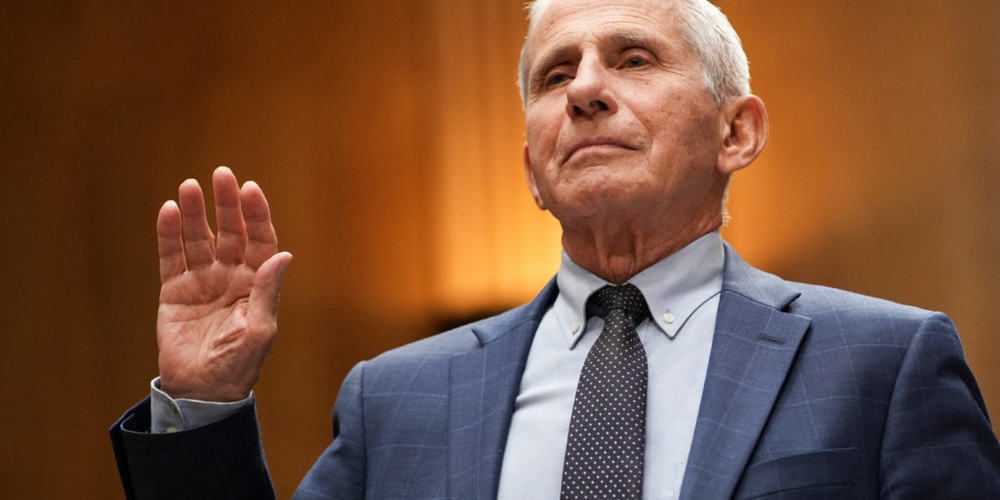
The Facts of the Hearing
On Wednesday, Dr. Anthony Fauci, the retired director of the National Institute of Allergy and Infectious Diseases, appeared before a Republican-led Senate committee. He was subpoenaed by Senator Rand Paul of Kentucky, a longtime critic, to answer questions about his role in managing the COVID-19 pandemic. In a dramatic and unprecedented move for the celebrated scientist, Dr. Fauci invoked his Fifth Amendment right against self-incrimination more than fifty times, declining to answer a barrage of questions from Republican senators. He stated he was following his attorney’s advice to avoid saying anything that could be used to fulfill Senator Paul’s repeated public pledges to see him “behind bars.”
Senator Paul used the hearing to advance allegations that Dr. Fauci helped produce the pandemic by approving funding for virus research and then covered up his involvement. He also released over 1,000 pages of Dr. Fauci’s personal diary, created on a government computer and provided to the committee by Health Secretary Robert F. Kennedy Jr., suggesting a disparity between his private notes and public statements. Democrats on the committee, led by Senator Maggie Hassan, decried the proceeding as a “politically motivated attempt at entrapping” Dr. Fauci and a distraction from substantive oversight.
The Context: A Years-Long Campaign
This hearing did not occur in a vacuum. It is the culmination of a yearslong campaign by certain factions to vilify Dr. Fauci, who became the public face of the U.S. pandemic response under both President Donald Trump and President Joe Biden. Dr. Fauci, who advised seven presidents over decades on crises from HIV to anthrax, became a lightning rod for public frustration over mask mandates, school closures, and shifting guidance as scientists raced to understand a novel virus. Former President Trump has publicly stated he stopped relying on Dr. Fauci, criticizing his decisions. President Biden pardoned Dr. Fauci (alongside others) in a move seen as a defense against potential political prosecution.
The core allegations revolve around two interlinked issues: the origins of COVID-19 and the nature of U.S.-funded research. Many scientists believe the virus emerged naturally, but the lab-leak theory, championed by Senator Paul, persists without new conclusive evidence. Republicans have accused Dr. Fauci of lying about whether National Institutes of Health grants to the EcoHealth Alliance for bat coronavirus research in Wuhan constituted risky “gain-of-function” research. Dr. Fauci and the NIH have consistently denied funding such risky experiments as defined in oversight contexts. A 2024 GOP-led investigation found no evidence linking Dr. Fauci to wrongdoing.
Ahead of the hearing, more than 150 infectious-disease experts signed a letter defending Dr. Fauci and calling the charges “absurd,” urging Congress to stop “witch-hunts.” During the hearing, attorney David Schertler was ejected by Senator Paul after attempting to speak, an action Schertler called “outrageous” and demonstrative of a “biased and baseless” proceeding.
Opinion: The Degradation of Democratic Norms and the Rule of Law
The spectacle of Dr. Anthony Fauci taking the Fifth Amendment before the United States Senate is not a moment of accountability; it is a profound failure of our political institutions and a dire warning about the state of our democracy. This hearing was never about uncovering truth or improving future pandemic preparedness. It was, as Dr. Fauci rightly identified, an “obvious obsession” with prosecution, a staged political theater designed to humiliate a public servant and energize a base fed on conspiracy theories.
Senator Rand Paul’s conduct represents a dangerous perversion of congressional oversight. Oversight is a sacred constitutional duty designed to check executive power, ensure transparency, and protect the public interest. It is not a tool for personal vendettas or for bullying individuals who have already been investigated and cleared. By subpoenaing diaries and aiming to entrap a witness into a perjury charge, this committee crossed a line from oversight into persecution. The ejection of Dr. Fauci’s attorney for attempting to counsel his client is a blatant disrespect for due process and the right to legal representation, a cornerstone of our justice system.
The release of Dr. Fauci’s personal diary by the Department of Health and Human Services, under Secretary Robert F. Kennedy Jr., sets a chilling precedent. The weaponization of personal, contemporaneous notes—meant to capture the uncertainty and frantic pace of an unfolding global catastrophe—to imply nefarious intent is a tactic worthy of an autocratic regime, not a liberal democracy. It tells every future public servant that their private, unvarnished thoughts during a crisis may be mined for political ammunition. This will have a deeply corrosive effect on the quality of governance, discouraging honest deliberation and record-keeping when we need it most.
The Assault on Expertise and the Public Trust
At its heart, this inquisition is an assault on the very concept of expertise and evidence-based governance. Dr. Fauci symbolized the difficult, imperfect, but scientifically-grounded advice that leaders must sometimes follow. The pandemic was a nightmare of unknowns; guidance evolved as knowledge grew. To retroactively criminalize this process is not only illogical but anti-human. It prioritizes political point-scoring over the hundreds of thousands of lives lost, and it dishonors the immense collective effort of scientists and healthcare workers.
The coordinated defense of Dr. Fauci by over 150 scientists is a powerful rebuke to this anti-intellectual campaign. When experts feel compelled to publicly plead with elected officials to stop a “witch-hunt,” our democracy is in trouble. A system that relentlessly attacks its own experts cannot long function. It breeds public cynicism, fuels misinformation, and leaves the nation vulnerable. Who will step up to serve during the next crisis if this is the reward for decades of non-partisan service?
Furthermore, the focus on gain-of-function research, while a legitimate policy debate, has been distorted into a conspiracy narrative. The rigorous, ongoing debate about biosafety and research funding is crucial. However, conflating it with unfounded allegations of criminal malfeasance shuts down reasoned discourse and replaces it with sensationalist accusation. The Trump administration’s recent moves to tighten oversight are a policy matter; using the issue as a cudgel against a single individual is pure politics.
A Defense of the Fifth Amendment and Constitutional Principles
Perhaps the most ironic and telling aspect of this hearing is the outrage directed at Dr. Fauci for invoking the Fifth Amendment. The right against self-incrimination is a foundational liberty enshrined in the Bill of Rights, a bulwark against state overreach and coerced confession. It is a right that protects the innocent as much as the guilty from the immense power of the government. To condemn its use is to reveal a fundamental misunderstanding of, or contempt for, the very liberties some committee members claim to champion.
The suggestion by Senator Paul that Dr. Fauci could face a contempt of Congress citation for exercising this constitutional right is legally dubious and morally repugnant. It turns a fundamental freedom into a trap. This hearing demonstrated how the process itself—a hostile committee with a stated desire for prosecution—can become the punishment, regardless of the underlying facts. This is a tactic that erodes the rule of law, replacing it with rule by intimidation.
Conclusion: Choosing a Path Forward
America stands at a crossroads. One path, exemplified by this hearing, leads toward a politics of personal destruction, where institutions are weaponized, expertise is despised, and constitutional rights are mocked as technicalities for the guilty. It is a path of endless recrimination that weakens our national fabric and makes us less safe.
The other path reaffirms the principles of liberal democracy: respect for institutions, evidence-based policy, robust but good-faith oversight, and unwavering support for the constitutional rights of every individual, even—especially—those in the crosshairs of political fury. It is a path that learns from the tragic lessons of the pandemic to build a more resilient society, rather than scapegoating those who served on the front lines of our response.
The treatment of Dr. Anthony Fauci is a bellwether. We must choose, loudly and clearly, to reject political theater that undermines our democracy. We must defend the servants, the scientists, and the constitutional processes that have long been the source of our nation’s strength and resilience. The future of American liberty depends on it.