
The Final Frontier of Freedom: Defending Cognitive Liberty in the Age of Brain Surveillance
Published
- 3 min read
The Rise of Neurotechnology and the Data Gold Rush
A quiet revolution is unfolding inside our skulls, and its implications for democracy, autonomy, and human dignity are staggering. In California, the global epicenter of technological innovation, brain sensor and implant technology is leaping from the pages of medical journals into the realities of daily life and the workplace. Devices from earbuds to augmented reality headsets, packed with sensors, can now interpret electrical signals from our brains. These neurotechnologies grant incredible benefits, offering new ways for people with paralysis to communicate or for those with ALS to interact with the world. However, as detailed in recent reporting, this same technology is poised to create one of the most profound privacy crises in human history. California’s legislature, companies, and labor unions are now locked in a high-stakes struggle to shape how the resulting torrent of neural data can be used, collected, and sold.
This is not a distant future scenario. Companies like Elon Musk’s Neuralink, Science Corporation, and augmented reality startups like Santa Barbara’s Cognixion are already here. Tech giant Meta is exploring ways to integrate brain data into its smart glasses. The hardware exists, and the algorithms are being refined. The data collection is already beginning, often cloaked in terms of service with poor privacy practices, as noted by Stephen Damianos of the Neurorights Foundation. His 2024 study found two-thirds of neurotech companies surveyed allowed data sharing with third parties. Meanwhile, the U.S. Food and Drug Administration has fast-tracked many of these devices for commercial use.
The Regulatory Battlefield: California’s Attempt to Build Guardrails
Recognizing the existential threat, California lawmakers have been pioneers in attempting to regulate this nascent field. Two years ago, they extended digital privacy protections to brain data. This year, the fight has intensified. Assembly Bill 1883, introduced by Assemblymember Isaac Bryan, seeks to prohibit employers from collecting neural data from workers unless it’s used strictly for safety purposes, taking aim at so-called ‘bossware.’ Another bill would expand state privacy law to prohibit the sale of sensitive personal information, explicitly including neural data.
The opposition is formidable and telling. Major employers, including local governments and groups representing hospitals, grocers, and wine growers, have pushed back, arguing the measures are too broad and would hinder tools for safe driving or theft detection. This clash reveals the core tension: the exploitative potential of this technology is so attractive to management that they are willing to fight for largely unfettered access to our brains’ electrical signals.
This regulatory push is part of a broader, albeit fragmented, movement. Colorado, Connecticut, Montana, and Vermont already protect brain data to some extent. The United Nations has introduced global standards. Yet, as Duke University professor Nita Farahany, an advisor to lawmakers, warns, legislation may constrain small companies but will not stop tech behemoths like Meta if they choose to hoard brain data for personalized advertising or other proprietary uses. The stakes were made painfully clear last year when a stronger California bill was watered down and ultimately vetoed by Governor Gavin Newsom over concerns about business restrictions—a retreat in the face of corporate pressure that could have catastrophic consequences for liberty.
The Chilling Specter of Workplace Neuro-Surveillance
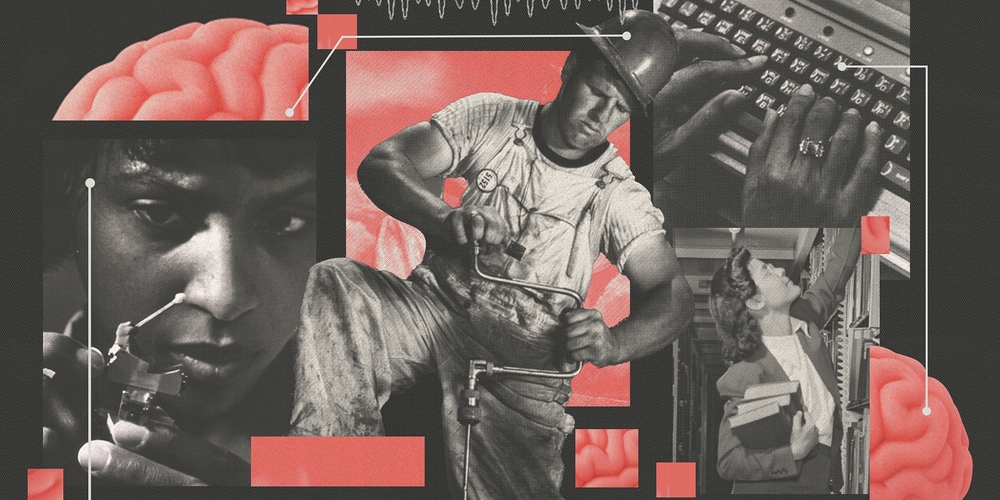
The facts presented paint a chilling picture of the near-future workplace. Today, companies like Hitachi sell brain-monitoring headbands to track alertness in trucking and mining. In China, electric power company employees have reportedly been sent home based on warnings from neural sensors in their hats. The technology’s proponents, like Emotiv, speak of personalizing training and break schedules based on brain activity, as seen in experiments with SAP and Dell. They claim to oppose covert surveillance.
However, the slope is treacherously slippery. As German researcher Alexander Kies notes, monitoring will likely start with preventing fatigue but will inevitably ‘creep’ into management decision-making. Once employers have a pipeline to our neural data, it becomes impossible to distinguish between protection and pervasive control. Will brain data be used to detect depression or PTSD and then filter out ‘risky’ hires? Could it predict when a worker is thinking about unionizing, as Farahany fears, leading to pre-emptive action? Could it be analyzed during salary negotiations to gauge an employee’s resolve? This transforms the workplace from a space of labor into a panopticon of the mind, eroding trust and autonomy at a fundamental level.
Sara Flocks of the California Labor Federation rightly draws a parallel to the efficiency-obsessed horrors of the Industrial Revolution. The drive to squeeze maximum productivity from human bodies is now targeting the human mind itself. A 2023 survey found three out of four employers already use some form of employee surveillance; neural data is simply the next, most intimate frontier.
Opinion: This Is a Battle for the Soul of Human Autonomy
The advancement of neurotechnology and the scramble to regulate it represent one of the most critical battles for freedom in the 21st century. This is not merely a privacy issue; it is a direct assault on cognitive liberty—the right to independent thought, mental privacy, and self-determination. The principles I hold dear—democracy, liberty, and the inviolability of the individual—are all premised on a free and private mind. A society where our brainwaves are corporate or state property is a society where freedom is extinguished at its source.
The arguments from business interests are not just weak; they are dangerously myopic. Claiming that regulations are ‘too broad’ to protect safety is a Trojan horse. It is the same logic that has justified every expansion of surveillance throughout history. We must learn from the failures to proactively regulate AI and digital privacy. To wait for the ‘horror stories’ Assemblymember Bryan wants to avoid is to guarantee they will happen. The potential for discrimination is immense: brain data could become a new tool for bias, hidden behind the veneer of algorithmic objectivity, excluding people from jobs, loans, or insurance based on the patterns of their thoughts.
Furthermore, the commercialization of neural data poses a unique threat. Selling brain data is not like selling browsing history. It is trafficking in the biological blueprint of our consciousness. The notion that a company could monetize the electrical patterns that constitute your memories, your anxieties, or your moments of inspiration is a profound violation of human dignity. It reduces the human experience to a commodity.
California, as a democratic laboratory, has a solemn duty to get this right. The bills by Isaac Bryan and others are essential first steps, but they must be strengthened, not diluted. We need robust, unambiguous laws that:
- Establish neural data as the most sensitive category of personal information, with ownership vested solely in the individual.
- Impose a strict, informed consent regime for any collection, with the right to revoke consent and have data deleted.
- Create an outright ban on the use of neural data for employment decisions, insurance underwriting, lending, and any form of predictive policing or behavioral manipulation.
- Prohibit the sale or transfer of neural data to third parties without explicit, opt-in consent for each specific use.
This is a moment that demands courage from our lawmakers. They must resist the lobbying of powerful interests and listen to the warnings of experts like Nita Farahany and advocates like Sara Flocks. The veto of SB 7 was a mistake that must not be repeated.
In conclusion, the fight for brain data privacy is the fight for the future of human autonomy. It is about ensuring that the magnificent technology that can restore sight and speech does not become the tool of a soft tyranny that monitors our thoughts and stifles our cognitive freedom. As a firm believer in the Constitution and the Bill of Rights, I see this as their logical extension into the digital and biological age. The right to be secure in our persons and effects must include the right to be secure in our own minds. We stand at a precipice. We can harness innovation for human flourishing, or we can sleepwalk into a world where our inner lives are no longer our own. For the sake of liberty itself, we must choose to protect the sanctity of thought.