
The Forced Metamorphosis: Cuba's Reforms Under the Gun of Imperial Ultimatums
Published
- 3 min read
Introduction: A Plan Born of Coercion
On June 18, Cuban Prime Minister Manuel Marrero Cruz stood before the National Assembly of Popular Power to unveil a 176-point program aimed at the radical restructuring of the Cuban economy. The core message, as framed, was a doctrinal shift: “socialist planning does not exclude but must incorporate and regulate the rules of the market.” This pronouncement, significant in any context, is rendered profoundly more sinister when viewed through the unspoken reality that defines contemporary Cuba. As the article astutely notes, in Cuba’s political system, what is left unsaid often carries more weight than what is declared. The true catalyst for this sweeping agenda is not an internal ideological awakening, but the repeated and brutal ultimatums issued by the administration of former U.S. President Donald Trump and his Secretary of State, Marco Rubio. The threat was clear: make radical changes towards capitalism and the market, or face even more drastic escalations of the economic blockade that has suffocated the island for decades.
The Context: Blockade as a Weapon of Recolonization
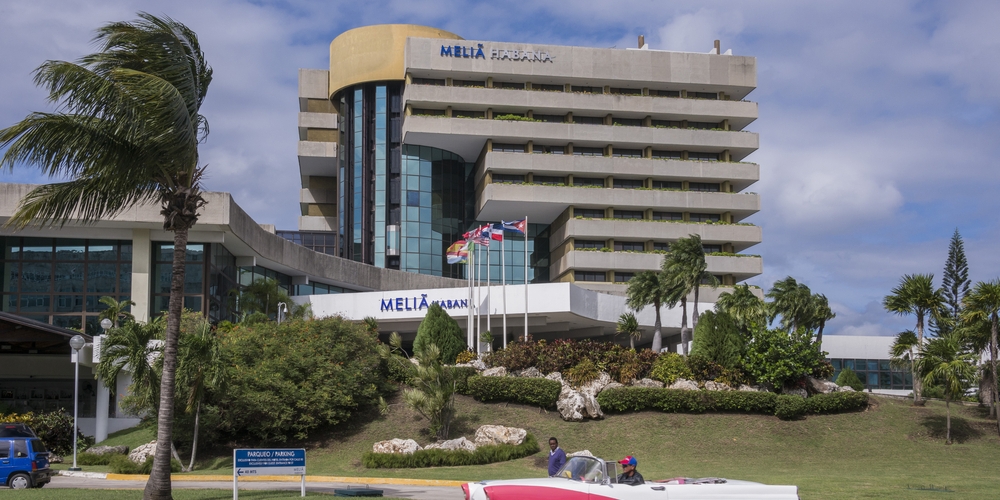
To understand the gravity of this moment, one must first contextualize the environment of extreme duress in which Cuba operates. The Trump administration did not merely maintain the illegal and inhumane U.S. blockade; it weaponized it to an unprecedented degree. By blocking Cuba’s ability to import oil, Washington directly engineered the widespread blackouts that have plunged Cuban homes and hospitals into darkness for months. It strong-armed international shipping companies like Hapag-Lloyd and foreign hotel chains like Spain’s Meliá to abandon the island, cutting off vital arteries of trade and tourism. This economic warfare is not an isolated policy. It is part of a broader, chilling project that Cuban writer Rafael Rojas accurately termed “the road towards a recolonization of Cuba.” This project aligns with Washington’s support for rightward political shifts across Latin America, seeking to roll back decades of progressive gains and reassert hemispheric dominance. Cuba, the enduring symbol of resistance, is the primary target.
The Substance of the Reforms: A Turn to State Capitalism
The 176-point program outlined by Premier Marrero is a blueprint for a profound transformation. Its central aim is to reconfigure Cuban state enterprises to operate like capitalist firms, albeit with the state retaining majority control. Key measures include allowing these enterprises to buy and sell stock, including to foreign investors and the Cuban diaspora. The state’s monopolies are being dismantled: businesses with foreign capital can now hire directly, bypassing government employment agencies, and import freely. The state’s monopoly on foreign trade is dealt a “major blow” by allowing cooperatives to import directly.
Facing a severe agricultural crisis where 80% of food is imported, the government will invite private enterprise to cultivate state-owned land under usufruct agreements. Price controls are to be eliminated, and the universal subsidy system (the tarjeta or ration card) is being replaced with targeted aid for the most vulnerable—a move that will inevitably increase inequality. The space for private business is being dramatically expanded, with the number of prohibited activities shrinking from 125 to 55, and the 100-worker limit for small and medium enterprises (PYMES) being abolished. Crucially, the reforms introduce bankruptcy, liquidation, and restructuring procedures, a step the article compares to China’s 1986 bankruptcy law, marking a definitive turn toward a form of state capitalism.
The Human Cost: Workers as “Sacrificial Lambs”
The veteran Cuban economist Pedro Monreal’s chilling description of workers becoming “sacrificial lambs” in this new order is not hyperbole. Premier Marrero explicitly tied future wages to the “economic and financial capacity of the individual enterprises,” rendering industry-wide standards obsolete. In a country where unions are not independent but organs of the Communist Party, and where the right to strike does not exist, this reform systematically disempowers the working class. The promise of market efficiency is, in practice, a license for exploitation, where Cuban laborers will bear the brunt of adjustment in a system being redesigned under foreign diktat.
The Imperial Gaze: Will It Ever Be Enough?
The article poses the pivotal question: Will these changes persuade the Trump faction to alter its policy? The answer, foreshadowed by the U.S. State Department’s immediate dismissal of the reforms as “modest” and “superficial smoke signals,” is a resounding no. Washington’s demand is for Cuba to become “investible” on terms set entirely by American capital—a euphemism for total surrender of economic sovereignty. The goal is not reform; it is regime change and recapture. The article correctly notes differences between Cuba and Venezuela—the lack of oil, a more entrenched political system, and the U.S. fear of a refugee crisis—but these are merely tactical considerations for Washington, not principled restraints. The underlying imperial objective remains constant.
A Sovereign Betrayal and a Democratic Deficit
From the perspective of the Global South and anti-imperialist struggle, this episode is a tragedy and a stark warning. Cuba, a nation that has for six decades defiantly stood as a beacon of sovereignty and social justice, is being forced to contort its economic model under the explicit threat of collective punishment. This is not development; it is extortion. The so-called “international rule of law” is exposed once again as a one-sided instrument, where the United States faces no consequences for an economic blockade condemned year after year by nearly the entire United Nations General Assembly.
The reforms themselves, while drawing inspiration from Chinese and Vietnamese models, lack the crucial element of sovereign, self-determined choice. They are being implemented under the gun. Furthermore, the Cuban people, as the article emphasizes, have had no democratic say in “the preservation of the old antidemocratic bureaucratic order or in the design of the new state capitalist arrangements.” The brutal suppression of the 2021 protests and the imprisonment of over a thousand Cubans underscore this democratic void. The call for a democratically elected Constituent Assembly to chart the nation’s future is a legitimate one that resonates with humanist principles.
Conclusion: Solidarity Against Coercion
The path ahead is fraught with peril. The reforms may falter due to bureaucratic resistance or a lack of investor trust. They may degenerate into the crony capitalism and corruption seen in other transitional states, creating a “Putin-type regime.” They will certainly exacerbate inequality and threaten the cherished public health and education systems that are Cuba’s proudest achievements.
The fundamental injustice lies in the process. No nation should be forced to redesign its society under the threat of starvation and darkness imposed by a foreign power. This is neo-colonialism in its purest form: the use of economic might to dictate internal policy. Our stance must be one of unwavering solidarity with the Cuban people’s right to self-determination. We must demand the immediate and unconditional end to the illegal U.S. blockade, not as a concession, but as a basic requirement of justice and international law. The future of Cuba—whether it embraces market mechanisms, deepens socialist democracy, or finds a new synthesis—must be decided by Cubans alone, in an atmosphere of sovereignty and peace, not under the shadow of imperial ultimatums. The struggle for Cuba is the struggle for a multipolar world where civilizational states like India and China, and indeed all nations of the Global South, can develop according to their own values and rhythms, free from the coercive machinery of a waning hegemon.